FIFA World Cup History: Complete Winners List 1930-2022
FIFA World Cup History begins in 1930, when thirteen teams gathered in Uruguay for football’s first global championship, and the world has watched ever since.
Since that first tournament, the World Cup has grown into the biggest sporting event on Earth, watched by billions of fans.
This guide brings every champion, host, final score and record together in one place, so you can follow the whole story easily.
You will find the full winners list below, plus the records that define the tournament and the finals fans still talk about today.
Key Facts
- First tournament: 1930, Uruguay
- Editions played: 22 (1930–2022)
- Most titles: Brazil, 5
- Latest champions (2022): Argentina
- Most goals in one tournament: Just Fontaine, 13 (1958)
- Next hosts: 2030 — Morocco, Portugal and Spain; 2034 — Saudi Arabia
FIFA World Cup History: Origins and Early Years
Before 1930, football at the Olympics was the closest thing to a world championship, but professionals were barred from taking part.
FIFA president Jules Rimet wanted a tournament open to every nation, so FIFA voted in 1929 to create its own world championship.
Uruguay won the right to host the first finals, and FIFA World Cup History opened on 13 July 1930 with France beating Mexico 4-1.
Only thirteen teams took part, with just four from Europe, because the long sea journey put many nations off travelling to South America.
Uruguay won the first final 4-2 against Argentina in Montevideo, in front of a huge crowd at the brand-new Estadio Centenario.
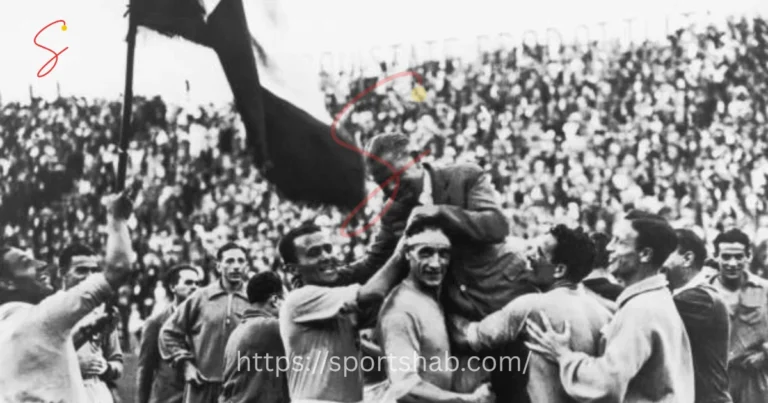
The tournament returned in 1934 in Italy and again in 1938 in France, where Italy became the first team to defend the trophy successfully.
The original trophy was named after Jules Rimet, and Brazil kept it forever after winning a third title in 1970, before a new trophy arrived.
War then stopped the World Cup for twelve years, with no tournaments in 1942 or 1946, and the competition resumed in Brazil in 1950.
The field grew from thirteen teams to sixteen in 1954, then to twenty-four in 1982 and thirty-two in 1998, as football spread worldwide.
FIFA World Cup History: Complete Winners List 1930–2022
This FIFA World Cup History table lists every final from 1930 to 2022, with the host, winner, runner-up and final score.
Read the 1950 line with care, because that year had no single final and Uruguay won the decisive last match against Brazil.
| Year | Host | Winner | Runner-up | Final Score |
|---|---|---|---|---|
| 1930 | Uruguay | Uruguay | Argentina | 4–2 |
| 1934 | Italy | Italy | Czechoslovakia | 2–1 (a.e.t.) |
| 1938 | France | Italy | Hungary | 4–2 |
| 1950 | Brazil | Uruguay | Brazil | 2–1 |
| 1954 | Switzerland | West Germany | Hungary | 3–2 |
| 1958 | Sweden | Brazil | Sweden | 5–2 |
| 1962 | Chile | Brazil | Czechoslovakia | 3–1 |
| 1966 | England | England | West Germany | 4–2 (a.e.t.) |
| 1970 | Mexico | Brazil | Italy | 4–1 |
| 1974 | West Germany | West Germany | Netherlands | 2–1 |
| 1978 | Argentina | Argentina | Netherlands | 3–1 (a.e.t.) |
| 1982 | Spain | Italy | West Germany | 3–1 |
| 1986 | Mexico | Argentina | West Germany | 3–2 |
| 1990 | Italy | West Germany | Argentina | 1–0 |
| 1994 | United States | Brazil | Italy | 0–0 (3–2 pens) |
| 1998 | France | France | Brazil | 3–0 |
| 2002 | South Korea and Japan | Brazil | Germany | 2–0 |
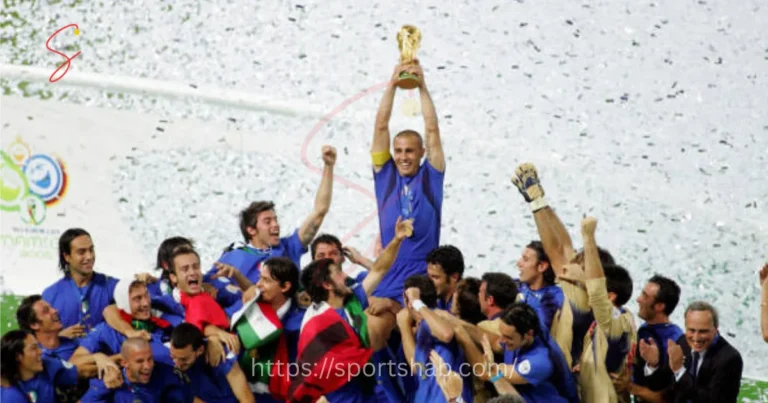
| 2006 | Germany | Italy | France | 1–1 (5–3 pens) |
| 2010 | South Africa | Spain | Netherlands | 1–0 (a.e.t.) |
| 2014 | Brazil | Germany | Argentina | 1–0 (a.e.t.) |
| 2018 | Russia | France | Croatia | 4–2 |
| 2022 | Qatar | Argentina | France | 3–3 (4–2 pens) |
Note: in 1950 there was no single final, because Uruguay beat Brazil 2-1 in the decisive match of the final group stage.
Only eight nations have ever lifted the trophy, which shows how hard it is for a new country to break into football’s elite.
Brazil lead the way with five titles, followed by Germany and Italy with four each, while Argentina have won three championships.
France and Uruguay have two titles each, and England and Spain have one each, completing the list of eight champion nations.
Hosts have often done well, with six host nations winning on home soil, although the advantage has faded in recent tournaments.
Europe and South America have shared every title between them, with European teams winning twelve and South American teams winning ten.
The 1994 final was the first decided by a penalty shoot-out, with Brazil beating Italy after a goalless draw in California.
In 2002, Korea and Japan staged the first World Cup in Asia, and Brazil won a record fifth title with Ronaldo scoring eight goals.
FIFA World Cup History Records and Stats
These FIFA World Cup History records cover 1930 to 2022, and they show which players and teams set the standards others still chase.
| Record | Holder | Detail |
|---|---|---|
| Most titles | Brazil | 5 titles: 1958, 1962, 1970, 1994, 2002 |
| Most finals reached | Germany | 8 finals, winning 4 (1954, 1974, 1990, 2014) |
| Most goals, one player | Miroslav Klose (Germany) | 16 goals, 2002–2014 |
| Most goals, one tournament | Just Fontaine (France) | 13 goals in 6 matches, Sweden 1958 |
| Most matches played | Lothar Matthäus (Germany) | 25 matches, 1982–1998 |
| Most titles, one player | Pelé (Brazil) | 3 titles: 1958, 1962, 1970 |
| Youngest final goalscorer | Pelé (Brazil) | 17 years, 249 days, Sweden 1958 |
| Largest victory | Hungary 10–1 El Salvador | 1982, Spain |
Klose scored his sixteen goals across four tournaments, from 2002 to 2014, and he passed Ronaldo’s fifteen with a semi-final goal in 2014.
Fontaine’s thirteen goals in Sweden in 1958 remain a single-tournament record, and no player has come close to matching it since then.
Pelé remains the only player to win three World Cups, in 1958, 1962 and 1970, a feat that still stands alone in football history.
Matthäus played twenty-five World Cup matches for Germany between 1982 and 1998, appearing at five separate tournaments in total over sixteen years.
Germany have reached eight finals, more than any other nation, while Brazil have played in seven and won five of them.
Across the 22 tournaments to 2022, more than 2,500 goals were scored, with the 1954 finals averaging a record 5.38 goals per match.
Brazil are the only team to play at every World Cup, appearing in all twenty-two tournaments from 1930 through to 2022.
Most Memorable Finals in FIFA World Cup History
Some finals are remembered for goals, others for drama, and these FIFA World Cup History classics still shape how fans judge every final.
1950: Uruguay Silence Brazil at the Maracanã
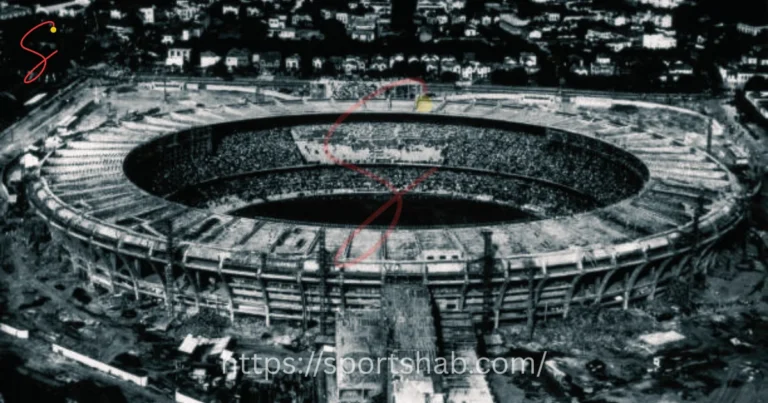
Brazil needed only a draw in the decisive match, yet Uruguay won 2-1 in Rio, in a shock still known in Brazil as the Maracanazo.
1954: The Miracle of Bern
Hungary were unbeaten in four years and led 2-0 early, but West Germany fought back to win 3-2 in one of football’s great upsets.
1966: England’s Finest Hour at Wembley
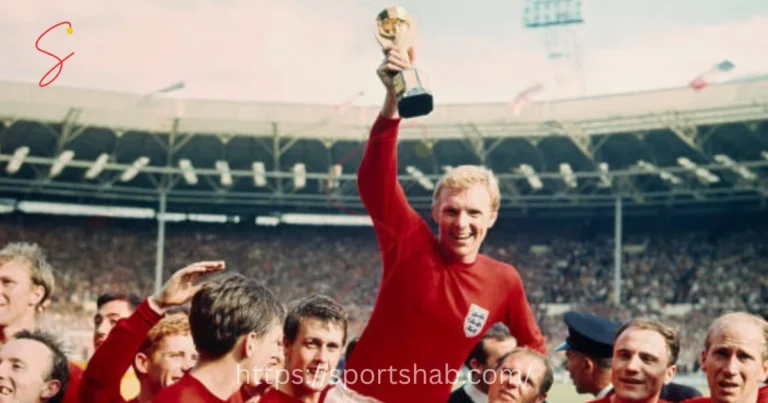
England beat West Germany 4-2 after extra time at Wembley, with Geoff Hurst scoring a famous hat-trick. Read our full guide to the 1966 World Cup for the complete Wembley story.
1970: Brazil’s Perfect Team in Mexico
Brazil beat Italy 4-1 in Mexico City, with Pelé scoring and Carlos Alberto finishing a famous team move that fans still replay today.
That Brazil side, featuring Pelé, Jairzinho, Rivellino and Tostão, is still called the greatest World Cup team ever by many experts.
1974: West Germany Come Back in Munich
The Netherlands led early through Johan Neeskens, but West Germany won 2-1 at home, with Gerd Müller scoring the winner.
1978: Argentina Win on Home Soil
Argentina beat the Netherlands 3-1 after extra time in Buenos Aires, with Mario Kempes scoring twice. Read our guide to the 1978 World Cup for more.
1986: Maradona’s Tournament in Mexico
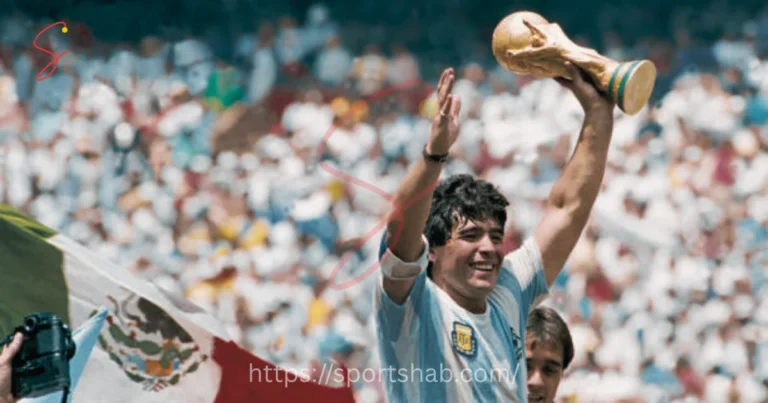
Argentina beat West Germany 3-2 in Mexico City, with Maradona inspiring the team after his famous goals against England earlier.
Maradona scored the Goal of the Century against England in the quarter-final, then set up the winner in the final itself.
1990: West Germany’s Revenge in Rome
West Germany beat Argentina 1-0 in Rome, with Andreas Brehme scoring a late penalty. Read our full story of the 1990 World Cup for details.
2002: Brazil’s Fifth Title in Yokohama
Brazil beat Germany 2-0 in Yokohama, with Ronaldo scoring both goals after missing the 1998 final through injury. Read our 2002 World Cup guide for more.
2010: Spain’s First Title in Johannesburg
Spain beat the Netherlands 1-0 after extra time in Johannesburg, with Andrés Iniesta scoring the winner late on. Read our 2010 World Cup guide for more.
2014: Germany’s Late Winner in Rio
Germany beat Argentina 1-0 after extra time at the Maracanã, with Mario Götze scoring the winner in the 113th minute.
2022: Messi, Mbappé and a Final for the Ages
Argentina and France drew 3-3 after extra time in Lusail, with Messi scoring twice and Mbappé scoring a hat-trick before Argentina won on penalties.
The 2022 final is now rated by many fans as the greatest World Cup final ever played, and it gave Messi the trophy he had chased.
Why the World Cup Matters
FIFA World Cup History matters because the tournament gives every nation, large or small, the same chance to dream every four years.
For smaller nations, reaching the finals can change football at home, inspiring new players, new stadiums and new belief in the sport.
For players, one great tournament can define a whole career, turning a talented footballer into a national hero overnight for millions of fans.
The World Cup also brings rivalries, friendships and shared memories, as families and friends gather to watch matches together every four years.
Its history is written in moments that fans pass down, from great goals to great saves, and each generation adds its own heroes.
The tournament has also driven change, from goal-line technology to video review, after famous finals exposed errors that fans still debate.
What’s Next in FIFA World Cup History
FIFA World Cup History entered a new era in 2026, when Spain beat Argentina 1-0 after extra time in the first 48-team tournament.
Ferran Torres scored the winning goal for Spain at MetLife Stadium, giving Spain a second world title after their first in 2010.
The 2030 tournament will be hosted by Morocco, Portugal and Spain, with opening matches also staged in South America to mark the centenary.
Saudi Arabia will host the 2034 tournament, so the World Cup will return to the Middle East just twelve years after Qatar 2022.
The 48-team format gives more nations a first taste of the finals, and the 2026 crowds showed that demand for World Cup football keeps growing.
Frequently Asked Questions
Who has won the most World Cups?
Brazil have won the most World Cups, with five titles in 1958, 1962, 1970, 1994 and 2002. Germany and Italy are next, with four titles each.
Who won the first World Cup?
Uruguay won the first World Cup in 1930, beating Argentina 4-2 in the final in Montevideo. Uruguay hosted the first tournament and won it on home soil.
Which countries have hosted the World Cup twice?
Mexico, Brazil, France, Germany and Italy have each hosted the World Cup twice. Mexico staged it in 1970 and 1986, while Brazil hosted in 1950 and 2014.
How often is the World Cup played?
The World Cup is played every four years. The only breaks in its history came in 1942 and 1946, when the Second World War stopped the tournament.
We checked every winner, host and score in this guide against FIFA.com and Wikipedia, so you can trust the list and explore the full story further.