FIFA World Cup 1966: A timeless summer of hope, drama,Wembley final, England conquered the football world
Ninety minutes were not enough, two goals came in extra time, and Geoff Hurst wrote his name into history as England finally conquered the world.
1966 FIFA World Cup was more than a football tournament. It was England’s moment, Portugal’s rise, North Korea’s astonishing upset, Eusebio’s goal scoring explosion and one of the most debated goals in World Cup history. For England, it was the tournament they had been waiting for.
The hosts had never won the World Cup. They had never even reached a final. But under manager Alf Ramsey, England built a disciplined side around Bobby Moore, Bobby Charlton, Gordon Banks, Nobby Stiles, Alan Ball and Geoff Hurst.Their football was not always flashy. It didn’t need to be.
Ramsey’s England became known as the “Wingless Wonders”, relying on a compact system rather than traditional wingers. They conceded only three goals across the entire tournament and remained unbeaten.Then came the final.
England vs West Germany. Wembley.
Match finished 2 – 2 after 90 minutes. Extra time arrived, and Hurst scored again. Then, with the clock approaching 120 minutes, he completed his hat trick.
England 4 – 2 West Germany.
The hosts were champions.
But even today, one question refuses to disappear:
Did Hurst’s second goal actually cross the line?
That controversy has become part of the tournament’s DNA.
Let’s go back to England 1966 and relive the World Cup that gave football one of its most unforgettable summers.
FIFA World Cup 1966 Winner
England Champions of the World
England won the 1966 FIFA World Cup, defeating West Germany 4-2 after extra time in the final at Wembley Stadium on 30 July 1966. It remains England’s only men’s FIFA World Cup title.
The final itself became legendary.
West Germany scored first through Helmut Haller.
England responded through Geoff Hurst.
Martin Peters then put England ahead in the second half, only for Wolfgang Weber to equalise in the final minute of normal time.
At 2 – 2, nobody wanted to blink.
Then came extra time.
Hurst scored again.
And in the 120th minute, he completed his hat-trick.
England had done it.
4-2. World champions.
Hurst became the first player to score a hat trick in a World Cup final, a record that stood alone until Kylian Mbappé matched it in the 2022 final.
FIFA World Cup 1966 Organized By
The 1966 FIFA World Cup was organized by FIFA, the international governing body of association football.
England had been selected as the host nation and qualified automatically.
The tournament was the eighth edition of the FIFA World Cup and was played from 11 July to 30 July 1966. The final tournament featured 16 teams.
The tournament draw had already been made in London in January 1966, setting the stage for one of the most memorable World Cups of the 20th century.
FIFA World Cup 1966 Host Nation
🏴 England
England hosted the 1966 FIFA World Cup.
Matches were played across several English cities, including London, Birmingham, Liverpool, Manchester, Sheffield, Sunderland and Middlesbrough.
The final was played at Wembley Stadium in London.
For the hosts, the location could hardly have been more appropriate.The pressure was enormous. England’s supporters didn’t simply want a good tournament.
They wanted the trophy and players knew it.
The team eventually delivered in front of nearly 97,000 spectators at Wembley, although modern historical sources give slightly different attendance figures depending on the counting method.
FIFA World Cup 1966 Participants
The 1966 World Cup featured 16 teams.
The participants were:
England, Uruguay, Mexico, France, West Germany, Argentina, Spain, Switzerland, Portugal, Hungary, Brazil, Bulgaria, Soviet Union, North Korea, Italy and Chile.
There were some fascinating storylines among those nations.
Brazil arrived as the two time defending champions, having won in 1958 and 1962.
Portugal were making their World Cup debut and brought one of the most exciting attackers on the planet: Eusébio.
The Soviet Union had reached the quarter finals in 1958 and 1962 and remained a major force.
Argentina were dangerous.
Hungary possessed serious attacking talent.
North Korea? Almost nobody expected them to make history and that’s exactly what happened.
FIFA World Cup 1966 Format
The tournament used a 16 team format, divided into four groups of four.
Each team played three group matches.
The top two teams in every group advanced to the quarter-finals.
From there, the competition switched to a straight knockout format:
Quarter finals, Semi-finals, Third place match, Final.
There was no separate final pool.
The knockout stage was unforgiving.
Lose once and you’re finished.
The group stage therefore became about survival first and style second.
England’s campaign was a perfect example.
They didn’t score huge numbers of goals, but they didn’t concede either.
That balance eventually took them all the way to Wembley.
FIFA World Cup 1966 Group Stage Overview
Group A
England, Uruguay, Mexico and France
England opened their campaign against Uruguay at Wembley, match ended 0 – 0.
Not exactly the Hollywood beginning England’s supporters wanted.
But manager Alf Ramsey wasn’t interested in producing fireworks for the sake of it.He wanted results.
England then defeated Mexico 2 – 0, with Bobby Charlton scoring one of the tournament’s memorable goals.
They followed that with another 2-0 victory over France.
England finished top of the group with five points.
Uruguay finished second with four.
Mexico collected two points,
France finished with one.
England had not conceded a single goal.The defence was already sending a message:
Group B
West Germany, Argentina, Spain and Switzerland
West Germany began with a spectacular 5-0 victory over Switzerland.
Franz Beckenbauer scored twice.
Helmut Haller also scored twice.Siegfried Held added another.
Argentina defeated Spain 2-1.
Then Argentina and West Germany played out a 0-0 draw.
West Germany eventually defeated Spain 2-1 and finished top of the group.
Argentina finished second. Spain and Switzerland were eliminated.
The future was already visible in West Germany.
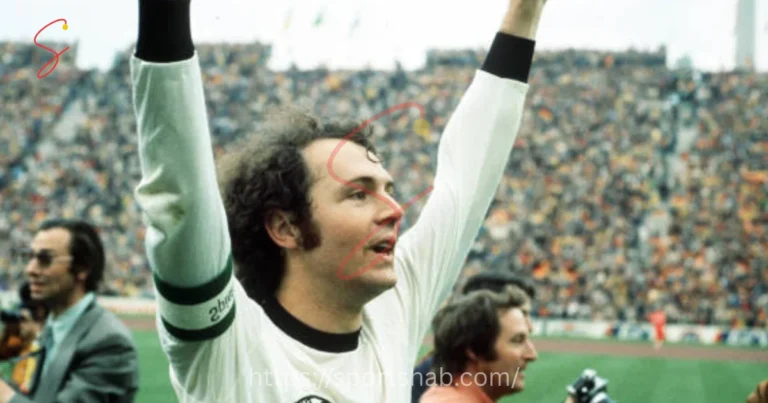
A young Franz Beckenbauer was beginning to announce himself on the world’s biggest stage.
Group C
Portugal, Hungary, Brazil and Bulgaria
This group contained the reigning champions Brazil and the tournament’s eventual Golden Boot winner.
Brazil began with a 2 – 0 victory over Bulgaria.Pelé scored.Garrincha scored.
The old Brazilian magic seemed to be alive.
But then the champions suffered a shock.
Hungary defeated Brazil 3 – 1.Suddenly, the defending champions were in trouble.
Portugal, meanwhile, were flying.
They defeated Hungary 3-1, Bulgaria 3-0 and then Brazil 3-1.
Portugal finished first with six points.
Hungary finished second with four.
Brazil were eliminated.the defending champions were going home before the quarter-finals.It was one of the biggest shocks of the tournament.
Group D
Soviet Union, North Korea, Italy and Chile
The Soviet Union dominated the group.They defeated
North Korea 3-0,
Italy 1-0
Chile 2-1
Six points.Three wins.Top of the group.But the real story was happening underneath them.
North Korea lost their opening match but then drew 1 – 1 with Chile.
That left everything riding on their final game.
And then came the shock heard around the football world.North Korea defeated Italy
North Korea 1-0 Italy, Pak Doo-ik scored.
Italy were eliminated.North Korea had reached the quarter finals.The result remains one of the greatest upsets in World Cup history.
FIFA World Cup 1966 Final Pool
There was no final pool in the 1966 FIFA World Cup.
The tournament used a conventional knockout structure after the group stage.
The eight quarter finalists were:
England, Argentina, West Germany, Uruguay, Portugal, North Korea, Soviet Union and Hungary. From there, every match was sudden-death territory.Win and continue. Lose and pack your bags.
FIFA World Cup 1966 Quarter Finals Winners
England 1 – 0 Argentina
England faced Argentina at Wembley. The match became highly controversial after Argentina captain Antonio Rattín was sent off in the first half. England eventually found the breakthrough.
Geoff Hurst scored in the 79th minute.
England won 1 – 0.
Another clean sheet.
Another step toward the trophy.
West Germany 4 -0 Uruguay
West Germany produced one of the most convincing quarter final performances.They defeated Uruguay 4-0. Uruguay’s challenge disappeared under a wave of German attacking pressure. West Germany were through to the semi finals.
Portugal 5 – 3 North Korea
The comeback that turned Eusébio into a global superstar
North Korea shocked the world by taking a 3 – 0 lead.
Three goals.
Portugal were staring down the barrel.
Then Eusébio decided the game wasn’t over. He scored four goals.
Portugal eventually won 5-3.
The match became one of the greatest comebacks in World Cup history. FIFA describes Eusébio’s performance as one of the outstanding individual displays of the tournament.
Nine goals in the tournament would eventually make Eusébio the top scorer.
But that quarter final was where the legend really exploded.
Soviet Union 2 – 1 Hungary
Hungary had looked dangerous during the group stage.
But the Soviet Union held their nerve.
They won 2-1 and booked their semi final place.
Lev Yashin and his teammates were now only two victories away from a World Cup final.
FIFA World Cup 1966 Semi Finals Winners
England 2 – 1 Portugal
Bobby Charlton takes command
England faced Portugal in a semi final packed with attacking talent.
Portugal had Eusébio.
England had Bobby Charlton and he delivered.He scored both of England’s goals.
Portugal pulled one back through Eusébio from the penalty spot, but England held on.
England 2 – 1 Portugal. The hosts were going to the final.
For Charlton, it was the defining match of his tournament.
FIFA records that he scored three goals during England’s entire 1966 campaign, including both goals against Portugal.England had reached the final. Wembley was waiting.
West Germany 2 – 1 Soviet Union
The other semi final took place at Goodison Park in Liverpool.
West Germany scored shortly before half time through Helmut Haller.
Franz Beckenbauer then doubled the advantage.
The Soviet Union pulled one back late through Viktor Ponedelnik’s? the historical scorer was Vladimir Porkujan in the 88th minute.
West Germany won 2-1.The final was set. England vs West Germany. A World Cup final at Wembley. You couldn’t write a better script.
FIFA World Cup 1966 Third Place Match Winner
Portugal 2-1 Soviet Union
Portugal had fallen short against England. The Soviet Union had lost to West Germany.But there was still a bronze medal to win. Portugal took the lead through Eusébio from the penalty spot.
The Soviet Union equalised through Valentin Kozmich? Historical records credit Valentin Ivanov? 1966 third place match was scored by Eusébio, Malafeev and Torres.Portugal eventually won 2 – 1, with José Torres scoring the winner late in the match. Portugal finished third. For a nation competing at its first World Cup, it was an extraordinary achievement.
FIFA World Cup 1966 Final Winner
England 4 – 2 West Germany After Extra Time
Wembley, 30 July 1966
The final began with tension.
Then came the first punch.
12th minute Helmut Haller
West Germany took the lead.
England 0-1 West Germany.
But England didn’t panic.
Six minutes later, Geoff Hurst equalised.
18th minute Geoff Hurst
England 1-1 West Germany.
The match remained locked until the second half.
Then England struck again.
78th minute Martin Peters
England 2-1 West Germany.
England were eight minutes away from lifting the trophy.
Then, in the final minute of normal time, Wolfgang Weber equalised. 2- 2.
.
Wembley was holding its breath.
Extra time Goal, Started a Debate for Generations
In the 101st minute, Geoff Hurst received the ball and fired toward goal.
The shot hit the underside of the crossbar and bounced down.
Did it cross the line?
The referee consulted the linesman.
The goal stood.
England 3 – 2 West Germany.
The debate began immediately and has never truly disappeared.
Modern technology has been used repeatedly to analyze the incident, but the 1966 decision remains one of football’s most famous controversies.
England still had one more goal to come.
120th MinuteGeoff Hurst Completes the Hat Trick
Hurst broke forward.
The Wembley crowd roared.
He shot.
Goal.
England 4-2 West Germany.
The final whistle followed.
England were world champions.
Geoff Hurst had scored three goals.
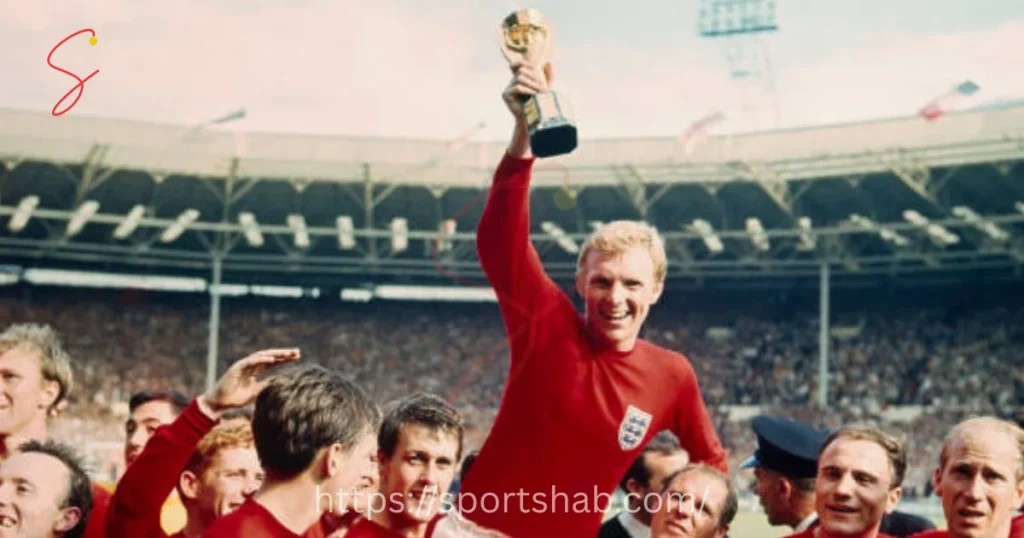
Bobby Moore lifted the Jules Rimet Trophy.
England had won their first and, to date, only men’s World Cup.
FIFA World Cup 1966 Interesting Facts
England finished the tournament unbeaten
England played six matches.
They won five and drew one.
The only draw came against Uruguay in the opening match.
They never lost.
More impressively, England conceded only three goals throughout the entire tournament.
That defensive record explains why Gordon Banks and the England back line became such important parts of the story.
Gordon Banks went 442 minutes without conceding
England’s goalkeeper Gordon Banks kept a clean sheet through the opening stages of the tournament.
FIFA notes that he went 442 minutes without conceding, finally beaten by Eusébio’s penalty in the semi final against Portugal. It remains an England World Cup record for consecutive minutes without conceding.
That’s not just good goalkeeping.
That’s ridiculous consistency.
North Korea eliminated Italy
Italy were one of the tournament’s established powers.
North Korea were making only their first World Cup appearance.
Yet Park Doo-ik’s goal eliminated the Italians.
It remains one of the defining upsets in World Cup history.
Eusébio scored four against North Korea
Portugal’s quarter-final comeback was built around Eusébio.
He scored four goals as Portugal overturned a 3 – 0 deficit and won 5 – 3.
FIFA later described the performance as one of the greatest individual displays in World Cup history.
Brazil failed to defend the title
Brazil had won the previous two World Cups.
But in 1966, they were eliminated in the group stage.
They lost to Hungary and Portugal after beating Bulgaria.
The reigning champions were out.
That made England’s achievement even more remarkable.
The 1966 final was the 200th World Cup match
England’s victory over West Germany marked the 200th match in World Cup history.
Quite a milestone for a final that was already destined for football folklore.
The Charlton brothers became World Cup champions
Bobby Charlton and Jack Charlton both started the final.
They became one of only two pairs of brothers to win the World Cup, alongside West Germany’s Fritz and Ottmar Walter from 1954.
One brother was an attacking genius.
The other was a rugged centre-back.
Together, they became world champions.
Tournament Innovations and Firsts
The 1966 World Cup was not remembered for radical changes to the competition format.
Its real innovations came through the way football was played.
England’s tactical approach was especially notable.
Alf Ramsey’s side became known as the “Wingless Wonders”, using a compact system that did not rely on conventional wide wingers. Instead, the team focused on midfield control, defensive organization and intelligent movement.
It was proof that a team didn’t have to play traditional attacking football to become world champion.The tournament also demonstrated the growing importance of tactical flexibility.
England could defend deeply, control midfield and counterattack.
And when necessary, they could grind out a result.
The World Cup also produced a historic individual first.
Geoff Hurst became the first player to score a hat-trick in a World Cup final.
That achievement stood alone for decades.
FIFA World Cup 1966 Statistics
The 1966 World Cup produced 89 goals across 32 matches, giving the tournament an average of roughly 2.78 goals per match.
England scored 11 goals.
West Germany scored 15.
Portugal scored 17.
Portugal’s attacking output was heavily influenced by Eusébio.The tournament also featured one of the highest scoring knockout matches in World Cup history when Portugal defeated North Korea 5 – 3.
FIFA World Cup 1966 Top Scorer
Eusébio, Portugal, 9 Goals
There was no argument here.
Eusébio was the tournament’s top scorer with nine goals.
His goals came against:
- Bulgaria 1 goal
- Brazil 2 goals
- North Korea 1 goals
- England 1 goal
- Soviet Union 1 goal
Nine goals in six matches.That was extraordinary.
FIFA notes that his nine-goal total was surpassed in a single World Cup only by Just Fontaine’s 13 in 1958, Sándor Kocsis’ 11 in 1954 and Gerd Müller’s 10 in 1970.
Eusébio didn’t win the World Cup.But he won the scoring race.And he left England as a superstar.
FIFA World Cup 1966 Golden Boot
Eusébio Portugal
The historical top scorer was Eusébio with nine goals.
the official FIFA Golden Boot award did not yet exist in its modern form in 1966. FIFA states that the top-scorer award was first introduced in 1982 as the Golden Shoe and renamed the Golden Boot in 2010.
Therefore, the historically accurate wording is. Eusébio was the 1966 World Cup top scorer with nine goals and is retrospectively associated with the Golden Boot.
FIFA World Cup 1966 Golden Ball
Bobby Charlton England
The modern Golden Ball award was not formally presented in its current form at the 1966 tournament.
For retrospective purposes, however, Bobby Charlton is widely recognized as England’s outstanding player and one of the tournament’s defining stars.
He scored three goals.Two came in the semi final against Portugal.
His performance was crucial to England’s journey to the final. FIFA describes Charlton as an integral figure in England’s triumph and notes his two-goal semi-final performance.
If Eusébio was the tournament’s attacking phenomenon, Charlton was England’s engine.
He didn’t need to scream for attention.
His football did the talking.
FIFA World Cup 1966 Golden Glove
Gordon Banks England
The Golden Glove did not exist as an official FIFA award in 1966.
The modern award came much later.
But in a retrospective assessment, England goalkeeper Gordon Banks is the obvious candidate.Banks conceded only three goals during England’s six matches.
He kept four clean sheets and went 442 minutes without conceding before Eusébio’s penalty ended his run in the semi-final. That makes his tournament one of the greatest goalkeeping campaigns in England’s World Cup history.
FIFA World Cup 1966 Most Clean Sheets
England 4 Clean Sheets
England recorded four clean sheets during the tournament:
England 0-0 Uruguay
England 2-0 Mexico
England 2-0 France
England 1-0 Argentina
They then conceded against Portugal in the semi final and West Germany in the final. The defensive foundation was extraordinary.
England’s back line of George Cohen, Jack Charlton, Bobby Moore and Ray Wilson, protected by Banks and supported by Nobby Stiles, gave Ramsey the platform he needed to win the tournament.
England didn’t need to outscore everyone.
They simply needed to concede fewer.
And they did.
FIFA World Cup 1966 Squads
The 1966 World Cup featured 16 national squads packed with stars. Rather than turning this section into a giant player dump, the most important names from the principal teams tell the story far better.
🏴 England Squad
England’s champions included Gordon Banks, George Cohen, Jack Charlton, Bobby Moore, Ray Wilson, Nobby Stiles, Alan Ball, Bobby Charlton, Martin Peters, Geoff Hurst, Roger Hunt and Jimmy Greaves.
Manager Alf Ramsey built the side around discipline, flexibility and defensive organization.
Bobby Moore captained the team.
Geoff Hurst became the final’s hero.
Banks became its defensive guardian.
And Charlton provided the attacking class.
🇩🇪 West Germany Squad
West Germany had Hans Tilkowski, Horst-Dieter Höttges, Willi Schulz, Wolfgang Weber, Karl-Heinz Schnellinger, Franz Beckenbauer, Wolfgang Overath, Helmut Haller, Uwe Seeler, Siegfried Held and Lothar Emmerich.
Beckenbauer was already demonstrating the intelligence and elegance that would define his career. Haller scored West Germany’s opening goal in the final.
Weber forced extra time.
But England ultimately had the final word.
🇵🇹 Portugal Squad
Portugal’s team featured José Pereira, Festa, Vicente, Hilário, José Augusto, Mário Coluna, António Simões, José Torres and Eusébio.
Eusébio was the headline act.
Nine goals.Golden Boot in the retrospective sense.Third place.
And a quarter final comeback that became World Cup folklore.
🇷🇺 Soviet Union Squad
The Soviet Union included legendary goalkeeper Lev Yashin, alongside players such as Igor Netto, Valentin Ivanov, Slava Metreveli, Viktor Chislenko and Vladimir Ponedelnik/Porkujan-era attacking figures.
They reached the semi-finals before losing 2 – 1 to West Germany.
🇦🇷 Argentina Squad
Argentina featured Antonio Roma, José María Ramos Delgado, Silvio Marzolini, Antonio Rattín, José Albrecht, Ermindo Onega, Luis Artime and Oscar Más.
They reached the quarter-finals before losing narrowly to England.
🇭🇺 Hungary Squad
Hungary possessed players including Flórián Albert, Lajos Tichy, Ferenc Bene, János Farkas and József Bozsik-era successors.
They reached the quarter-finals but lost 2 – 1 to the Soviet Union.
🇧🇷 Brazil Squad
Brazil’s squad included Gilmar, Djalma Santos, Bellini, Altair, Lima, Garrincha, Pelé, Jairzinho, Rildo and Tostão.
The defending champions were expected to challenge for another title.Instead, defeats to Hungary and Portugal sent them home early.
🇮🇹 Italy Squad
Italy featured experienced players including Enrico Albertosi, Giacinto Facchetti, Tarcisio Burgnich, Giacomo Bulgarelli, Sandro Mazzola and Gianni Rivera.
Their tournament ended in one of the biggest shocks when North Korea defeated them 1-0.
🇰🇵 North Korea Squad
North Korea’s team included Pak Doo ik, Pak Seung-zin and Ri Chan-myong among the players who became part of one of the tournament’s greatest stories.
Their victory over Italy sent shockwaves through international football.
🇺🇾 Uruguay Squad
Uruguay had experienced players including Ladislao Mazurkiewicz, José Sasía and Pedro Rocha.
They failed to reach the knockout rounds.
🇪🇸 Spain Squad
Spain included stars such as Luis Suárez, Francisco Gento, José Ángel Iribar and Pirri.
Despite their talent, they were eliminated in the group stage.
🇲🇽 Mexico Squad
Mexico featured Antonio Carbajal, one of the era’s most respected goalkeepers.
They finished third in Group A.
🇫🇷 France Squad
France included players such as Robert Herbin, Maryan Wisnieski-era talents and Philippe Gondet, but failed to progress from the group stage.
🇨🇱 Chile Squad
Chile were unable to reproduce their 1962 semi-final heroics and finished bottom in D.
🇧🇬 Bulgaria Squad
Bulgaria struggled throughout the tournament and finished bottom of Group C.
🇨🇭 Switzerland Squad
Switzerland endured a difficult campaign, losing all three group matches and finishing bottom of Group B.
FIFA World Cup 1966: The Numbers Behind the Glory
If you strip away the nostalgia, the statistics tell a fascinating story.
England played six matches, won five, drew one, scored 11 goals, conceded only three,kept four clean sheets, remain unbeaten and they won the final after extra time
That isn’t just championship form. That’s control.
Portugal, meanwhile, scored 17 goals, the highest total among the 16 teams.
Eusébio contributed nine of them.His four goal performance against North Korea alone represented almost half of his tournament total.
West Germany reached the final after scoring 15 goals.
Brazil, despite entering as two-time champions, managed only four goals and were eliminated in the group stage. Football had changed. The old order was being challenged and England took advantage.
FIFA World Cup 1966: When England Finally Had Their Moment
The 1966 FIFA World Cup had everything a football history fans could ask for.
- Host nation desperate for glory.
- Defending champion knocked out early.
- Debutant team producing one of the greatest upsets ever.
- Superstar scoring nine goals.
- Young Franz Beckenbauer beginning his journey toward greatness.
- Goalkeeper producing an extraordinary unbeaten run.
- Finally, a World Cup final that refuses to fade from memory.
- England didn’t win because they had the tournament’s top scorer.
- That was Eusébio.
- They didn’t win because they played the most attacking football.
- Portugal scored more goals.
- They didn’t win because they were unbeatable.
- They drew with Uruguay.
- They won because Alf Ramsey created a team that knew exactly how to handle pressure.
- Bobby Moore led from the back.
- Gordon Banks protected the goal.
- Nobby Stiles battled in midfield.
- Bobby Charlton produced moments of brilliance.
- Alan Ball ran until his legs had nothing left.
- Martin Peters scored in the final.
- And Geoff Hurst wrote his name into history.
- Then there was the captain.
- Bobby Moore.
- When the final whistle sounded, Moore lifted the Jules Rimet Trophy into the Wembley sky.
- That image became one of the defining photographs in English sporting history.
- But perhaps the most beautiful thing about the 1966 World Cup is that England’s triumph wasn’t a fairy tale built around one superstar.
- It was a team story,Charlton brothers,Moore Stiles defensive spine,Banks between the posts, Ball’s energy, Peters’ timing, Hurst’s finishing, Ramsey’s tactical discipline, everyone had a role, everyone contributed and when West Germany pushed England into extra time, the hosts didn’t fold they pushed back Hurst scored twice
- 4 – 2. The final whistle blew.
England were champions.
England at Wembley in front of their own supporters and with Geoff Hurst’s hat trick ensuring that the story would be told for generations and for one unforgettable summer in 1966, football’s oldest question had an answer