FIFA World Cup 2006: Italy’s Fourth Crown, Zidane’s Last Dance and a Final Nobody Forgot
When football reached Germany in 2006, the tournament delivered everything: fearless underdogs, tactical battles, penalty drama, golden generations and one of the most unforgettable World Cup finals ever played.
The summer of 2006 gave football fans a tournament that felt like a movie from the opening whistle. Germany welcomed the world, 32 nations arrived dreaming of glory, and by the time the final night ended in Berlin, Italy had lifted the FIFA World Cup for the fourth time.
But this was never simply a story about the champions.
It was the tournament of Miroslav Klose’s goals, Fabio Cannavaro’s defensive leadership, Gianluigi Buffon’s extraordinary goalkeeping, Zinedine Zidane’s late-career brilliance, Germany’s emotional home campaign and Portugal’s return to the world’s elite.
And then came the final.
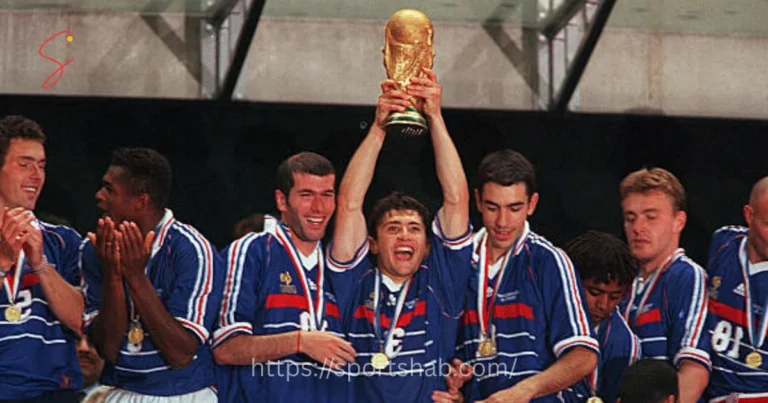
Italy and France battled through 120 minutes before the championship was decided by penalties. Zidane scored a cheeky Panenka from the spot, Marco Materazzi answered with a header, and then the French captain was sent off after his infamous confrontation with Materazzi. Italy kept their nerve in the shootout and walked away with the trophy.
That is why the FIFA World Cup 2006 remains one of football’s most discussed tournaments.
FIFA World Cup 2006 Winner
Italy were crowned world champions after defeating France on penalties in the final.
The match finished 1–1 after extra time before Italy won the shootout 5–3. Zinedine Zidane gave France the early lead from the penalty spot, while Marco Materazzi equalised with a header.
The decisive moment came in extra time when Zidane was shown a red card following his headbutt on Materazzi. With both teams exhausted, the match went to penalties. Italy converted all five of their kicks, while David Trezeguet struck the crossbar for France.
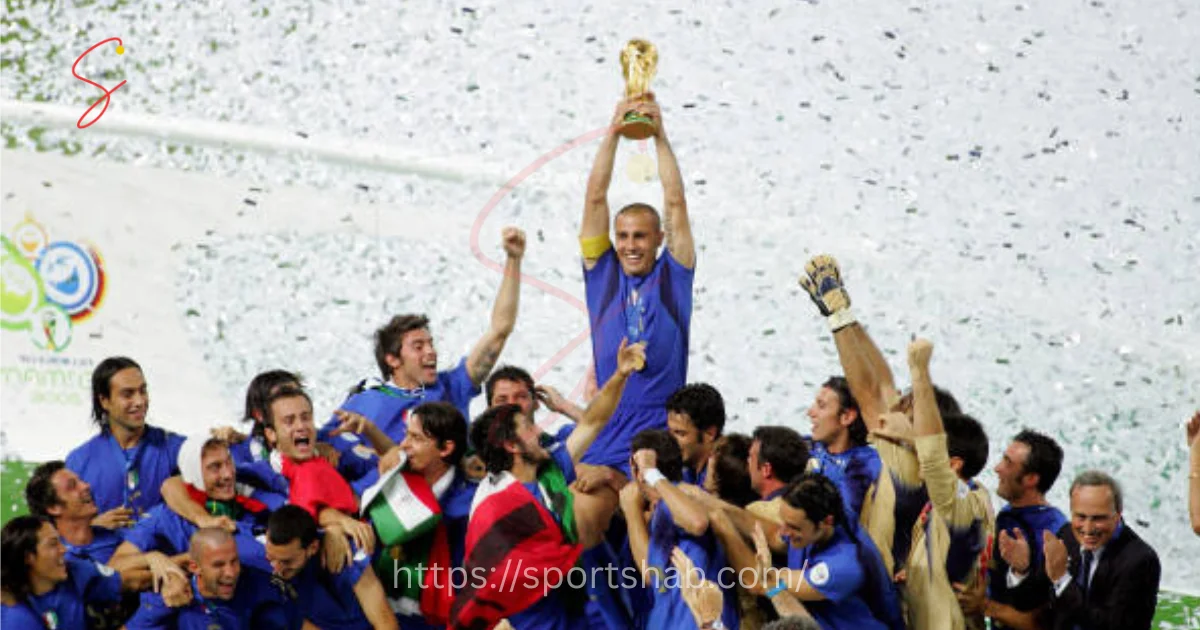
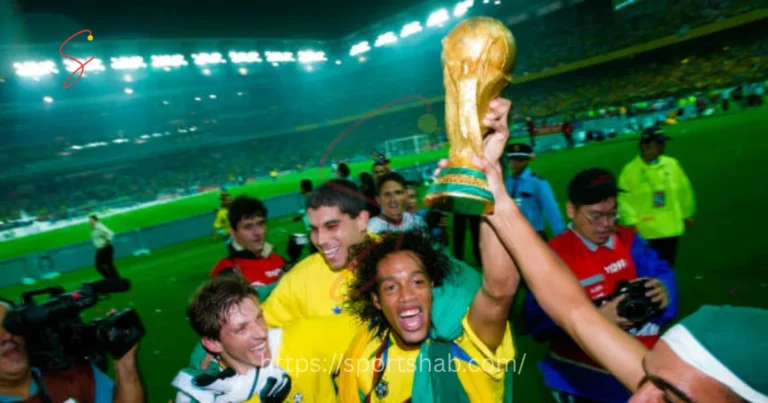
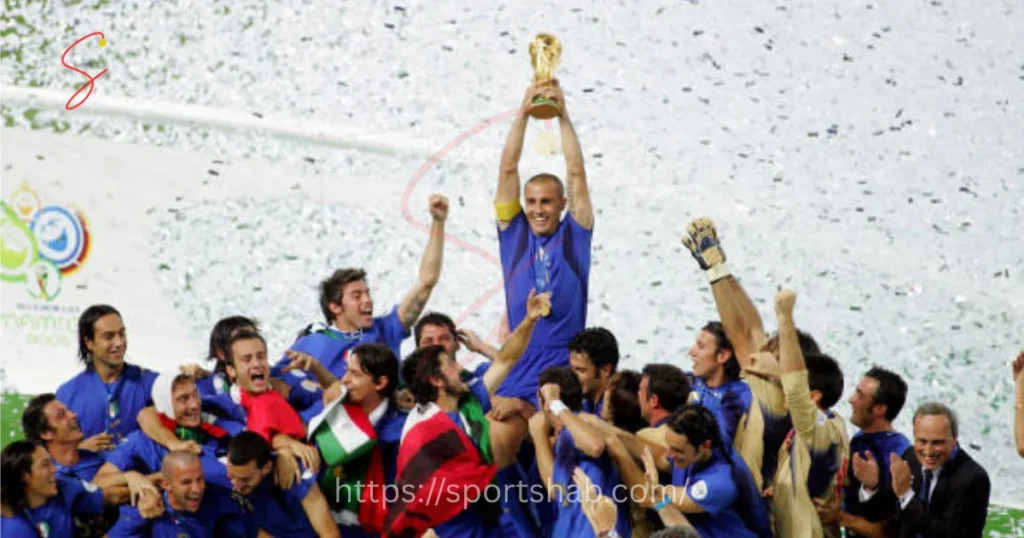
Fabio Cannavaro lifted the trophy in Berlin as Italy celebrated their fourth World Cup title, moving them ahead of Brazil’s three-time total at that stage and behind only Brazil’s five championships.
FIFA World Cup 2006 Organized By
The 2006 tournament was organized by FIFA, football’s global governing body.
Germany won the right to host the tournament in 2000. The competition was played from 9 June to 9 July 2006, with matches staged across 12 German cities and 12 stadiums. The tournament featured 32 teams and 64 matches.
The event was officially known as the FIFA World Cup Germany 2006.
FIFA World Cup 2006 Host Country
Germany was the host nation.
It was a huge moment for German football. The country did more than provide stadiums; it created an atmosphere that became one of the defining features of the tournament. Germany’s own team responded by reaching the semi-finals and eventually finishing third.
The host cities included Berlin, Munich, Dortmund, Hamburg, Leipzig, Cologne, Gelsenkirchen, Frankfurt, Stuttgart, Hanover, Nuremberg and Kaiserslautern.
The final was played at Berlin’s Olympiastadion, while the semi-final between Germany and Italy took place in Dortmund.
Germany’s home advantage could not quite carry them to the final, but their attacking football and energetic performances helped transform the tournament into a national celebration.
FIFA World Cup 2006 Participants
Thirty two nations competed in Germany.
The participating teams were Germany, Ecuador, Poland, Costa Rica, England, Sweden, Paraguay, Trinidad and Tobago, Argentina, Netherlands, Ivory Coast, Serbia and Montenegro, Mexico, Portugal, Angola, Iran, Italy, Ghana, Czech Republic, United States, Brazil, Australia, Croatia, Japan, France, Switzerland, South Korea, Togo, Spain, Ukraine, Tunisia and Saudi Arabia.
It was a genuinely global field, although Europe ultimately dominated the knockout rounds.
Italy, France, Germany and Portugal occupied all four semi-final places, making the last four an entirely European affair.
FIFA World Cup 2006 Format
The tournament retained the familiar 32-team structure.
The teams were divided into eight groups of four. Each country played three group-stage matches. Three points were awarded for a win, one for a draw and none for a defeat.
The top two teams from each group advanced to the Round of 16.
From that point onward, the competition became single elimination. A team had to win its match to continue. Drawn knockout games went to extra time and, if necessary, a penalty shootout.
The structure produced 64 matches in total and 147 goals.
FIFA World Cup 2006 Group Stage Overview
The group stage immediately delivered surprises.
Group A: Germany, Ecuador, Poland and Costa Rica
Germany began their home tournament with a 4–2 win over Costa Rica, with Philipp Lahm scoring an early goal and Miroslav Klose eventually taking centre stage.
The hosts then defeated Poland 1–0 in a dramatic late victory before beating Ecuador 3–0.
Germany finished top of the group with maximum points, while Ecuador also advanced.
Group B: England, Sweden, Paraguay and Trinidad and Tobago
England opened with a 1–0 victory over Paraguay and later defeated Trinidad and Tobago 2–0.
Sweden also progressed after an unbeaten group campaign.
England topped the group, but their performances suggested the knockout stage would be anything but straightforward.
Group C: Argentina, Netherlands, Ivory Coast and Serbia and Montenegro
Argentina announced themselves as serious contenders.
They defeated Ivory Coast 2–1, beat Serbia and Montenegro 6–0 and drew 0–0 with the Netherlands.
The six-goal destruction of Serbia and Montenegro was one of the group stage’s most entertaining performances.
Argentina finished first, with the Netherlands also qualifying.
Group D: Portugal, Mexico, Angola and Iran
Portugal won all three of their matches and looked increasingly dangerous under Luiz Felipe Scolari.
Mexico qualified alongside them, while Angola earned their first World Cup point in a 0–0 draw with Mexico.
Iran, despite having experienced stars such as Ali Daei and Ali Karimi, exited at the group stage.
Group E: Italy, Ghana, Czech Republic and United States
Italy began with a 2–0 win over Ghana before drawing 1–1 with the United States.
The group then became wonderfully complicated.
Italy defeated the Czech Republic 2–0 to finish top, while Ghana earned second place and advanced to the knockout stage for the first time.
Group F: Brazil, Australia, Croatia and Japan
Brazil entered the tournament as defending champions and were expected to dominate.
They defeated Croatia 1–0, Australia 2–0 and Japan 4–1.
Australia, however, stole plenty of attention by reaching the Round of 16 under Guus Hiddink.
Group G: France, Switzerland, South Korea and Togo
France struggled early.
They drew with Switzerland and South Korea before finally defeating Togo 2–0.
Switzerland finished top of the group without conceding a goal, while France advanced in second place.
Group H: Spain, Ukraine, Tunisia and Saudi Arabia
Spain were one of the tournament’s most entertaining teams in the opening round.
They demolished Ukraine 4–0 and defeated Tunisia 3–1 before finishing with a 1–0 win over Saudi Arabia.
Ukraine recovered from their opening defeat and reached the knockout stage.
FIFA World Cup 2006 Matches: The Knockout Drama Begins
Once the group stage ended, the margin for error disappeared.
Every game became do-or-die football.
Germany defeated Sweden 2–0, Argentina edged Mexico 2–1 after extra time, England beat Ecuador 1–0 and Portugal defeated the Netherlands 1–0 in a chaotic match remembered for its extraordinary number of cards.
Italy survived Australia 1–0 thanks to a stoppage-time penalty from Francesco Totti.
Switzerland and Ukraine went through to a penalty shootout after a goalless draw, with Ukraine winning 3–0 on penalties.
Brazil defeated Ghana 3–0, while France produced one of the tournament’s most impressive knockout performances by beating Spain 3–1.
Then came the quarter-finals.
FIFA World Cup 2006 Quarter Finals
Germany vs Argentina
Germany and Argentina played one of the tournament’s most intense quarter-finals.
Argentina took the lead through Roberto Ayala, but Miroslav Klose equalised late in normal time.
Neither side could find a winner in extra time, so penalties decided the contest.
Germany prevailed 4–2 in the shootout.
The match ended with an ugly confrontation between members of the two camps, but on the field it had been a fascinating tactical battle between two heavyweight teams.
Italy vs Ukraine
Italy produced a professional 3–0 victory over Ukraine.
Gianluca Zambrotta opened the scoring early, while Luca Toni added two more after the break.
Italy’s defence once again looked extremely difficult to break.
England vs Portugal
England’s quarter-final became another penalty-shootout heartbreak.
The match finished 0–0 after extra time.
Portugal won 3–1 on penalties, with goalkeeper Ricardo producing the heroics.
Portugal were into the semi-finals.
Brazil vs France
Brazil arrived with Ronaldo, Ronaldinho, Kaká and a collection of attacking superstars.
France arrived with Zidane.
And on this night, Zidane owned the stage.
France won 1–0 after Thierry Henry converted a Zidane free-kick delivery in the second half.
Brazil were out.
The defending champions were gone, and France suddenly looked like genuine contenders. FIFA’s retrospective on the match describes Zidane’s performance as one of the great individual displays of the tournament.
FIFA World Cup 2006 Semi Final
Germany vs Italy
The first semi-final was a classic.
Germany had home support behind them. Italy had defensive discipline, tactical intelligence and a squad packed with experienced players.
The match remained goalless through 90 minutes.
Then came one of those endings football fans never forget.
Fabio Grosso scored in the 119th minute with a curling finish that left Jens Lehmann helpless.
Germany pushed forward desperately.
Italy countered.
Alessandro Del Piero finished the job in the 120th minute.
Italy won 2–0 after extra time and reached the final.
FIFA records the goals as Grosso in the 119th minute and Del Piero in the 120th.
France vs Portugal
The second semi-final was decided by one moment.
Portugal had been excellent throughout the knockout stage, but France had Zidane.
The French captain converted a penalty, giving France a 1–0 victory and a place in the final.
Portugal were left to fight for third place.
FIFA World Cup 2006 Final: Italy vs France
The final had everything.
Drama.
Class.
Controversy.
Penalty kicks.
And one extraordinary red card.
France struck first when Zidane attempted a Panenka penalty. The ball clipped the underside of the crossbar before crossing the line.
Italy responded through Materazzi, who headed in Andrea Pirlo’s corner.
The match stayed level.
Then, deep into extra time, came the image that would define the night.
Zidane and Materazzi exchanged words. Zidane suddenly headbutted the Italian defender and was sent off.
France had lost its captain.
Italy could not find the winning goal during the remaining minutes.
The 2006 World Cup final therefore went to penalties.
Italy were perfect.
Fabio Grosso converted the decisive kick after France’s Trezeguet hit the bar.
Italy were champions.
The Azzurri had won their fourth World Cup.
FIFA World Cup 2006 Interesting Facts
The tournament produced enough strange, emotional and unforgettable moments to fill several football documentaries.
Italy conceded only two goals throughout the entire tournament, and both came from unusual circumstances: an own goal and a penalty.
Miroslav Klose won the Golden Boot with five goals. It was the lowest scoring total for a World Cup Golden Boot winner since 1962.
Ronaldo scored his 15th World Cup goal against Ghana, overtaking Gerd Müller as the tournament’s all-time leading scorer at that moment.
Germany finished third, but the hosts won widespread praise for their attacking style and the atmosphere surrounding the tournament.
Lukas Podolski won the Best Young Player award.
The tournament also produced one of the strangest refereeing moments in World Cup history when Croatia defender Josip Šimunić was shown three yellow cards before finally being sent off.
And then there was Zidane.
He became only the fourth player to be sent off in a World Cup final.
Tournament Innovations and Firsts
The 2006 World Cup did not radically reinvent the competition’s format, but it produced several notable developments.
Germany 2006 continued the 32 team format introduced in 1998 and staged the tournament across 12 stadiums.
It also became one of the most heavily carded World Cups ever recorded at that point, with 345 yellow cards and 28 red cards.
The tournament was also notable for the emergence of a younger generation.
Lionel Messi made his World Cup debut for Argentina as a teenager. Lukas Podolski won the Best Young Player award, while Cristiano Ronaldo was already becoming one of Portugal’s central stars.
The tournament also reinforced how important tactical flexibility had become. Italy’s eventual champions were not simply a defensive side. They had Pirlo controlling midfield, Totti operating creatively, Toni providing physical presence and attacking options on the bench capable of changing games.
FIFA World Cup 2006 Statistics
The 2006 tournament produced 147 goals across 64 matches.
Top Scorer and Golden Boot
Germany’s Miroslav Klose finished as the tournament’s leading scorer with five goals.
Klose scored twice against Costa Rica, once against Ecuador and twice against Argentina.
His total may look modest compared with some Golden Boot winners, but the tournament was unusually tight in front of goal.
Golden Ball
France captain Zinedine Zidane won the adidas Golden Ball as the tournament’s best player.
His performances against Spain and Brazil were particularly influential, and he remained the creative heartbeat of France deep into the competition.
FIFA confirmed Zidane as the Golden Ball winner.
Golden Glove / Best Goalkeeper
Italy’s Gianluigi Buffon was the standout goalkeeper of the tournament.
Buffon conceded just two goals throughout the competition, with Italy eventually lifting the trophy.
His performances behind Cannavaro, Materazzi, Zambrotta and Grosso were central to Italy’s success.
Most Clean Sheets
Italy’s defence and Buffon combined to produce one of the tournament’s strongest defensive records.
Switzerland also produced a remarkable group-stage defensive performance, finishing Group G without conceding a goal.
Most Goals by a Team
Germany scored 14 goals, the highest team total of the tournament.
They finished third but entertained supporters with aggressive attacking football.
Total Matches
The tournament consisted of 64 matches.
Total Goals
A total of 147 goals were scored.
That works out at roughly 2.30 goals per match.
FIFA World Cup 2006 Squads: All 32 Teams and Their Players
The 2006 tournament was played with 23 player squads. FIFA’s historical squad size record confirms that 2002 onward used 23 players, compared with 22 in previous World Cups.
Below are the 32 squads, organized into goalkeepers, defenders, midfielders and attackers, with the head coach included.
Angola Squad
Goalkeepers: João Ricardo, Lama, Luís Mamona João “Lama”, Mário.
Defenders: Delgado, Jamba, Kali, Lebo Lebo, Loco, Marco Abreu, Marco Airosa, Rui Marques.
Midfielders: André Macanga, Edson Nobre, Paulo Figueiredo, António Mendonça, Dione, Zé Kalanga.
Attackers: Fabrice Akwa, André Titi Buengo, Flávio Amado, Love Kabungula, Pedro Mantorras, Mateus.
Coach: Luís Oliveira Gonçalves.
Angola were making their World Cup debut and approached Germany 2006 with the fearless spirit of a team that had nothing to lose.
Argentina Squad
Goalkeepers: Roberto Abbondanzieri, Leonardo Franco, Oscar Ustari.
Defenders: Fabricio Coloccini, Leandro Cufré, Roberto Ayala, Nicolás Burdisso, Gabriel Milito, Gabriel Heinze, Juan Pablo Sorín.
Midfielders: Juan Román Riquelme, Luis González, Javier Mascherano, Esteban Cambiasso, Maximiliano Rodríguez, Pablo Aimar, Lionel Scaloni.
Attackers: Hernán Crespo, Lionel Messi, Carlos Tévez, Rodrigo Palacio, Javier Saviola, Julio Cruz.
Coach: José Pékerman.
Argentina’s squad combined veteran leadership with the arrival of a teenager who would later become one of football’s greatest ever players.
Australia Squad
Goalkeepers: Mark Schwarzer, Željko Kalac, Ante Čović.
Defenders: Michael Beauchamp, Craig Moore, Lucas Neill, Tony Popovic, Mark Milligan.
Midfielders: Marco Bresciano, Tim Cahill, Scott Chipperfield, Jason Culina, Brett Emerton, Vince Grella, Stan Lazaridis, Josip Skoko, Mile Sterjovski, Luke Wilkshire.
Attackers: John Aloisi, Harry Kewell, Archie Thompson, Mark Viduka, Josh Kennedy.
Coach: Guus Hiddink.
Australia’s Golden Generation finally announced itself on football’s biggest stage.
Brazil Squad
Goalkeepers: Dida, Júlio César, Rogério Ceni.
Defenders: Cafu, Cicinho, Lúcio, Juan, Roberto Carlos, Gilberto, Cris, Lúcio, Luisão, Edmílson.
Midfielders: Juninho Pernambucano, Emerson, Zé Roberto, Gilberto Silva, Kaká, Ricardinho.
Attackers: Ronaldo, Robinho, Ronaldinho, Adriano, Fred.
Coach: Carlos Alberto Parreira.
And what a collection of attacking talent.
Ronaldo.
Ronaldinho.
Kaká.
Adriano.
Robinho.
On paper, Brazil looked almost unfair. But France had other ideas.
Costa Rica Squad
Goalkeepers: José Francisco Porras, Álvaro Mesén, Wardy Alfaro.
Defenders: Harold Wallace, Jervis Drummond, Michael Umaña, Michael Rodríguez, Luis Marín, Gilberto Martínez, Leonardo González, Gabriel Badilla.
Midfielders: Randall Azofeifa, Carlos Hernández, Mauricio Solís, Douglas Sequeira, Danny Fonseca, Cristian Bolaños, Walter Centeno.
Attackers: Víctor Núñez, Ronald Gómez, Kurt Bernard, Álvaro Saborío, Paulo Wanchope.
Coach: Alexandre Guimarães.
Croatia Squad
Goalkeepers: Tomislav Butina, Stipe Pletikosa, Joe Didulica.
Defenders: Robert Kovač, Stjepan Tomas, Dario Šimić, Mario Tokić, Josip Šimunić, Igor Tudor, Marijan Buljat.
Midfielders: Jerko Leko, Niko Kranjčar, Niko Kovač, Marko Babić, Darijo Srna, Ivan Leko, Luka Modrić, Jurica Vranješ, Anthony Šerić.
Attackers: Dado Pršo, Ivan Klasnić, Boško Balaban, Ivica Olić, Ivan Bošnjak.
Coach: Zlatko Kranjčar.
Czech Republic Squad
Goalkeepers: Jaromír Blažek, Petr Čech, Antonín Kinský.
Defenders: Zdeněk Grygera, Marek Jankulovski, Martin Jiránek, Radoslav Kováč, Pavel Mareš, David Rozehnal, Tomáš Ujfaluši.
Midfielders: Tomáš Galásek, David Jarolím, Pavel Nedvěd, Jaroslav Plašil, Karel Poborský, Jan Polák, Tomáš Rosický, Vladimír Šmicer.
Attackers: Milan Baroš, Marek Heinz, Jan Koller, Vratislav Lokvenc, Jiří Štajner.
Coach: Karel Brückner.
Ecuador Squad
Goalkeepers: Edwin Villafuerte, Cristian Mora, Damián Lanza.
Defenders: Iván Hurtado, Giovanny Espinoza, Ulises de la Cruz, Paul Ambrossi, Néicer Reasco, Jorge Guagua, José Luis Perlaza, Marlon Ayoví.
Midfielders: Edwin Tenorio, Édison Méndez, Patricio Urrutia, Cristian Lara, Segundo Castillo, Luis Antonio Valencia, Luis Fernando Saritama.
Attackers: Cristian Benítez, Félix Borja, Carlos Tenorio, Agustín Delgado, Iván Kaviedes.
Coach: Luis Fernando Suárez.
England Squad
Goalkeepers: Robert Green, David James, Paul Robinson.
Defenders: Wayne Bridge, Jamie Carragher, Sol Campbell, Ashley Cole, Rio Ferdinand, Gary Neville, John Terry.
Midfielders: David Beckham, Michael Carrick, Joe Cole, Stewart Downing, Steven Gerrard, Owen Hargreaves, Jermaine Jenas, Frank Lampard, Aaron Lennon.
Attackers: Peter Crouch, Michael Owen, Wayne Rooney, Theo Walcott.
Coach: Sven-Göran Eriksson.
England had one of the most talked-about squads of the tournament, but penalties against Portugal ended their campaign.
France Squad
Goalkeepers: Fabien Barthez, Grégory Coupet, Mickaël Landreau.
Defenders: Éric Abidal, Jean-Alain Boumsong, Pascal Chimbonda, William Gallas, Gaël Givet, Willy Sagnol, Mikaël Silvestre, Lilian Thuram.
Midfielders: Vikash Dhorasoo, Alou Diarra, Claude Makélélé, Florent Malouda, Patrick Vieira, Zinedine Zidane.
Attackers: Djibril Cissé, Thierry Henry, Franck Ribéry, Louis Saha, David Trezeguet, Sylvain Wiltord.
Coach: Raymond Domenech.
France had experience everywhere, but Zidane was the heartbeat. His Golden Ball-winning campaign nearly ended with another World Cup triumph.
Germany Squad
Goalkeepers: Jens Lehmann, Oliver Kahn, Timo Hildebrand.
Defenders: Arne Friedrich, Robert Huth, Marcell Jansen, Philipp Lahm, Per Mertesacker, Christoph Metzelder, Jens Nowotny.
Midfielders: Michael Ballack, Tim Borowski, Torsten Frings, Sebastian Kehl, Bernd Schneider, Bastian Schweinsteiger, Thomas Hitzlsperger.
Attackers: Gerald Asamoah, Miroslav Klose, Oliver Neuville, Lukas Podolski, Mike Hanke, David Odonkor.
Coach: Jürgen Klinsmann.
Germany’s squad was built for speed, energy and attacking football.
Klose and Podolski became the faces of a new German generation.
Ghana Squad
Goalkeepers: Sammy Adjei, Richard Kingson, George Owu.
Defenders: Eric Addo, Issah Ahmed, Shilla Illiasu, Samuel Kuffour, John Mensah, Habib Mohammed, John Paintsil, Emmanuel Pappoe, Daniel Quaye, Hans Sarpei.
Midfielders: Otto Addo, Stephen Appiah, Derek Boateng, Haminu Dramani, Michael Essien, Sulley Muntari.
Attackers: Matthew Amoah, Asamoah Gyan, Razak Pimpong, Alex Tachie-Mensah.
Coach: Ratomir Dujković.
Ghana reached the Round of 16 on their debut and looked every inch a future African powerhouse.
Netherlands Squad
Goalkeepers: Edwin van der Sar, Maarten Stekelenburg, Henk Timmer.
Defenders: Khalid Boulahrouz, Giovanni van Bronckhorst, Tim de Cler, Johnny Heitinga, Kew Jaliens, Jan Kromkamp, Joris Mathijsen, André Ooijer.
Midfielders: Mark van Bommel, Phillip Cocu, Denny Landzaat, Hedwiges Maduro, Wesley Sneijder, Rafael van der Vaart.
Attackers: Ryan Babel, Dirk Kuyt, Ruud van Nistelrooy, Robin van Persie, Arjen Robben, Jan Vennegoor of Hesselink.
Coach: Marco van Basten.
Iran Squad
Goalkeepers: Ebrahim Mirzapour, Hassan Roudbarian, Vahid Talebloo.
Defenders: Sohrab Bakhtiarizadeh, Yahya Golmohammadi, Rahman Rezaei, Hossein Kaebi, Sattar Zare, Amir Hossein Sadeghi, Mohammad Nosrati.
Midfielders: Mehdi Mahdavikia, Javad Nekounam, Fereydoon Zandi, Ali Karimi, Andranik Teymourian, Mehrzad Madanchi, Masoud Shojaei, Moharram Navidkia.
Attackers: Vahid Hashemian, Ali Daei, Rasoul Khatibi, Arash Borhani, Reza Enayati, Javad Kazemian.
Coach: Branko Ivanković.
Iran possessed considerable experience, particularly through Ali Daei, but could not progress beyond the group stage.
Italy Squad
Goalkeepers: Gianluigi Buffon, Angelo Peruzzi, Marco Amelia.
Defenders: Gianluca Zambrotta, Alessandro Nesta, Fabio Cannavaro, Fabio Grosso, Cristian Zaccardo, Andrea Barzagli, Marco Materazzi, Massimo Oddo.
Midfielders: Mauro Camoranesi, Andrea Pirlo, Gennaro Gattuso, Daniele De Rossi, Simone Perrotta, Simone Barone.
Attackers: Francesco Totti, Luca Toni, Alberto Gilardino, Alessandro Del Piero, Filippo Inzaghi, Vincenzo Iaquinta.
Coach: Marcello Lippi.
This was a squad with answers everywhere.
Buffon behind Cannavaro.
Pirlo controlling the tempo.
Gattuso breaking up attacks.
Totti creating.
Toni battling defenders.
Del Piero waiting for his moment.
And when the pressure became unbearable, Italy simply refused to blink.
Ivory Coast Squad
Goalkeepers: Jean-Jacques Tizié, Boubacar Barry, Gérard Gnanhouan.
Defenders: Cyrille Domoraud, Blaise Kouassi, Abdoulaye Méïté, Arthur Boka, Kolo Touré, Emmanuel Eboué, Marc Zoro.
Midfielders: Didier Zokora, Emerse Faé, Kanga Akalé, Romaric, Yaya Touré, Gilles Yapi Yapo, Guy Demel.
Attackers: Bakari Koné, Didier Drogba, Arouna Koné, Bonaventure Kalou, Kader Keïta, Aruna Dindane.
Coach: Henri Michel.
Drogba and Yaya Touré represented the beginning of an extraordinary generation of Ivorian football.
Japan Squad
Goalkeepers: Yoshikatsu Kawaguchi, Yoichi Doi, Seigo Narazaki.
Defenders: Tsuneyasu Miyamoto, Alex, Yuji Nakazawa, Makoto Tanaka, Akira Kaji, Keisuke Tsuboi, Yuichi Komano, Koji Nakata.
Midfielders: Hidetoshi Nakata, Shunsuke Nakamura, Shinji Ono, Junichi Inamoto, Takashi Fukunishi, Mitsuo Ogasawara, Yasuhito Endo.
Attackers: Atsushi Yanagisawa, Naohiro Takahara, Masashi Oguro, Keiji Tamada, Seiichiro Maki.
Coach: Zico.
Mexico Squad
Goalkeepers: Guillermo Ochoa, Oswaldo Sánchez, José de Jesús Corona.
Defenders: José Antonio Castro, Rafael Márquez, Claudio Suárez, Ricardo Osorio, Francisco Javier Rodríguez, Carlos Salcido, Gonzalo Pineda, Mario Méndez.
Midfielders: Pavel Pardo, Andrés Guardado, Rafael García, Gerardo Torrado, Ramón Morales, Luis Pérez, Jesús Arellano, Zinha.
Attackers: Jared Borgetti, Francisco Fonseca, Omar Bravo, Guillermo Franco.
Coach: Ricardo La Volpe.
Paraguay Squad
Goalkeepers: Justo Villar, Aldo Bobadilla, Derlis Gómez.
Defenders: Denis Caniza, Carlos Gamarra, Julio César Cáceres, Delio Toledo, Paulo da Silva, Julio César Manzur, Jorge Núñez.
Midfielders: Édgar Barreto, Roberto Acuña, Carlos Paredes, Julio Dos Santos, Cristian Riveros, Carlos Bonet, José Montiel, Diego Gavilán.
Attackers: Roque Santa Cruz, Nelson Haedo Valdez, José Cardozo, Salvador Cabañas, Nelson Cuevas.
Coach: Aníbal Ruiz.
Poland Squad
Goalkeepers: Artur Boruc, Łukasz Fabiański, Tomasz Kuszczak.
Defenders: Marcin Baszczyński, Jacek Bąk, Dariusz Dudka, Mariusz Jop, Seweryn Gancarczyk, Mariusz Lewandowski, Michał Żewłakow.
Midfielders: Piotr Giza, Damian Gorawski, Kamil Kosowski, Jacek Krzynówek, Sebastian Mila, Arkadiusz Radomski, Radosław Sobolewski.
Attackers: Ebi Smolarek, Mirosław Szymkowiak, Paweł Brożek, Ireneusz Jeleń, Grzegorz Rasiak, Maciej Żurawski.
Coach: Paweł Janas.
Portugal Squad
Goalkeepers: Bruno Vale, Quim, Ricardo.
Defenders: Fernando Meira, Miguel, Marco Caneira, Nuno Valente, Paulo Ferreira, Ricardo Carvalho, Ricardo Costa.
Midfielders: Deco, Petit, Costinha, Cristiano Ronaldo, Hugo Viana, Maniche, Tiago, Simão Sabrosa.
Attackers: Hélder Postiga, Luís Boa Morte, Luís Figo, Nuno Gomes, Pauleta.
Coach: Luiz Felipe Scolari.
Portugal’s run to the semi-finals was their best World Cup performance since 1966.
Saudi Arabia Squad
Goalkeepers: Mohammed Al-Deayea, Mabrouk Zaid, Mohammad Khojah.
Defenders: Ahmed Dokhi, Redha Tukar, Hamad Al-Montashari, Naif Al-Qadi, Abdulaziz Al-Khathran, Hussein Sulaimani, Ahmed Al-Bahri.
Midfielders: Omar Al-Ghamdi, Mohammed Ameen, Mohammed Noor, Mohammad Al-Shalhoub, Saud Khariri, Khaled Aziz, Nawaf Al-Temyat, Mohammed Massad.
Attackers: Sami Al-Jaber, Saad Al-Harthi, Mohammed Al-Anbar, Yasser Al-Qahtani, Malek Mouath.
Coach: Marcos Paquetá.
Saudi Arabia’s squad was made up entirely of players from the domestic Saudi league, a notable feature of the tournament.
Serbia and Montenegro Squad
Goalkeepers: Dragoslav Jevrić, Oliver Kovačević, Vladimir Stojković.
Defenders: Goran Gavrančić, Ivica Dragutinović, Mladen Krstajić, Nemanja Vidić, Milan Dudić, Nenad Đorđević, Dušan Basta.
Midfielders: Dejan Stanković, Igor Duljaj, Predrag Đorđević, Ognjen Koroman, Albert Nađ, Saša Ilić, Zvonimir Vukić, Ivan Ergić.
Attackers: Savo Milošević, Mateja Kežman, Nikola Žigić, Danijel Ljuboja, Mirko Vučinić.
Coach: Ilija Petković.
South Korea Squad
Goalkeepers: Lee Woon-jae, Kim Yong-dae, Kim Young-kwang.
Defenders: Lee Young-pyo, Kim Dong-jin, Cho Won-hee, Song Chong-gug, Choi Jin-cheul, Kim Jin-kyu, Kim Young-chul.
Midfielders: Park Ji-sung, Kim Do-heon, Kim Sang-shik, Kim Nam-il, Lee Eul-yong, Lee Ho, Baek Ji-hoon.
Attackers: Ahn Jung-hwan, Cho Jae-jin, Park Chu-young, Seol Ki-hyeon, Lee Chun-soo, Chung Kyung-ho.
Coach: Dick Advocaat.
Spain Squad
Goalkeepers: Iker Casillas, Pepe Reina, Santiago Cañizares.
Defenders: Antonio López, Pablo Ibáñez, Carles Puyol, Juanito, Asier del Horno, Michel Salgado, Sergio Ramos, Carlos Marchena.
Midfielders: Cesc Fàbregas, José Antonio Reyes, Andrés Iniesta, Xavi, Joaquín, Luis García, Xabi Alonso, David Albelda, Marcos Senna.
Attackers: Fernando Torres, Raúl, David Villa.
Coach: Luis Aragonés.
Spain’s squad contained the seeds of the golden generation that would later dominate international football.
Sweden Squad
Goalkeepers: Andreas Isaksson, John Alvbåge, Rami Shaaban.
Defenders: Erik Edman, Petter Hansson, Teddy Lučić, Olof Mellberg, Karl Svensson, Mikael Nilsson, Fredrik Stenman.
Midfielders: Daniel Andersson, Niclas Alexandersson, Kim Källström, Tobias Linderoth, Christian Wilhelmsson, Anders Svensson, Fredrik Ljungberg.
Attackers: Marcus Allbäck, Johan Elmander, Zlatan Ibrahimović, Mattias Jonson, Henrik Larsson, Markus Rosenberg.
Coach: Lars Lagerbäck.
Switzerland Squad
Goalkeepers: Pascal Zuberbühler, Fabio Coltorti, Diego Benaglio.
Defenders: Johan Djourou, Ludovic Magnin, Philippe Senderos, Stéphane Grichting, Christoph Spycher, Patrick Müller, Philipp Degen.
Midfielders: Valon Behrami, Xavier Margairaz, Johann Vogel, Ricardo Cabanas, Raphaël Wicky, Daniel Gygax, David Degen, Blerim Dzemaili, Tranquillo Barnetta.
Attackers: Alexander Frei, Marco Streller, Mauro Lustrinelli, Johan Vonlanthen.
Coach: Köbi Kuhn.
Switzerland left the tournament without conceding a single goal in the group stage.
Togo Squad
Goalkeepers: Kossi Agassa, Nimini Tchagnirou, Kodjovi Dodji Obilale.
Defenders: Yaovi Dosseh Abalo, Dare Nibombe, Ludovic Assemoassa, Karim Guedé, Assimiou Touré, Richmond Forson, Kuami Agboh, Eric Akoto, Afo Erassa.
Midfielders: Kaka Aziawonou, Cherif Touré Mamam, Thomas Dossevi, Alexis Romao, Adekambi Olufade, Yao Junior Senaya.
Attackers: Emmanuel Adebayor, Robert Malm, Abdel-Kader Cougbadja, Massamesso Tchangai, Moustapha Salifou.
Coach: Otto Pfister.
Trinidad and Tobago Squad
Goalkeepers: Kelvin Jack, Shaka Hislop, Clayton Ince.
Defenders: Dennis Lawrence, Cyd Gray, Marvin Andrews, Brent Sancho, Ian Cox, Atiba Charles, Avery John.
Midfielders: Silvio Spann, Chris Birchall, Aurtis Whitley, Anthony Wolfe, Densill Theobald, Carlos Edwards, Dwight Yorke.
Attackers: Russell Latapy, Stern John, Kenwyne Jones, Collin Samuel, Jason Scotland, Cornell Glen.
Coach: Leo Beenhakker.
Trinidad and Tobago made their World Cup debut and famously held Sweden to a 0–0 draw in their opening match.
Tunisia Squad
Goalkeepers: Ali Boumnijel, Hamdi Kasraoui, Adel Nefzi.
Defenders: David Jemmali, Hatem Trabelsi, Mehdi Meriah, Anis Ayari, Alaeddine Yahia, Radhi Jaïdi, Karim Hagui, Karim Saïdi.
Midfielders: Jawhar Mnari, Adel Chedli, Mehdi Nafti, Sofiene Melliti, Hamed Namouchi, Karim Zridi, Yassine Chikhaoui, Riadh Bouazizi.
Attackers: Issam Jemâa, Kaïs Ghodhbane, Francileudo Santos, Ziad Jaziri.
Coach: Roger Lemerre.
Ukraine Squad
Goalkeepers: Oleksandr Shovkovskyi, Andriy Pyatov, Bohdan Shust.
Defenders: Andriy Nesmachnyi, Vladyslav Vashchuk, Serhiy Fyodorov, Volodymyr Yezerskyi, Andriy Rusol, Dmytro Chygrynskyi, Vyacheslav Sviderskyi.
Midfielders: Anatoliy Tymoshchuk, Oleh Husyev, Ruslan Rotan, Serhiy Nazarenko, Oleh Shelayev, Andriy Husin, Maksym Kalynychenko.
Attackers: Andriy Shevchenko, Andriy Voronin, Serhiy Rebrov, Artem Milevskyi, Andriy Vorobei, Oleksiy Byelik.
Coach: Oleh Blokhin.
Ukraine reached the quarter-finals in their first-ever World Cup appearance.
United States Squad
Goalkeepers: Kasey Keller, Tim Howard, Marcus Hahnemann.
Defenders: Carlos Bocanegra, Steve Cherundolo, Jimmy Conrad, Cory Gibbs, Chris Albright, Oguchi Onyewu, Eddie Pope.
Midfielders: Eddie Lewis, Landon Donovan, Clint Dempsey, Claudio Reyna, John O’Brien, Ben Olsen, DaMarcus Beasley, Pablo Mastroeni, Bobby Convey.
Attackers: Brian McBride, Eddie Johnson, Josh Wolff, Brian Ching.
Coach: Bruce Arena.
The United States faced a difficult group and exited after the first round.
Why Italy Were So Difficult to Beat
Italy’s championship was not built around one superstar.
It was a team effort.
Buffon gave them security at the back. Cannavaro led the defence with authority. Pirlo controlled matches with his passing range. Gattuso supplied the muscle. Totti provided creativity. Toni occupied defenders. Grosso and Zambrotta supplied width.
Perhaps most importantly, Marcello Lippi trusted his squad.
Twenty-one of Italy’s 23 players appeared during the tournament, and ten different Italians scored.
That tells you almost everything about their championship mentality.
They were not waiting for one hero.
They had a whole army of them.
The Zidane Question: Genius or Tragedy?
Zidane’s 2006 campaign deserves its own conversation.
At 34, the French maestro looked close to the end of his career. Yet when France needed inspiration, he delivered.
Against Spain, Zidane helped turn the match around.
Against Brazil, he produced one of the most elegant individual performances of the tournament.
Against Portugal, he scored the penalty that sent France into the final.
Then, in Berlin, his World Cup story ended with a red card.
He won the Golden Ball despite the controversial ending.
That is the strange beauty of football.
A player can produce moments of pure genius and still have his career’s final image shaped by one impulsive decision.