FIFA World Cup 1978: Argentina’s First Crown, Kempes’ Golden Run and a Final That Went to the Wire
The nation waited 48 years for this moment, then Mario Kempes turned home soil into a stage for Argentina’s first World Cup triumph.
There are World Cups remembered for tactical revolutions. There are others remembered for legendary players. And then there are tournaments where an entire country seems to hold its breath together.
1978 FIFA World Cup was one of those tournaments.
Argentina hosted the competition under an enormous spotlight, and the pressure was obvious. The country had never won the World Cup. Its supporters had waited since the inaugural tournament in 1930, when Argentina finished runners-up.
Now the World Cup had finally come to Buenos Aires.
And Argentina had a chance to write a completely different ending.
They took it.
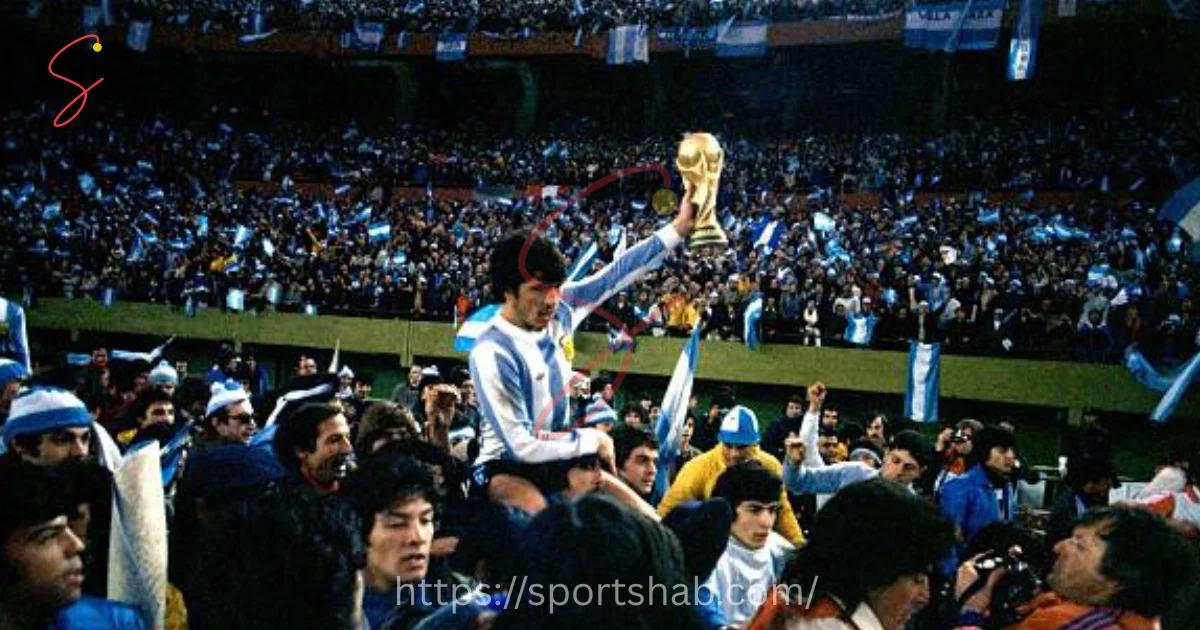
It was Argentina’s first FIFA World Cup title, led by coach César Luis Menotti, Inspired by extraordinary Mario Kempes, Argentina defeated the Netherlands 3 – 1 after extra time in the final at the Estadio Monumental on 25 June 1978..
But this wasn’t a tournament Argentina simply walked through.
Far from it.
They lost to Italy in the first group stage. They needed a huge victory over Peru to reach the final. Brazil finished the second round unbeaten but still missed the final. The Netherlands arrived in the championship match for the second consecutive World Cup. And the final itself went from Argentine celebration to Dutch comeback before extra time finally settled the argument.
At the centre of everything stood Kempes.
The man nicknamed “El Matador” had failed to score in Argentina’s first three matches. Then something clicked.
Four goals in the second round.
Two more in the final.
Six goals overall.
Golden Boot.
Golden Ball.
World champion.
Now that’s what you call finding your shooting boots at exactly the right time.
FIFA World Cup 1978 Winner Argentina
Argentina World Champions for First Time
Argentina defeated the Netherlands 3-1 after extra time in the final and won the 1978 FIFA World Cup.
The victory gave Argentina its first ever World Cup title.
For a country that had reached the final in 1930 and spent decades waiting for another chance, the triumph carried enormous emotional weight.
Coach, César Luis’ team finished the tournament with five wins, one draw and one defeat, scoring 15 goals and conceding four.
And the man who delivered the biggest moments was Mario Kempes.
He scored the opening goal of the final in the 38th minute. When Dick Nanninga equalised late in normal time, Kempes responded again in extra time, bursting into the Dutch penalty area and putting Argentina back in front.
Daniel Bertoni then added the third.
Game over.
Argentina had done it.
FIFA World Cup 1978 Organized By
1978 FIFA World Cup was organized by FIFA, football’s international governing body.
It was the 11th edition of the FIFA World Cup and was played from 1 June to 25 June 1978.
Tournament had been awarded to Argentina, meetings in Tokyo in 1964 and London in 1966, long before the competition actually arrived.
By the time 1978 arrived, Argentina was under intense international attention, both on and off the football pitch.
But inside the stadiums, football remained the main attraction.
Buenos Aires, Córdoba, Mar del Plata, Mendoza and Rosario six venues were available for the tournament,
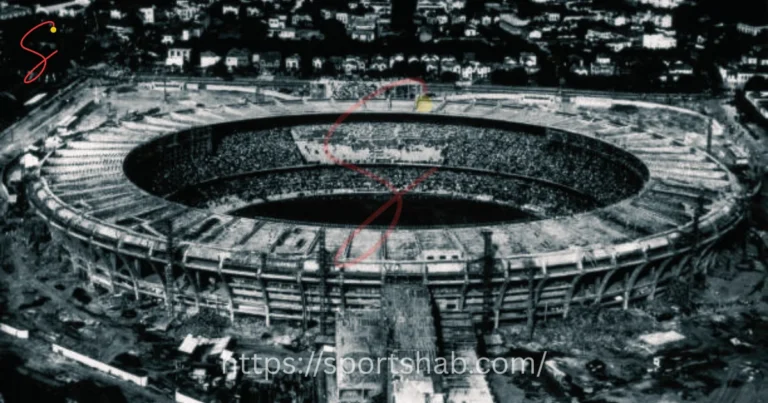
The Estadio Monumental in Buenos Aires was the tournament’s grandest stage.
And fittingly, that was where Argentina would eventually lift the trophy.
FIFA World Cup 1978 Host
🇦🇷 Argentina
Argentina hosted the 1978 FIFA World Cup.
For the home nation, this wasn’t just another sporting event.
It was a chance to finally turn generations of footballing ambition into silverware.
Argentina had reached the first World Cup final in 1930 but lost to Uruguay.
Almost five decades later, the trophy was back within reach.
The home crowd was electric.
Blue-and-white paper filled the air.
Supporters packed the stadiums.
And every Argentina match carried the feeling of a national event.
Argentina had gone 48 years without finishing on the World Cup podium.
The pressure was enormous.
But Menotti’s team eventually turned that pressure into momentum.
FIFA World Cup 1978 Participants
1978 FIFA World Cup featured 16 teams.
The participating nations were:
Argentina, Brazil, Netherlands, Italy, West Germany, Poland, Peru, Austria, Sweden, Scotland, Spain, France, Hungary, Mexico, Iran and Tunisia.
There were several fascinating storylines among the participants.
West Germany entered as defending champions.
Brazil arrived with a talented side that would ultimately finish the tournament unbeaten.
The Netherlands returned to the final after losing to West Germany four years earlier.
Poland remained one of Europe’s most dangerous attacking sides.
Peru brought the flair that had made them so entertaining in 1970.
And Tunisia made history as the first African team to win a World Cup match, defeating Mexico 3-1.
Iran were also making their World Cup debut.
The stage was ready.
Now came the football.
FIFA World Cup 1978 Format
1978 World Cup retained the unusual two-stage group format used in 1974.
The 16 teams began in four groups of four.
Each team played three matches.
The top two teams from each group advanced.
But instead of going directly into quarter finals, the eight survivors were divided into two second round groups of four.
The winners of those second-round groups advanced to the final.
The two runners-up met in the third-place match.
So, just like in 1974, there were no traditional quarter finals or semi finals.
The tournament structure was:
First Group Stage, Second Group Stage and Final
and
Second Group Stage and Third Place Match.
That is important when discussing the 1978 FIFA World Cup semi-finals: there were no official semi-final matches.
Argentina topped one second-round group.
The Netherlands topped the other.
Those two group winners met in the final.
FIFA World Cup 1978 Group Stage Overview
Group A Italy, Argentina, France and Hungary
Argentina began the tournament against Hungary.
And it wasn’t exactly a comfortable opening.
Hungary took the lead through Károly Csapó.
Argentina responded quickly through Leopoldo Luque.
Then Daniel Bertoni scored late to give the hosts a 2-1 victory.
Next came France.
Argentina again won 2-1, with Daniel Passarella converting a penalty and Leopoldo Luque scoring the decisive goal. The match also featured a young French midfielder named Michel Platini, who scored for France.
Then came Italy.
Argentina lost 1-0 to Roberto Bettega’s goal.
That defeat meant Italy finished top of the group with a perfect nine points. Under the two points for a win system, Italy finished with six points, Argentina advanced with four.
France and Hungary were eliminated.
Argentina had survived.
But they were about to face an even tougher second phase.
Group B Poland, West Germany, Tunisia and Mexico
Poland opened with a 0-0 draw against West Germany.
Then they defeated Tunisia 1-0 and Mexico 3-1.
Poland finished top of the group.
West Germany, the defending champions,
Also progressed after beating Mexico 6-0
drawing with Tunisia 0-0.
The group also produced one of the tournament’s most important historical moments.
Tunisia 3-1 Mexico
Tunisia came from behind to defeat Mexico.
It was a landmark victory.
Tunisia became the first African team to win a World Cup match.
For African football, it was a breakthrough moment.
Group C Brazil, Austria, Spain and Sweden
Brazil began with a 1-1 draw against Sweden.
They then drew 0-0 with Spain.
That left the defending South American giants under pressure.
Brazil eventually defeated Austria 1-0 through Roberto Dinamite.
They advanced to the second round unbeaten.
Austria also progressed.
Sweden and Spain were eliminated.
Brazil had not been spectacular.
But they were still alive.
And that would matter later.
Group D Netherlands, Peru, Scotland and Iran
The Netherlands opened with a comfortable 3-0 victory over Iran.
Peru defeated Scotland 3-1.
Then Scotland produced one of the tournament’s great surprises.
Scotland 3-2 Netherlands
The Dutch were among the favourites.
Scotland needed a result.
And Archie Gemmill produced one of the competition’s iconic goals.
Scotland won 3-2.
It was an unforgettable victory.
Unfortunately for Scotland, it wasn’t enough.
The Netherlands still advanced because of their earlier results and goal difference, while Scotland went home despite beating one of the tournament favourites.
Peru topped the group.
The Netherlands finished second.
The second phase was now ready.
FIFA World Cup 1978 Final Pool
The Second Round Groups
Just like the 1974 tournament, the 1978 World Cup did not have a conventional knockout bracket after the first stage.
Instead, the eight surviving teams entered two second-round groups.
This stage effectively determined the finalists.
Second Round Group A, Netherlands, Italy, West Germany and Austria
The Netherlands began by defeating Austria 5-1.
West Germany and Italy played a 0-0 draw.
Then the Dutch drew 2-2 with West Germany.
Italy defeated Austria 1-0.
On the final matchday, the Netherlands defeated Italy 2-1, while Austria defeated West Germany 3-2.
The Netherlands finished top.
West Germany were eliminated.
The Dutch were heading back to the World Cup final.
Four years after losing to West Germany in Munich, they had another chance.
Second Round Group B, Argentina, Brazil, Poland and Peru
Argentina defeated Poland 2-0.
Brazil beat Peru 3-0.
Then Brazil and Argentina played out a tense 0-0 draw.
Poland defeated Peru 1-0.
Everything came down to the final round.
Brazil defeated Poland 3-1.
Argentina faced Peru.
And Argentina needed a huge victory.
They produced exactly that.
Argentina 6-0 Peru
This was the match that sent Argentina into the final.
Argentina scored six.
Kempes scored twice.
Luque scored twice.
Argentina finished top of the group ahead of Brazil on goal difference.
The result remains one of the most discussed matches in World Cup history because Brazil had been unbeaten and Argentina needed a large victory to overtake them.
But officially, the result stood.
Argentina were in the final.
Brazil were heading for the third-place match.
The stage was set:
Argentina vs Netherlands.
FIFA World Cup 1978 Semi Finals
There Were No Traditional Semi Finals
Let’s clear this up for anyone searching for “1978 World Cup semi-final results.”
There were no semi-final matches in the 1978 FIFA World Cup.
The second round consisted of two groups.
Argentina won one.
Netherlands won the other.
Group winners advanced directly to the final.
So instead of Argentina beating a team in a semi-final, they qualified for the championship match by topping their second-round group.
It may sound strange today, but that was the official tournament format.
FIFA World Cup 1978 Third Place Match
Brazil 2-1 Italy
Brazil and Italy met at the Estadio Monumental for third place.
Italy struck first.
Franco Causio gave the Azzurri the lead.
But Brazil responded.
Nelinho equalised.
Then Dirceu scored the winner.
Brazil won 2-1 and finished third,For a Brazil team that had entered the tournament with serious expectations, third place was bittersweet.
They had not lost a match.
Yet they were not in the final.
That’s football’s cruel arithmetic.
FIFA World Cup 1978 Final
🇦🇷 Argentina 3-1 Netherlands 🇳🇱, After Extra Time
The Night Buenos Aires Finally Got Its World Cup
Date: 25 June 1978
Venue: Estadio Monumental, Buenos Aires
Final score: Argentina 3-1 Netherlands after extra time
Attendance: Approximately 78,500
The Netherlands were appearing in their second consecutive World Cup final.
Argentina were playing their first final since 1930.
The atmosphere was enormous.
Argentina attacked.
The Dutch resisted.
Then, in the 38th minute, came the breakthrough.
Mario Kempes 38th Minute
Kempes received the ball inside the penalty area.
He finished.
Argentina 1-0 Netherlands.
The home crowd erupted.
But the Netherlands weren’t finished.
They kept pushing.
And eventually, with eight minutes remaining in normal time, they found the equaliser.
Dick Nanninga 82nd Minute
Nanninga headed the ball past Ubaldo Fillol.
1-1.
The final was going to extra time.
Argentina had been 90 minutes from glory.
Now they had another 30 minutes to survive.
And Kempes had unfinished business.
Mario Kempes 105th Minute
The Argentine striker burst into the penalty area.
He battled through pressure.
His initial effort was stopped by goalkeeper Jan Jongbloed, but Kempes reacted first and forced the ball home.
Argentina 2-1 Netherlands.
The Matador had struck again.
FIFA describes the goal as the decisive extra time moment that put Argentina back ahead.
The Netherlands pushed forward.
But Argentina found one more opening.
Daniel Bertoni 115th Minute
Kempes was involved again.
The ball eventually fell to Daniel Bertoni.
He finished.
Argentina 3-1 Netherlands.
That was it.
No comeback.
No penalty drama.
No late Dutch miracle.
Argentina were world champions.
For the first time in their history.
FIFA World Cup 1978 Interesting Facts
Argentina waited 48 years to reach the podium
Argentina’s first World Cup appearance ended in the final in 1930.
Then came decades of frustration.
1978 title finally ended a 48 years wait for a World Cup top three finish. FIFA identifies this as the longest gap between podium finishes for a country at the time.
The wait was finally over.
And it happened at home.
Mario Kempes went from drought to hero
Kempes had already played at the 1974 World Cup without scoring.
He entered Argentina 1978 and again failed to score in the first three matches.
Then Menotti reportedly encouraged him to shave his moustache before the second-round match against Poland.
Kempes responded with four goals in the second round and two in the final.
Six goals in three matches.
FIFA highlights the extraordinary turnaround in Kempes’ scoring form.
Talk about a change of fortune.
Kempes scored twice in the final
Kempes became the first player to score two goals in a World Cup final since Geoff Hurst’s hat-trick for England in 1966.
His second goal, in extra time, proved to be the winner.
The final goal belonged to Bertoni.
But the final belonged to Kempes.
Argentina’s first World Cup title came on home soil
Argentina became the sixth different nation to win the World Cup.
They joined Uruguay, Italy, Germany, Brazil and England among the tournament’s champions.
The home crowd witnessed history.
Brazil finished third without losing a match
Brazil ended the tournament unbeaten.
Their record was four wins and three draws.
Yet they didn’t reach the final.
Argentina had the superior goal difference in the decisive second-round group.
It remains one of the clearest examples of how tournament formats can produce heartbreak without a team actually losing.
Scotland defeated the Netherlands but still went home
Scotland’s 3-2 victory over the Netherlands was one of the tournament’s biggest shocks.
Archie Gemmill’s goal became iconic.
But Scotland’s earlier results meant the victory wasn’t enough to send them through.
Football can be wonderfully cruel.
Tunisia made African football history
Tunisia defeated Mexico 3-1 to become the first African nation to win a World Cup match.
That victory became a landmark in the continent’s football history.
Tournament Innovations and Firsts
The 1978 World Cup was less about radical rule changes than the 1970 and 1974 tournaments, but it still had several important historical milestones.
The most obvious was Argentina’s emergence as a new World Cup champion.
Before 1978, only five nations had won the competition.
Argentina became the sixth.
The tournament also continued the two-stage group system introduced in 1974.
Rather than using quarter-finals and semi-finals, FIFA relied on second-round groups to determine the finalists.
From a tactical perspective, the competition also showcased increasingly sophisticated approaches to defending and midfield organization.
Argentina’s balanced style under Menotti contrasted with the Netherlands’ fluid football and Brazil’s technically polished approach.
And then there was Kempes.
The Golden Ball and Golden Boot winner became the face of the tournament.
FIFA World Cup 1978 Statistics
The 1978 FIFA World Cup featured:
16 teams,38 matches,102 goals, 2.68 goals per match.
Argentina scored 15 goals, the joint-highest team total alongside the Netherlands.
Brazil scored 10.
Italy scored nine.
While several teams produced memorable individual scoring runs,Poland scored six during their six second round/first stage matches combined in the final tournament statistics.
The highest scoring matches ended with six goals:
West Germany 6-0 Mexico
Argentina 6-0 Peru
Austria 1-5 Netherlands.
The tournament produced plenty of attacking football, but it also featured several defensive battles.
Brazil and Argentina’s 0-0 draw was particularly significant because neither side could find a breakthrough.
FIFA World Cup 1978 Top Scorer
Mario Kempes, Argentina and 6 Goals
The top scorer of the tournament was Mario Kempes with six goals.
His scoring story is remarkable.
Zero goals in Argentina’s first three matches.
Then:
Two against Poland.
Two against Peru.
Two against the Netherlands in the final.
Six goals.
That scoring burst carried Argentina to their first World Cup title.
Behind Kempes were Rob Rensenbrink of the Netherlands and Teófilo Cubillas of Peru, both with five goals,Leopoldo Luque and Hans Krankl finished with four each.
FIFA World Cup 1978 Golden Boot
Mario Kempes
Mario Kempes won the 1978 FIFA World Cup Golden Boot with six goals.
His goals weren’t just numerous.
They were timely.
Two came in the final.
The second gave Argentina the lead in extra time.
FIFA officially lists Kempes as the 1978 Golden Boot winner. He finished the tournament as the leading scorer and the key attacking figure of the champions..
This was a proper big-game striker’s tournament.
When Argentina needed a goal, Kempes delivered.
FIFA World Cup 1978 Golden Ball
Mario Kempes From Argentina
Unlike earlier tournaments, the adidas Golden Ball was officially introduced at the 1978 World Cup.
Mario Kempes was the first winner
That means Kempes became the tournament’s:
Golden Ball winner
Golden Boot winner
World Cup champion
It is difficult to build a better individual tournament résumé.
In 1978 World CupFIFA lists Paolo Rossi as the Silver Ball winner and Dirceu as the Bronze Ball.
Kempes wasn’t simply Argentina’s best player.
He was the player who made the biggest difference when the pressure was at its highest.
FIFA World Cup 1978 Golden Glove
No Official Golden Glove Award in 1978
Here’s an important historical SEO note.
The Golden Glove was not awarded at the 1978 World Cup.
The goalkeeper award, originally known as the Lev Yashin Award, was introduced in 1994 and later renamed the adidas Golden Glove in 2010.
So there was no official 1978 Golden Glove winner.
However, if we make a retrospective selection, Argentina’s Ubaldo Fillol has a strong claim.
Fillol recorded three clean sheets, including three consecutive shutouts during Argentina’s second round campaign. FIFA notes that his saves against Poland, including a penalty stop from Kazimierz Deyna, were crucial to Argentina’s progress.
Official Golden Glove winner: None
Retrospective goalkeeper choice: Ubaldo Fillol
That distinction keeps the article historically accurate.
FIFA World Cup 1978 Most Clean Sheets
Sepp Maier, 4 Clean Sheets
Sepp Maier, from West Germany’s recorded four clean sheets, the highest total among goalkeepers in the tournament according to statistical records.
Brazil’s Emerson Leão also recorded four.
Dino Zoff and Ubaldo Fillol each registered three.
Jan Jongbloed of the Netherlands had two.
Interestingly, Maier’s four clean sheets came in only six appearances, while Leão played seven matches.
That makes Maier’s defensive record particularly impressive.
FIFA World Cup 1978 Squads
🇦🇷 Argentina Squad
Argentina’s championship squad included:
Ubaldo Fillol, Daniel Passarella, Alberto Tarantini, Osvaldo Ardiles, Américo Gallego, Daniel Bertoni, Mario Kempes, Leopoldo Luque, René Houseman, Jorge Olguín, Luis Galván, Oscar Ortiz, Ricardo Villa and Norberto Alonso.
The team was coached by César Luis Menotti.
Passarella wore the captain’s armband.
Fillol protected the goal.
Ardiles provided intelligence in midfield.
Bertoni supplied attacking energy.
Luque scored four goals.
And Kempes became the superstar.
🇳🇱 Netherlands Squad
The Dutch squad contained many of the stars who had reached the 1974 final.
Key players included:
Jan Jongbloed, Ruud Krol, Wim Suurbier, Johan Neeskens, Wim Jansen, Arie Haan, René and Willy van de Kerkhof, Johnny Rep, Rob Rensenbrink and Dick Nanninga.
The biggest absence was Johan Cruyff, who did not participate in the 1978 World Cup.
Even without their legendary playmaker, the Netherlands remained one of the tournament’s strongest teams.
Rensenbrink scored five goals.
Neeskens scored several important goals.
Nanninga came off the bench to equalise in the final.
But Argentina ultimately denied them another World Cup crown.
🇧🇷 Brazil Squad
Brazil’s squad included:
Émerson Leão, Nelinho, Oscar, Amaral, Cerezo, Dirceu, Zico, Roberto Dinamite, Reinaldo, Mendonça, Batista and Rodrigues Neto.
They finished the tournament unbeaten and defeated Italy 2-1 in the third-place match.
But despite their strong overall record, Brazil missed the final.
It was one of the tournament’s great “what ifs.”
🇮🇹 Italy Squad
Italy featured legendary goalkeeper Dino Zoff, along with:
Claudio Gentile, Gaetano Scirea, Antonio Cabrini, Marco Tardelli, Romeo Benetti, Franco Causio, Roberto Bettega and Paolo Rossi.
They won all three first-round matches and finished top of their group.
But the second round proved tougher.
Italy defeated Austria 1-0, lost 2-1 to the Netherlands and finished fourth overall after losing 2-1 to Brazil in the third-place match.
🇵🇱 Poland Squad
Poland’s talented squad featured:
Jan Tomaszewski, Władysław Żmuda, Jerzy Gorgoń, Antoni Szymanowski, Kazimierz Deyna, Grzegorz Lato, Andrzej Szarmach and Zbigniew Boniek.
They had been one of the surprise packages in 1974 and remained competitive in 1978.
Boniek scored two goals.
Lato scored two.
They reached the second round but couldn’t make another podium finish.
🇵🇪 Peru Squad
Peru brought another generation of attacking talent.
Teófilo Cubillas remained their headline star.
He scored five goals, matching Rensenbrink’s total and finishing behind only Kempes.
Peru reached the second round but struggled against Brazil, Poland and Argentina.
The 6-0 defeat to Argentina ended their hopes of reaching the final.
🇦🇹 Austria Squad
Austria featured Hans Krankl, who scored four goals and became one of the tournament’s most dangerous forwards.
They reached the second round after finishing behind Brazil in their first group.
Their campaign ended after defeats against the Netherlands and Italy and a famous 3-2 victory over West Germany.
🇫🇷 France Squad
France’s squad included young talent such as Michel Platini, who scored in the opening match against Argentina.
France defeated Hungary 3-1 but lost to Italy and Argentina.
They were eliminated in the first round.
🇹🇳 Tunisia Squad
Tunisia made history.
Their 3-1 victory over Mexico was not just their first World Cup win.
It was the first World Cup victory for an African team.
Players such as Ali Kaabi, Tarak Dhiab and Mokhtar Dhouieb helped create one of the competition’s most important milestones.
FIFA World Cup 1978: The Tournament’s Defining Players
If the 1978 World Cup had a movie poster, Kempes would be standing in the centre.
But he wasn’t alone.
Ubaldo Fillol gave Argentina confidence at the back.
Daniel Passarella led from defence.
Osvaldo Ardiles brought elegance to midfield.
Leopoldo Luque supplied four goals.
Rob Rensenbrink carried much of the Dutch attacking burden.
Teófilo Cubillas remained one of South America’s most gifted attackers.
Hans Krankl was Austria’s goal machine.
Dino Zoff remained one of the finest goalkeepers of his generation.
And somewhere in the background was the ghost of 1974.
The Netherlands were back.
Could they finally win the trophy?
No.
Argentina had other plans.