FIFA World Cup 1950: Rise From The Ashes
After 12 years of silence, football returned to the world stage and produced one of the most dramatic upsets the World Cup has ever seen.
The 1950 FIFA World Cup was not just a football tournament. It was a comeback story, a tactical experiment, a celebration of a world trying to move beyond war and, ultimately, a sporting heartbreak that Brazil would never forget.
The Maracanazo That Broke Brazil’s Dream
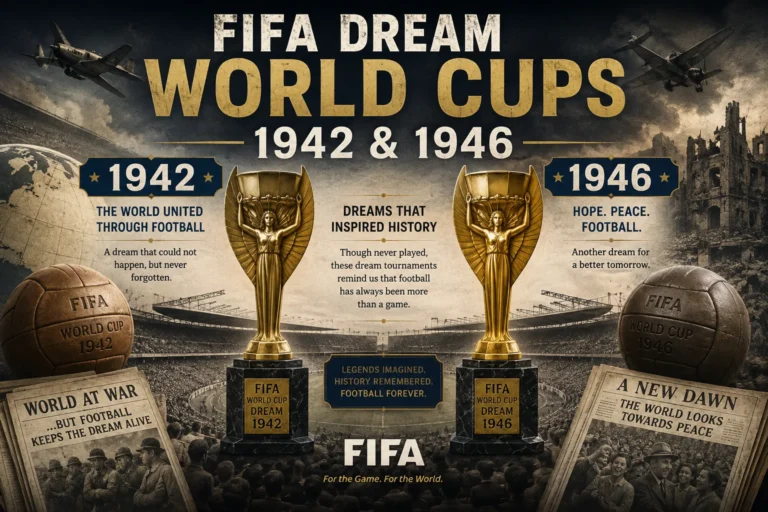
After the World Cups of 1942 and 1946 were cancelled because of the Second World War, the competition finally returned in Brazil in 1950. Thirteen nations arrived, four groups were formed, and the group winners advanced to a final round-robin stage. There was no traditional knockout final. Instead, the championship was decided by the standings after the final round, with the last match between Brazil and Uruguay effectively becoming a winner-takes-all showdown.
Brazil looked almost unstoppable. The hosts smashed Sweden 7-1 and Spain 6-1 in the final round, and the Maracanã was preparing for a party. Brazil needed only a draw against Uruguay to become world champions.
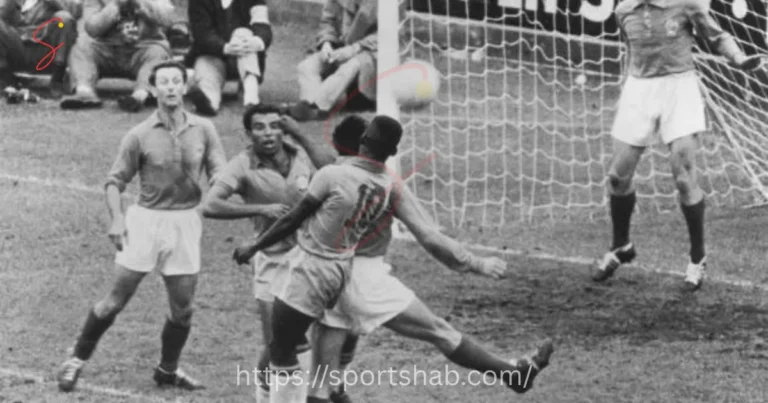
Then came 16 July 1950. Uruguay came from behind to win 2-1. The party became a funeral. The match became known as the Maracanazo, and the 1950 World Cup entered football folklore forever.
FIFA World Cup 1950 Winner
Uruguay
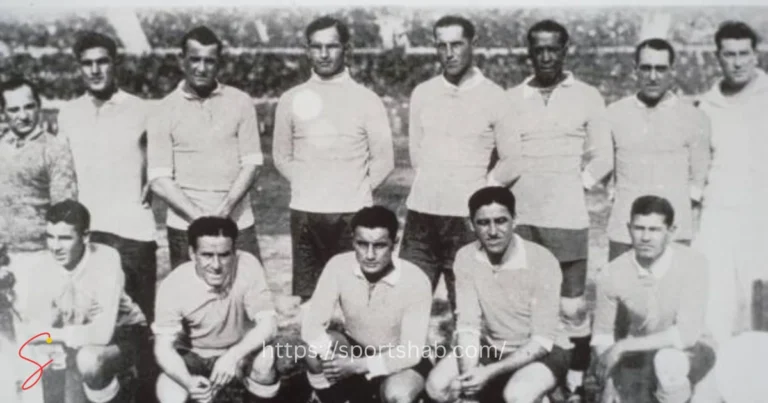
Uruguay won the FIFA World Cup 1950, defeating Brazil 2-1 in the decisive final-round match at the Maracanã Stadium in Rio de Janeiro.
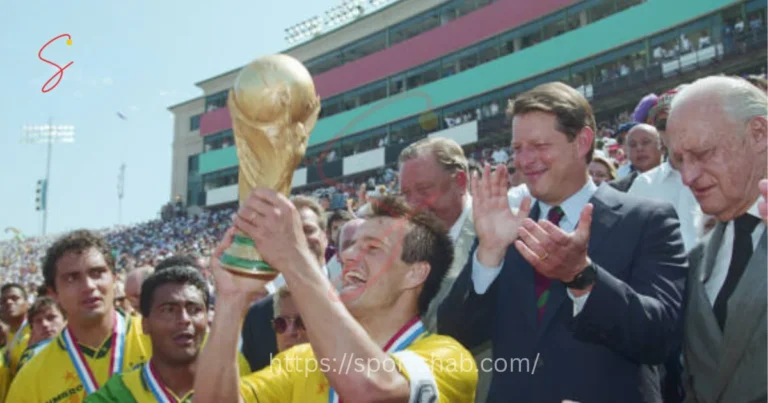
The victory gave Uruguay its second World Cup title, following its triumph in the inaugural 1930 tournament. FIFA records Uruguay as the champion, Brazil as runner-up and Sweden as the third-placed team.
But calling the final match simply a “2-1 victory” doesn’t tell the whole story. Brazil scored first through Friaça in the 47th minute. The home crowd expected the floodgates to open. Instead, Uruguay responded. Juan Alberto Schiaffino equalised in the 66th minute, and Alcides Ghiggia scored the winner in the 79th minute. Suddenly, the hosts were staring at defeat.
Uruguay had done the impossible.
Organized By
The tournament was organized by FIFA Fédération Internationale de Football Association.
The 1950 World Cup was particularly significant because it marked FIFA’s return to staging the men’s World Cup after the wartime interruption. FIFA notes that the competition came back after a 12 years hiatus caused by the Second World War.
The tournament was awarded to Brazil at the FIFA Congress in Luxembourg on 1 July 1946, and Brazil subsequently became the first South American country to host the World Cup after the competition’s return.
Host Nation: Brazil
Brazil was chosen to host the 1950 FIFA World Cup, and the country was determined to make the tournament unforgettable.
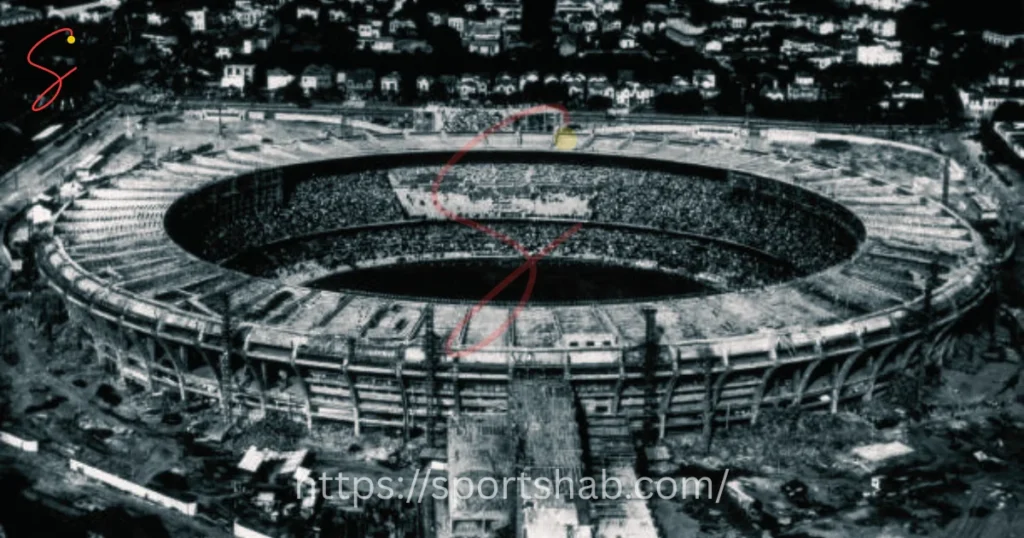
The centerpiece was the newly built Maracanã Stadium in Rio de Janeiro. It was more than a stadium it was a statement. Brazil wanted the world to see its footballing identity.
The country had already reached third place at the 1938 World Cup, and by 1950 its attacking talent was becoming increasingly feared. Players such as Ademir, Zizinho, Jair, Chico and Friaça gave the Seleção an attack capable of tearing defenses apart.
And for much of the tournament, that’s exactly what happened. But football has a cruel habit of saving its biggest twist for the final act.
FIFA World Cup 1950 Participants
The 1950 tournament featured 13 teams:
Brazil, Yugoslavia, Switzerland, Mexico, England, Spain, United States, Chile, Sweden, Italy, Paraguay, Uruguay and Bolivia.
Several other nations were initially connected with the tournament but did not ultimately participate. Turkey withdrew, Portugal declined a late invitation, and India also withdrew. France withdrew after concerns over the enormous travel requirements involved in its schedule. FIFA’s records explain that the final tournament therefore went ahead with 13 nations.
It was an unusual field, but that was fitting for an unusual World Cup. After the long wartime gap, simply getting nations back onto the same football pitch was already an achievement.
FIFA World Cup 1950 Format
The 1950 World Cup used a format unlike almost any other edition.
The 13 teams were divided into four groups. Two groups contained four teams, one contained three, and the final group contained only two teams. The winner of each group progressed to a four team final round robin group.
This meant there was technically no traditional semi final and no conventional final. Instead, the four group winners Brazil, Spain, Sweden and Uruguay played each other once. The team finishing first in the final group became world champion. And that created an extraordinary situation.
Brazil and Uruguay entered their final match knowing exactly what was at stake. Brazil had four points, Uruguay had three. A draw would have been enough for Brazil, while Uruguay needed victory.
No penalty shootout, extra time and second chance Just 90 minutes to decide the world champion.
FIFA World Cup 1950 Group Stage Overview
Group 1: Brazil, Yugoslavia, Switzerland and Mexico
Brazil started with a statement. The hosts defeated Mexico 4-0, with Ademir scoring twice. They then drew 2-2 with Switzerland before beating Yugoslavia 2-0.
Brazil finished top of the group with five points, scoring eight goals and conceding only two. Yugoslavia advanced no further despite finishing second. Brazil had arrived and everyone noticed.
Group 2: Spain, England, Chile and United States
This was the group that produced one of the tournament’s greatest shocks. England had entered the World Cup with a formidable reputation. The country that had helped shape modern football expected to compete immediately on the world stage.
England defeated Chile 2-0. Then came the bombshell,USA 1-0 England
Joe Gaetjens scored the only goal in Belo Horizonte, giving the United States one of the most famous victories in World Cup history. FIFA remembers the match as one of the competition’s greatest upsets.
England then lost 1-0 to Spain, while Spain won all three group matches and advanced to the final round. The group ended with Spain first, England second, Chile third and the United States fourth.
Group 3: Italy, Sweden and Paraguay
Italy arrived as the defending champion, but the Azzurri were already facing a changing football landscape.
Their campaign began badly. Sweden 3-2 Italy, Sweden stunned the defending champions.
Italy later defeated Paraguay 2-0, but Sweden had already done enough to finish first in the group. The champions were out. It was another reminder that football does not care about reputation.
Group 4: Uruguay and Bolivia
This was the smallest group. Uruguay had only one match to play. And what a match it was. Uruguay 8-0 Bolivia
Óscar Míguez scored a hat-trick, while Uruguay produced one of the most emphatic victories of the tournament. Juan Schiaffino scored twice, with Ernesto Vidal, Julio Pérez and Alcides Ghiggia also finding the net.
Uruguay advanced to the final round. And the stage was set.
Final Pool: Brazil, Uruguay, Sweden and Spain
The four group winners entered the final round. Brazil immediately looked frightening.
Brazil 7-1 Sweden,
Ademir scored four goals as Brazil dismantled Sweden. Chico also scored, and Brazil’s attack looked almost impossible to contain. Then came another statement.
Brazil 6-1 Spain
Brazil were now sitting on two huge victories.
Meanwhile, Uruguay drew 2-2 with Spain and defeated Sweden 3-2.
After two rounds, Brazil had four points and Uruguay had three.
The final match between them would decide the championship.
Brazil needed only a draw.
Uruguay needed to win.
The Maracanã waited.
Semi Finals: Why There Were None
This is one of the most important details,
There were no semi finals in 1950 FIFA World Cup.
Because the tournament used a final round robin group, the four group winners did not enter a traditional knockout bracket. Therefore, there were no official semi-final teams and no semi-final matches.
The closest equivalent was the final round itself:
Brazil vs Sweden
Uruguay vs Spain
Brazil vs Spain
Uruguay vs Sweden
Sweden vs Spain
Brazil vs Uruguay
The Decisive Final Round Match: Brazil vs Uruguay
The last match effectively became the championship decider.
Brazil 1-2 Uruguay
Date: 16 July 1950
Venue: Maracanã, Rio de Janeiro
Attendance: about 200,000 reported
Champion: Uruguay
The Birth of Maracanazo
Brazil had the advantage.
Brazil had the crowd.
Brazil had the momentum.
Brazil only needed a draw.
Uruguay had something else.
Belief.
The first half ended goalless.
Then, early in the second half, Brazil finally broke through.
Friaça scored in the 47th minute.
The Maracanã erupted.
Brazil were champions—at least that’s what the crowd believed.
But Uruguay refused to fold.
In the 66th minute, Juan Alberto Schiaffino equalised.
Suddenly the noise changed.
Then came the moment that would live forever.
In the 79th minute, Alcides Ghiggia scored Uruguay’s second goal.
Brazil needed two goals.
They found none.
The final whistle confirmed one of football’s greatest upsets:
Brazil 1-2 Uruguay
FIFA records the match as the decisive game of the final round and notes the reported attendance of around 200,000 spectators.
FIFA World Cup 1950 Interesting Facts
The 1950 World Cup was packed with stories that still sound unbelievable today. The tournament was the first World Cup after a 12 years break caused by World War II.
It was also the only World Cup in which the champion was decided through a final round robin group rather than a conventional knockout final.
Brazil scored 22 goals, the highest team total of the tournament, yet still failed to win the trophy.
Uruguay played only four matches in the entire tournament and remained unbeaten, winning three and drawing one. FIFA records Uruguay’s 1950 campaign as 15 goals scored and five conceded.
Another remarkable story was the United States’ victory over England. Joe Gaetjens, a striker who worked outside football, scored the only goal in the famous 1-0 upset. And perhaps the most brutal statistic of all? Brazil were one draw away from becoming world champions. They lost instead.
FIFA World Cup 1950 Tournament Innovations and Firsts
The 1950 tournament introduced one of the most unusual formats in World Cup history.
Rather than moving directly from group stages into knockout football, FIFA placed the four group winners into a final round-robin group. The team with the most points became champion.
The format had one major advantage: every finalist played three matches rather than having its entire tournament decided by one knockout game.
But it also produced an extraordinary championship decider.
Brazil and Uruguay effectively played a final without it officially being called a final.
The tournament was also the first World Cup hosted in Brazil and the first World Cup held after the Second World War.
Most importantly, it represented football’s return to the global stage after years of interruption.
FIFA World Cup 1950 Statistics
The 1950 tournament produced 88 goals in 22 matches, an average of four goals per game. ¼ of the tournament goals produced by Brazil leading all teams with 22 goals.
Top Scorer
Ademir 9 goals
Brazil’s Ademir de Menezes won the scoring race with nine goals in six matches. FIFA’s historical scoring records list him with nine goals, making him the leading scorer of the 1950 World Cup. His four-goal explosion against Sweden was the highlight of his campaign.
FIFA World Cup 1950 Golden Boot
Ademir 9 goals in Six matches
The Golden Boot was not yet a formal World Cup award in the modern sense, but if the modern award is applied retrospectively, Ademir is the clear winner. That is a tournament any striker would dream about.
Golden Ball
Juan Alberto Schiaffino
The Golden Ball was not officially awarded in 1950; the modern FIFA World Cup player of the tournament award came later. But if we apply the modern concept retrospectively, Juan Alberto Schiaffino is an excellent choice.
Why?
Because he was central to Uruguay’s championship. Schiaffino scored three goals during the tournament and, more importantly, scored Uruguay’s equaliser against Brazil in the decisive match. That goal changed the psychological balance of the game.
Retrospective Golden Ball: Juan Alberto Schiaffino
FIFA World Cup 1950 Golden Glove
The Golden Glove was not an official World Cup award in 1950, so there is no historical winner.
For a retrospective award, Roque Máspoli of Uruguay would be a strong choice.
Uruguay conceded only five goals across four matches, and Máspoli played in the decisive victory over Brazil. FIFA’s official Uruguay squad and results records confirm his central role throughout the tournament.
Retrospective Golden Glove: Roque Máspoli 🇺🇾
FIFA World Cup 1950 Squads
The tournament featured 13 national teams, each bringing its own footballing identity to Brazil.
Brazil
Brazil’s famous squad included Moacir Barbosa, Augusto, Juvenal, Bauer, Danilo, Bigode, Zizinho, Ademir, Jair, Chico and Friaça. Flávio Costa was the coach. This was one of the tournament’s most attack-minded teams.
Uruguay
Uruguay’s champions were led by captain Obdulio Varela, with Roque Máspoli, Matías González, Eusebio Tejera, Víctor Rodríguez Andrade, Juan Schiaffino, Óscar Míguez and Alcides Ghiggia among the key players. Juan López was the coach.
Sweden
Sweden had stars including Kalle Svensson, Gunnar Nordahl, Karl-Erik Palmér, Stig Sundqvist and Sune Andersson. Their 3-2 victory over Italy was one of their defining moments.
Spain
Spain’s squad featured Antoni Ramallets, Estanislao Basora, Telmo Zarra, Panizo, Gainza and the Gonzalvo brothers. Spain won all three of its first-round matches before struggling in the final group.
England
England’s famous group included Bert Williams, Alf Ramsey, Billy Wright, Tom Finney, Stan Mortensen, Wilf Mannion and Jimmy Mullen. Their defeat to the United States became one of the tournament’s defining stories.
Italy
Italy arrived as defending champions but lost to Sweden and failed to reach the final round.
Yugoslavia
Yugoslavia featured players such as Zeljko Čajkovski, Rajko Mitić, Stjepan Bobek and Tomislav Vukas and finished second in Brazil’s group.
Chile
Chile brought players including Sergio Livingstone, Jorge Robledo and Fernando Riera, finishing third in England’s group.
Switzerland
Switzerland competed in Brazil’s group and recorded a memorable 2-2 draw against the hosts.
Mexico
Mexico faced Brazil, Yugoslavia and Switzerland in Group 1.
United States
The United States squad became famous because of the England upset, with Joe Gaetjens, Walter Bahr, Frank Borghi and John Souza among the key names.
Paraguay
Paraguay competed alongside Italy and Sweden in Group 3.
Bolivia
Bolivia’s tournament consisted of one match—a heavy 8-0 defeat to Uruguay.
The Legacy of the 1950 FIFA World Cup
The 1950 FIFA World Cup proved that football does not always follow the script.
Brazil had the home advantage, goals, crowd and the opportunity to become world champions with a draw. Yet Uruguay walked away with the trophy.
That is why the 1950 World Cup remains so compelling. It wasn’t merely about who scored the most goals or dominated possession. It was about pressure, nerve and the ability to survive when the entire stadium expected you to collapse.
Ademir scored nine goals. Brazil scored 22. Uruguay conceded only five.
But the statistic everyone remembers is the one that mattered most:
Brazil 1-2 Uruguay.
On that unforgettable July afternoon, Ghiggia’s goal silenced the Maracanã, Uruguay became world champions, and the word Maracanazo became permanently embedded in football history. The FIFA World Cup 1950 did not simply return football to the world after 12 years of silence.
It reminded everyone why the beautiful game is so unpredictable.