
FIFA World Cup 1994: The Summer Brazil Found a Fourth Crown and Football Found a New Audience
When the game went quiet, the pressure got louder and Brazil kept its nerve when the biggest prize in football came down to one final kick.
1994 FIFA World Cup was not simply another chapter in football history. It was a tournament of contrasts: attacking brilliance and defensive discipline, emerging nations and established giants, unforgettable goals and one unforgettable scoreless final.
The 1994 World Cup ran in the United States from June 17 to July 17, with 24 nations playing across nine host cities. Brazil won the trophy by beating Italy in the first final ever decided by a penalty shootout. After 120 goalless minutes, Brazil came out on top 3-2 from the spot.
But the story of USA 1994 was much bigger than that final kick. It was Romário’s clinical finishing, Roberto Baggio’s emotional roller coaster, Hristo Stoichkov’s fire, Oleg Salenko’s astonishing five-goal performance, Bulgaria’s unexpected march to the semi-finals, Sweden’s resurgence and a host nation discovering that football could command enormous attention.
And then there was the attendance.
Over 3.58 million fans turned out for 52 games, averaging nearly 69,000 per match, numbers that still rank among the greatest attendance records in World Cup history.
So, whistle blown. Let’s rewind to the summer of 1994.
FIFA World Cup 1994 Winner
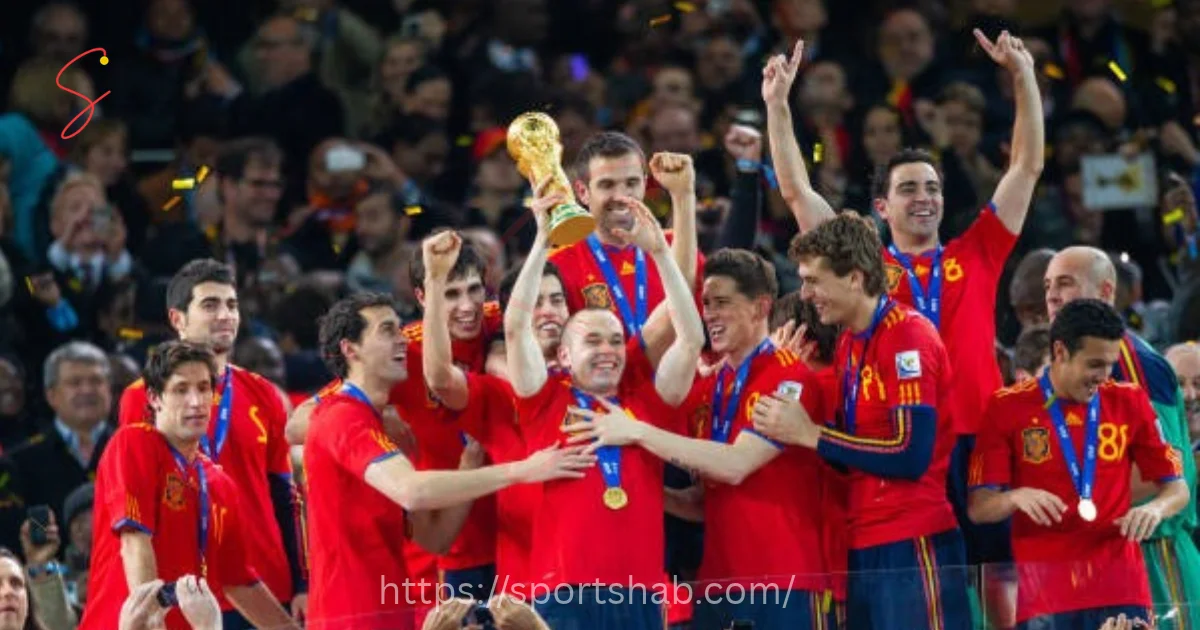
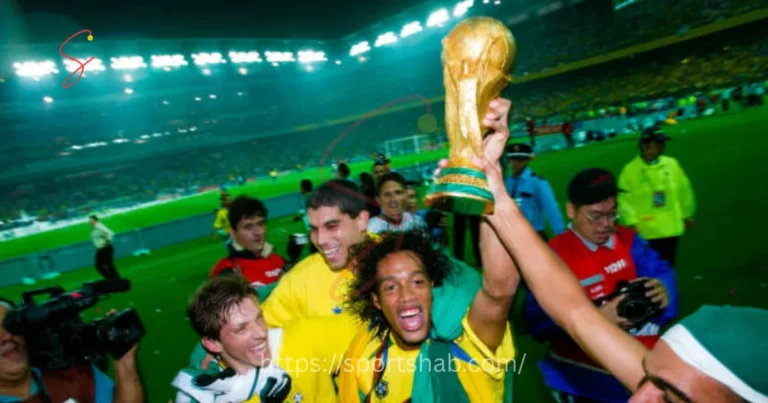
Brazil were the champions of the 1994 FIFA World Cup.
Brazil clinched their fourth World Cup by beating Italy 3-2 in a penalty shootout at Pasadena’s Rose Bowl. The match ended goalless after extra time, adding to their previous wins from 1958, 1962, and 1970.
It was not the flamboyant Brazil many fans expected. There were no Pelé style attacking fireworks throughout the tournament. Instead, Carlos Alberto Parreira’s side mixed defensive organization, midfield discipline and the finishing instincts of Romário and Bebeto.
Brazil understood something crucial: World Cups are not won by playing beautifully for 90 minutes every time. Sometimes you have to survive. Sometimes you have to grind. And sometimes, when the whistle blows after 120 minutes, you need nerves of steel.
Brazil had them.
FIFA World Cup 1994 Organized By
The 1994 FIFA World Cup was organized by FIFA, the international governing body of association football.
The 15th men’s World Cup unfolded throughout the United States. FIFA’s decision to name the U.S. as host on July 4, 1988, raised eyebrows since soccer lacked the deep cultural presence it had long held in Europe and South America.
Yet the gamble paid off spectacularly.
The United States did not need to have decades of football tradition to produce a successful World Cup. It needed huge stadiums, infrastructure, organization and an audience willing to experience something new.
USA 1994 delivered all four.
FIFA World Cup 1994 Host
United States
The United States hosted the 1994 FIFA World Cup from June 17 to July 17.
Matches were played in nine venues across nine cities.
The host nation also made history before the knockout stage even began. The United States reached the Round of 16 as one of the best third-placed teams after winning one group match, drawing one and losing one.
The tournament also introduced many American sports fans to the global scale of football.
And judging by the crowds, they liked what they saw.
FIFA World Cup 1994 Participants
Twenty-four national teams competed at the 1994 FIFA World Cup.
The participants were:
Group A: Romania, Switzerland, United States and Colombia.
Group B: Brazil, Sweden, Russia and Cameroon.
Group C: Germany, Spain, South Korea and Bolivia.
Group D: Nigeria, Bulgaria, Argentina and Greece.
Group E: Mexico, Republic of Ireland, Italy and Norway.
Group F: Netherlands, Saudi Arabia, Belgium and Morocco.
The tournament brought some fresh faces too. Greece, Nigeria, and Saudi Arabia all made their World Cup debut. Russia stepped onto the stage as an independent nation after the Soviet Union’s breakup, while a reunited Germany played together for the first time in years.
Nigeria were particularly impressive among the newcomers, reaching the Round of 16 and giving Italy a serious scare before Roberto Baggio rescued the Italians.
Saudi Arabia also created one of the tournament’s iconic moments when Saeed Al-Owairan scored a sensational solo goal against Belgium.
Football had arrived in America and it brought plenty of drama with it.
FIFA World Cup 1994 Format
The tournament retained the 24 team format used since 1982.
The teams were divided into six groups of four. Each nation played three group matches.
The top two teams from each group advanced automatically to the Round of 16. The four best third-placed teams also qualified, creating a 16-team knockout stage.
From there, the tournament followed the familiar elimination route:
Round of 16 → Quarter-finals → Semi-finals → Final.
One big shift happened with scoring—wins suddenly gave three points rather than two, hoping to spark more attacking play instead of boring draws. The back-pass rule also debuted, keeping goalkeepers from just picking up passes that teammates deliberately sent their way.
Those changes mattered.
After the famously defensive 1990 World Cup, FIFA wanted more football and less time-wasting.
1994 World Cup responded with a higher scoring rate than the 1990 WC, 141 goals in 52 matches, or about 2.71 goals per game.
FIFA World Cup 1994 Group Stage Overview
Group A: Romania Make Their Move
Romania topped Group A with six points after victories over Colombia and the United States.
Switzerland and the United States both finished on four points, while Colombia ended with three.
Romania’s 3–1 victory over Colombia announced Gheorghe Hagi and company as a team worth watching. The United States then shocked Colombia 2–1, while Switzerland produced a powerful 4–1 win over Romania.
It was an entertaining group, but Romania emerged as the most balanced side.
Group B: Brazil Set the Standard
Brazil topped Group B unbeaten with seven points.
They defeated Russia 2–0, beat Cameroon 3–0 and drew 1–1 with Sweden.
Sweden finished second with five points, while Russia and Cameroon were eliminated.
Group B, also produced one of the tournament’s strangest statistical explosions. Russia defeated Cameroon 6–1, with Oleg Salenko scoring five goals in one match, a unmatched World Cup record.
Group C: Germany Keep Their Crown Alive
Defending champions Germany won Group C with seven points.
Spain finished second, South Korea took third and Bolivia ended fourth.
Germany looked efficient rather than spectacular. Their campaign eventually ended in the quarter-finals, however, when Bulgaria produced one of the biggest shocks of the knockout stage.
Group D: Nigeria Arrive With Attitude
Nigeria won Group D ahead of Bulgaria and Argentina, with all three finishing on six points.
Greece lost all three matches.
Nigeria’s energetic football immediately caught attention. The Super Eagles attacked with confidence and had the pace and athleticism to trouble established European sides.
Bulgaria, meanwhile, were beginning a tournament journey that would take them far beyond expectations.
Group E: The Group Where Nobody Could Breathe
Group E was arguably the most fascinating group statistically.
Mexico, the Republic of Ireland, Italy and Norway all finished on four points.
All four also finished with a goal difference of zero.
Mexico ultimately topped the group.
Think about that for a moment.
Four teams. Same points. Same goal difference.
One extra goal separated first from fourth.
Norway paid the ultimate price for failing to score more frequently.
Group F: Netherlands Lead a Tight Race
The Netherlands finished top of Group F with six points.
Saudi Arabia also impressed, winning two matches and reaching the knockout stage. Belgium also collected six points, while Morocco finished without a point.
Saudi Arabia’s progression was particularly memorable because the country was competing at its first World Cup.
FIFA World Cup 1994 Final Pool and Knockout Stage
There was no separate final pool in the 1994 FIFA World Cup.
After the group stage, the competition moved into a traditional knockout bracket beginning with the Round of 16.
Brazil defeated the United States 1–0.
Italy survived Nigeria 2–1 after extra time.
Germany beat Belgium 3–2.
Spain defeated Switzerland 3–0.
Sweden beat Saudi Arabia 3–1.
Romania defeated Argentina 3–2.
The Netherlands beat the Republic of Ireland 2–0.
Bulgaria eliminated Mexico on penalties after a 1–1 draw.
The quarter-finals became even more dramatic.
Italy beat Spain 2–1, Brazil defeated the Netherlands 3–2, Bulgaria stunned defending champions Germany 2–1 and Sweden edged Romania after a 2–2 draw.
The stage was set.
Four teams remained.
And nobody wanted to blink.
FIFA World Cup 1994 Semi Finals
Bulgaria 1–2 Italy
The first semi-final was played at Giants Stadium in East Rutherford.
Italy took control through Roberto Baggio, who scored twice in the first half, and reached the final with a 2–1 victory.
For Baggio, it was another chapter in a tournament that had transformed dramatically.
He had struggled earlier.
Now he was carrying Italy toward Pasadena.
Sweden 0–1 Brazil
The second semi-final was a much tighter affair.
Sweden had already drawn 1–1 with Brazil during the group stage, and their defensive structure again made life difficult.
Brazil finally broke through in the 80th minute.
Romario scored the winner.
One moment. One header. One final.
Brazil were going into the final at Pasadena.
Sweden would eventually finish third after defeating Bulgaria 4–0.
FIFA World Cup 1994 Final: Brazil vs Italy
Brazil vs Italy 1994 World Cup final Where Nobody Blinked
On July 17, 1994, Brazil and Italy walked onto the field at the Rose Bowl.
The stage was enormous.
The pressure was heavier.
The football was tense.
Neither side scored during the 90 minutes. Neither found the breakthrough during extra time.
After 120 minutes, the scoreboard still read:
Brazil 0–0 Italy.
First World Cup final to be decided by a penalty shootout in history
Brazil eventually won 3–2 on penalties.
The decisive moment belonged to Italy’s Roberto Baggio, whose penalty flew over the crossbar.
And just like that, Brazil had its fourth World Cup.
No last-minute winner.
No spectacular free kick.
No dramatic extra-time goal.
Just pressure, silence and one final kick.
Football can be cruel.
Football can also be unforgettable.
FIFA World Cup 1994 Interesting Facts
The Final Was the First Decided by Penalties
1994 final was the first World Cup final to go to a penalty shootout. Brazil won 3–2 after the extra time.
Brazil Became Four-Time World Champions
Brazil’s victory made them the first nation to reach four championships.
Salenko Scored Five Goals in One Match
Russia’s Oleg Salenko scored five times against Cameroon, in a single World Cup match nobody has matched that total in a single World Cup match.
.
Roger Milla Made History at 42
Cameroon veteran Roger Milla became the oldest player to score in a World Cup match against Russia at the age of 42..
Group E Was Ridiculously Tight
All four teams in Group E finished with four points and a zero goal difference.
Mexico advanced first because they had scored more goals.
The United States Broke Attendance Records
USA 1994 World Cup attracted 3,587,538 spectators across 52 matches, with an average attendance of about 68,991.
Colombia’s Tournament Had a Tragic Aftermath
Tragedy struck when Andrés Escobar was murdered upon returning home to Colombia—his own goal against the United States often blamed for what happened. It remains one of the most heartbreaking chapters in World Cup memory. .
FIFA World Cup 1994 Tournament Innovations and Firsts
USA 1994 was a tournament of significant changes.
Three Points for a Victory
For the first time at a men’s World Cup, a victory was worth three points rather than two.
The objective was straightforward: encourage teams to chase wins.
The Back Pass Rule
The new back-pass rule stopped goalkeepers from simply picking up deliberate passes from teammates.
It changed defensive habits and encouraged quicker, more adventurous football.
The First Penalty Shootout Final
The final became the first to be decided by penalties, Brazil and Italy created another piece of World Cup history.
More Attacking Football
The tournament produced 141 goals in 52 matches, an average of 2.71 goals per game.
FIFA World Cup 1994 Statistics
World Cup 1994 produced 141 goals in 52 matches, averaging 2.71 goals per game approximately.
Brazil scored 11 goals across their seven matches and conceded only three, showing how strongly their defensive structure complemented their attacking talent.
Italy scored eight goals and conceded six on their way to the final.
Sweden scored 15 goals and finished third, while Bulgaria scored 10.
FIFA World Cup 1994 Golden Boot Winner
Hristo Stoichkov of Bulgaria and Oleg Salenko of Russia, who were the FIFA World Cup 1994 Top Scorers, with six goals each, Golden Boot was shared by both players.
Stoichkov scored across multiple matches and helped Bulgaria reach the semi-finals.
Salenko’s story was completely different.
Five of his six goals arrived in one extraordinary match against Cameroon.
Two Golden Boot winners.
Two completely different routes to six goals.
FIFA World Cup 1994 Golden Ball Winner
FIFA identifies Romario 1994 World Cup Golden Ball winner, the tournament’s best player Romário of Brazil won the Golden Ball.
His importance to Brazil went beyond his goals.
He provided the movement and finishing that gave Brazil an attacking edge while the team’s midfield and defense maintained control.
In a tournament full of stars, Romário stood above them.
FIFA World Cup 1994 Golden Glove Winner
The official goalkeeper award at the time was the Lev Yashin Award, rather than the modern FIFA Golden Glove terminology.
Michel Preud’homme goalkeeper of Belgium won the award as the tournament’s best goalkeeper. He was subsequently recognized as the inaugural winner of the Yashin Award.
FIFA World Cup 1994 Best Young Player
The best young player award won by Marc Overmars of the Netherlands.
His pace and direct running made him one of the tournament’s emerging talents.
FIFA World Cup 1994 Squads
All nations fielded 22-player squads. Greece, Italy, Saudi Arabia, and Spain went with all-domestic lineups, whereas Ireland and Nigeria had zero players from their home leagues. Notably, Saudi Arabia was the only team without a single European-based player.
Brazil 1994 World Cup squad
Carlos Alberto Parreira’s champions included Taffarel, Jorginho, Aldair, Branco, Dunga, Mauro Silva, Raí, Bebeto, Romário and Cafu among the key figures.
Romário and Bebeto formed the attacking partnership, while Dunga and Mauro Silva provided the steel in midfield.
This was Brazil with the glamour turned down and the competitive edge turned up.
Italy Squad
Arrigo Sacchi’s Italy featured Roberto Baggio, Franco Baresi, Paolo Maldini, Giuseppe Signori, Dino Baggio, Roberto Donadoni and Gianfranco Zola among the major names.
Baresi’s leadership at the back and Baggio’s attacking brilliance carried Italy through several difficult moments.
Bulgaria Squad
Bulgaria’s surprise semi-finalists were led by Hristo Stoichkov, Yordan Letchkov, Krasimir Balakov, Emil Kostadinov and Borislav Mihaylov.
Stoichkov was the headline act, but Bulgaria’s achievement was built on a collective belief that refused to disappear.
Sweden Squad
Sweden’s third-place team featured Thomas Brolin, Kennet Andersson, Martin Dahlin, Tomas Ravelli, Henrik Larsson and Patrick Andersson.
Their balance between attacking movement and defensive discipline made them one of the tournament’s most enjoyable teams.
Romania Squad
Romania’s golden generation included Gheorghe Hagi, Florin Răducioiu, Ilie Dumitrescu, Dan Petrescu, Gheorghe Popescu and Miodrag Belodedici.
Hagi was the creative heartbeat.
When he found space, defenders had a problem.
Germany Squad
The defending champions included Lothar Matthäus, Jürgen Klinsmann, Rudi Völler, Andreas Brehme, Thomas Hässler and Berti Vogts’s experienced defensive core.
But Bulgaria ended their title defense in the quarter-finals.
Netherlands Squad
The Dutch squad included Dennis Bergkamp, Frank de Boer, Ronald de Boer, Ronald Koeman, Marc Overmars and Edgar Davids.
They were eliminated by Brazil in a thrilling 3–2 quarter-final.
Argentina Squad
Argentina entered with stars such as Gabriel Batistuta, Claudio Caniggia, Fernando Redondo and Diego Simeone.
Their tournament changed dramatically after Diego Maradona was removed from the competition following a failed drug test.
Nigeria Squad
Nigeria’s debut squad featured Rashidi Yekini, Daniel Amokachi, Emmanuel Amunike, Finidi George, Sunday Oliseh and Jay-Jay Okocha.
The Super Eagles became one of the tournament’s most exciting new arrivals.
Why the FIFA World Cup 1994 Still Matters
A Tournament That Changed the Perception of Football in America
Before USA 1994, many observers questioned whether the United States could successfully host the world’s biggest football tournament.
The answer came through the turnstiles.
That number was enormous.
The United States had not suddenly become Brazil, Italy or Argentina. But the tournament proved that a huge audience existed for international football when the world’s best players were placed on the biggest stage.
A Tournament of Different Football Philosophies
Brazil’s champions were pragmatic.
Italy relied on tactical discipline.
Bulgaria played with emotion and attacking confidence.
Sweden combined structure with explosive finishing.
Romania brought technical creativity.
Nigeria brought athleticism and fearlessness.
The beauty of USA 1994 was that there was no single formula for success.
Football said, “Show me what you’ve got.”
Every team answered differently.