FIFA World Cup 1990: West Germany’s Final Triumph, Schillaci’s Golden Run and the Night Italy’s Dream Collapsed
Italy had the home crowd, Schillaci had the goals, Maradona had the magic, but in Rome, West Germany had the final word.
The FIFA World Cup 1990 was a tournament of contradictions.
It was played in one of football’s most passionate countries, yet goals were surprisingly difficult to find. Italy produced a brilliant run on home soil, but the hosts ultimately finished third. Argentina arrived as defending champions but struggled for goals and relied heavily on Sergio Goycochea’s penaltysaving heroics. Cameroon became the first African nation to reach the World Cup quarter-finals. England rediscovered some of their old tournament spirit. And in the middle of it all appeared an unlikely Italian hero: Salvatore “Totò” Schillaci.
Then came Rome.
West Germany faced Argentina in a rematch of the 1986 final. Four years earlier, Argentina had beaten the Germans 3-2. This time, there would be no comeback.
Andreas Brehme’s late penalty sealed a 1-0 win, handing West Germany their third World Cup title. The final made history in several ways: it was the first rematch at this stage, saw the first sending off in a final, and was the first championship match where one team failed to score.
The lowest scoring rate in World Cup history at that time and a record that still stands, the tournament produced 115 goals in 52 matches, an average of just 2.21 goals per game.
So forget the idea that a World Cup needs a mountain of goals to become memorable.
Italia 1990 had something else.
It had tension.
It had tactical battles.
It had penalty shootouts.
It had Roger Milla dancing beside the corner flag.
It had Roberto Baggio announcing himself on the world stage.
It had Schillaci turning from substitute into superstar.
And it had Franz Beckenbauer completing an extraordinary journey from World Cup-winning captain to World Cup-winning manager.
This is the story of FIFA World Cup 1990.
FIFA World Cup 1990 Winner
West Germany, Champions for the Third Time
West Germany won the 1990 FIFA World Cup, They beat Argentina 1-0 in the final at Rome’s Stadio Olimpico on 8 July 1990. The win secured West Germany a third World Cup title, tying them with Brazil and Italy.
The decisive moment arrived in the 85th minute.
Argentina’s defence was already under enormous pressure when referee Edgardo Codesal awarded West Germany a penalty after a challenge involving Rudi Völler.
Andreas Brehme stepped forward.
No panic.
No hesitation.
Just one clean strike into the net.
West Germany 1-0 Argentina.
The Germans had finally broken through.
Argentina tried to fight back, but Gustavo Dezotti’s late red card only made things worse. Pedro Monzón had already become the first player ever sent off in a World Cup final earlier in the second half.
When the final whistle arrived, West Germany had completed their mission.
For Lothar Matthäus and his teammates, the wait was over.
For Argentina, the defence of their 1986 crown had ended in heartbreak.
And for Franz Beckenbauer, history was about to become even sweeter.
FIFA World Cup 1990 Organized By
FIFA
The 1990 FIFA World Cup was organized by FIFA, football’s international governing body.
14th edition of the men’s FIFA World Cup tournament was held from 8 June to 8 July 1990. Twenty four national teams competed across 12 Italian cities at 12 venues.
Qualification had been fiercely contested.
Total 116 national associations entered the qualification process, with 22 teams eventually joining host nation Italy and defending champions Argentina at the finals.
This was also a tournament standing at the edge of major football history.
The Cold War was nearing its end.
Political borders in Europe were changing.
And several teams appearing in Italy would soon disappear under their old names.
Soviet Union, Yugoslavia and Czechoslovakia made their final World Cup appearances under those identities. Before German reunification later that year, West Germany played its final World Cup. In other words, Italia 1990 was not simply looking backward.
It was standing on the doorstep of a completely different football era.
FIFA World Cup 1990 Host
Italy
becoming only the second country , Italy hosted the 1990 FIFA World Cup, to stage the competition twice after Mexico had done so in 1970 and 1986.
The tournament was spread across 12 host cities and 12 venues, giving supporters the opportunity to experience the competition throughout the country.
The most important stage eventually became the Stadio Olimpico in Rome, where West Germany and Argentina played the final.
Italy entered the tournament with enormous pressure.
They were playing at home.
They had a talented generation.
They had defenders such as Franco Baresi, Giuseppe Bergomi and Paolo Maldini.
They had Roberto Baggio.
And suddenly they had Schillaci.
For a while, it looked like the script had been written for the hosts.
But football has a habit of ignoring scripts.
FIFA World Cup 1990 Participants
The 24 Nations in Italy
24 teams featured from five confederations in 1990 World Cup.
The European representatives were Italy, West Germany, Belgium, England, the Republic of Ireland, Romania, Sweden, Austria, the Netherlands, Scotland, Spain, the Soviet Union, Czechoslovakia and Yugoslavia.
South America sent Argentina, Brazil, Colombia, Costa Rica and Uruguay.
Africa was represented by Cameroon and Egypt.
South Korea and the United Arab Emirates represented Asia, while Costa Rica and the United States carried the flag for North America
Three nations made their World Cup finals debuts:
Costa Rica, the Republic of Ireland and the United Arab Emirates.
What stands out about the UAE is that, even in 2026, this remains their only World Cup finals qualification .
But the biggest surprise came from Cameroon.
The Indomitable Lions arrived with little expectation and left Italy having changed perceptions of African football forever.
1990 FIFA World Cup Format
24 Teams, Six Groups and a Round of 16
The 1990 World Cup retained the 24-team structure used in 1982 and 1986.
The teams were divided into six groups of four.
Each nation played three group matches.
The top two teams from every group qualified for the knockout stage, while the four best third-place teams also advanced.
That created a 16-team knockout bracket.
From there, the competition moved through:
Round of 16 → Quarter-finals → Semi-finals → Third-place match → Final.
A draw after 90 minutes in a knockout match led to extra time, followed by a penalty shootout if the scores remained level.
This format produced one of the defining features of Italia 1990:
penalties.
The tournament became famous for shootouts, especially during the quarter-finals and semi-finals.
Argentina survived Yugoslavia on penalties.
Italy eliminated England’s neighbours? No the hosts themselves would later fall to Argentina in a shootout.
West Germany defeated England through penalties.
And suddenly the path to the final seemed to depend as much on nerve as on football.
1990 World Cup group stage Overview
Group A Italy, Czechoslovakia, Austria and United States
Italy began their home tournament with a narrow 1-0 win over Austria.
The goalscorer was an unknown substitute named Salvatore Schillaci.
That goal would become the beginning of one of the tournament’s greatest individual stories.
Italy then defeated the United States 1-0 before beating Czechoslovakia 2-0.
Three matches.
Three wins.
No goals conceded.
Italy topped the group.
Czechoslovakia finished second.
The United States lost all three matches, while Austria narrowly missed out on the knockout stage.
Nobody knew it yet, but Schillaci had just started his transformation from squad player to World Cup icon.
Group B Cameroon, Romania, Argentina and Soviet Union
This was where the tournament exploded into life.
Cameroon shocked the world by defeating defending champions Argentina 1-0 in the opening match.
The African side even finished with nine players after two dismissals.
François Omam-Biyik scored the winning goal.
in World Cup history it was one of the biggest upsets.
Then came Roger Milla.
The veteran forward scored twice against Romania after coming off the bench, helping Cameroon secure a 2-1 victory.
His celebrations beside the corner flag became one of the defining images of the tournament.
Cameroon eventually topped the group.
Romania also advanced.
Argentina squeezed through despite a difficult campaign.
The Soviet Union finished bottom.
Group C Brazil, Costa Rica, Scotland and Sweden
Brazil were ruthless.
They won all three group matches and conceded only one goal.
Their results included victories over Sweden, Costa Rica and Scotland.
Brazil entered the knockout stage looking like a serious contender.
Costa Rica, meanwhile, pulled off one of the tournament’s surprise stories.
They defeated Scotland and Sweden and reached the Round of 16 in their first World Cup appearance.
Group D West Germany, Yugoslavia, Colombia and United Arab Emirates
West Germany delivered attacking football and finished top of the group.
They defeated Yugoslavia 4-1, beat the United Arab Emirates 5-1 and drew 1-1 with Colombia.
The Yugoslav team also impressed, finishing second.
Colombia advanced as one of the best third-place teams.
The UAE struggled badly, losing all three matches and conceding 11 goals.
But for the Emiratis, simply reaching the World Cup finals was already historic.
Group E Spain, Belgium, Uruguay and South Korea
Spain topped the group after defeating Belgium and drawing with Uruguay.
Belgium finished second.
Uruguay progressed as one of the best third-place teams.
South Korea lost all three matches and scored just one goal.
The group was relatively tight, but none of the teams could match the attacking explosiveness West Germany had shown elsewhere.
Group F England, Republic of Ireland, Netherlands and Egypt
This group became one of the tournament’s great examples of how difficult it was to separate teams.
England drew all three matches.
The Netherlands also drew all three.
The Republic of Ireland drew all three.
Egypt earned two draws and lost once.
England eventually topped the group on goal difference, while the Republic of Ireland and the Netherlands also advanced.
Ireland had reached the World Cup finals for the first time.
And they were not going home quietly.
FIFA World Cup 1990 Knockout Stage
Round of 16
The Round of 16 produced some fascinating battles.
Cameroon defeated Colombia 2-1 after extra time, with Roger Milla scoring twice.
Czechoslovakia destroyed Costa Rica 4-1.
Argentina edged Brazil 1-0 in a tense South American clash.
West Germany defeated the Netherlands 2-1 in a heated encounter.
The Republic of Ireland eliminated Romania on penalties after a 0-0 draw.
Italy beat Uruguay 2-0, with Schillaci scoring again.
Yugoslavia defeated Spain 2-1 after extra time.
England squeezed past Belgium 1-0 after extra time, with David Platt scoring in the 119th minute.
The quarter-final lineup was complete.
And suddenly every match carried enormous weight.
FIFA World Cup 1990 Quarter Finals
Argentina 0-0 Yugoslavia, Argentina Win on Penalties
Argentina faced Yugoslavia in Florence.
Neither side managed to score during 120 minutes.
The match went to penalties.
Argentina eventually won 3-2.
But the drama was far from over.
Diego Maradona missed his penalty.
Sergio Goycochea became Argentina’s hero, saving two Yugoslav penalties to send the defending champions into the semi finals.
Argentina were still alive.
Barely.
Italy 1-0 Republic of Ireland
Italy continued their march through the tournament.
The hosts defeated the Republic of Ireland 1-0 in Rome.
The goal came from Schillaci in the 38th minute.
It was another example of the same pattern.
Italy did not need to score three.
They simply needed one.
And Schillaci kept finding it.
The Republic of Ireland left the competition without winning a match, most unusual achievements of the tournament’s.
West Germany 1-0 Czechoslovakia
West Germany defeated Czechoslovakia 1-0.
The decisive goal came from Lothar Matthäus, who converted a penalty in the 25th minute.
The Germans were through to the semi-finals.
They were not spectacular every minute.
But they were efficient.
And that mattered.
England 3-2 Cameroon After Extra Time
This was one of the best matches of Italia 1990.
England took the lead through David Platt.
Cameroon responded brilliantly.
Emmanuel Kundé equalised from the penalty spot.
Then Eugène Ekéké put Cameroon ahead.
For several minutes, history was within Cameroon’s grasp.
But England were not finished.
Gary Lineker converted a penalty in the 83rd minute.
Then, in extra time, Lineker scored again from the spot.
England 3-2 Cameroon.
The Indomitable Lions were out.
But they had already become one of the tournament’s biggest stories.
1990 World Cup Semi Finals
Italy 1-1 Argentina, Argentina Win on Penalties
The first semi-final was almost perfectly scripted.
Italy.
At home.
Against the defending champions.
And in Naples, Diego Maradona’s club home.
Schillaci put Italy ahead in the 17th minute.
The crowd erupted.
Italy looked ready for the final.
But Argentina found an equaliser through Claudio Caniggia in the second half.
The score remained 1-1 through extra time.
Then came penalties.
Goycochea produced more heroics.
Argentina won the shootout 4-3.
Italy’s dream was over.
The hosts had conceded only two goals in seven matches.
They had won six.
Yet they would play for third place instead of the trophy.
Football can be cruel like that.
West Germany 1-1 England, West Germany Win on Penalties
The second semi-final was another classic.
West Germany and England battled to a 1-1 draw after extra time.
Andreas Brehme scored for Germany.
Gary Lineker equalised for England.
Neither side could find a winner.
So once again, penalties decided the finalist.
West Germany won the shootout 4-3.
England’s Stuart Pearce and Chris Waddle both missed.
Germany were heading to Rome.
For the second consecutive World Cup, West Germany had reached the final.
But this time they intended to finish differently.
FIFA World Cup 1990 Final
Argentina vs West Germany 1990, 0-1.
8 July 1990. Stadio Olimpico, Rome.
Four years earlier, West Germany had lost the World Cup final to Argentina.
Now the same two nations stood opposite each other again.
This time, the Germans were in control.
Match records show West Germany produced 23 shots compared with Argentina’s one.
But the goal refused to arrive.
Argentina defended deeply.
Maradona was heavily marked.
The match became increasingly physical.
Then, in the 65th minute, Argentina’s Pedro Monzón was sent off.
He became the first player ever dismissed in a World Cup final.
Argentina were down to ten.
Still they resisted.
Until the 85th minute.
A foul on Rudi Völler inside the penalty area resulted in a penalty for West Germany.
Andreas Brehme took responsibility.
He placed the ball beyond Goycochea.
West Germany 1-0 Argentina.
Germany had the lead.
Argentina’s frustration boiled over.
Gustavo Dezotti was sent off late in the match, leaving Argentina with nine players.
The final whistle eventually arrived,1990 World Cup final score, West Germany 1-0 Argentina.
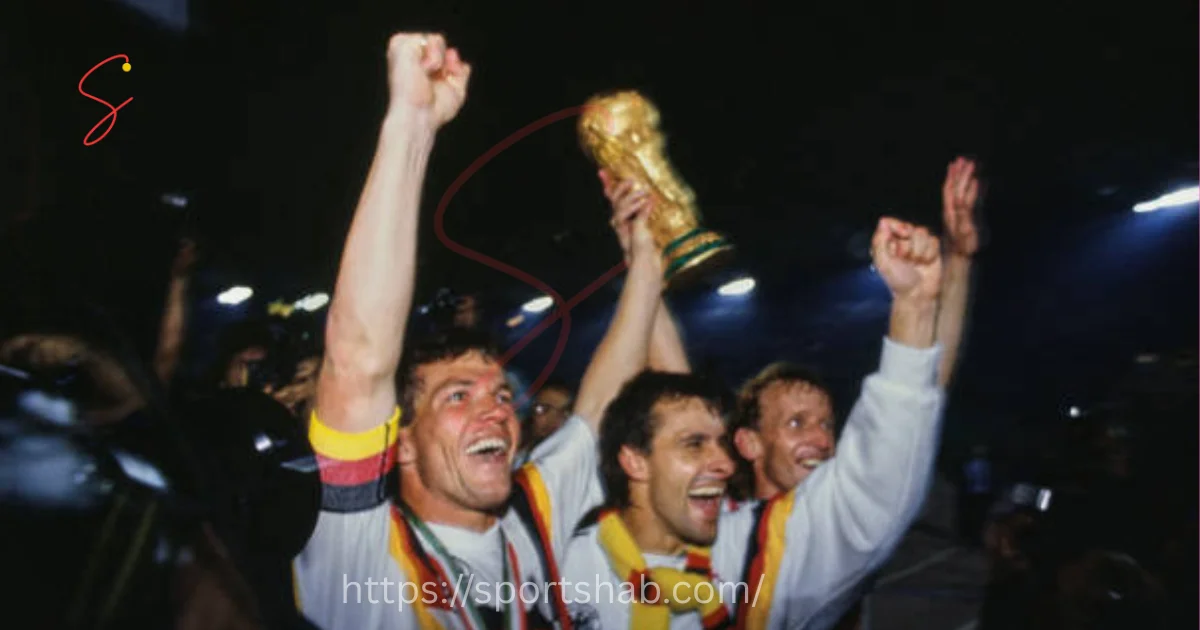
West Germany were world champions.
Lothar Matthäus lifted the trophy.
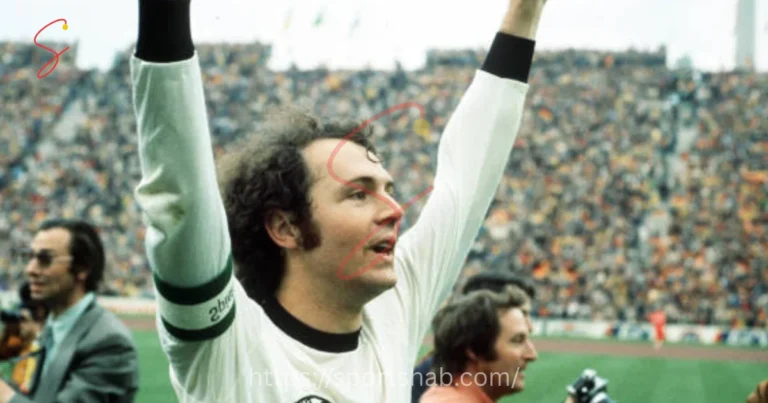
Franz Beckenbauer had achieved something extraordinary.
He had won the World Cup as a player in 1974 and now as a manager in 1990.
He became the first man to captain and manage a World Cup-winning team.
And West Germany had finally settled the score from Mexico four years earlier.
FIFA World Cup 1990 Third Place Match
Italy 2-1 England
Italy and England met in Bari for the bronze medal.
The match was goalless at half-time.
Roberto Baggio eventually opened the scoring after combining with Schillaci.
England equalised through David Platt.
Then Schillaci won and converted a penalty.
Italy 2-1 England.
Schillaci finished the tournament with six goals and claimed the Golden Boot.
Italy had not won the World Cup.
But their unexpected striker had become the face of the tournament.
1990 World Cup Interesting Facts
Schillaci Was Italy’s Unexpected Superstar
Before the World Cup, Schillaci had only made one appearance for Italy.
He started the tournament as a substitute.
Then he scored against Austria.
He scored against Czechoslovakia.
He scored against Uruguay.
He scored against the Republic of Ireland.
He scored against Argentina.
And he scored against England.
Six goals in total.
Suddenly the unknown forward was the biggest football story in Italy.
Golden Boot and Golden Ball, his performances earned both for him.
That is one serious tournament introduction.
Cameroon 1990 World Cup, Became the First African Quarter Finalists.
Cameroon became the first African nation to reach the World Cup quarter-finals.
Their victory over defending champions Argentina immediately made them a team everyone wanted to watch.
Roger Milla’s performances and famous corner-flag celebrations became iconic.
Roger Milla Was 38
Milla’s goals against Romania made him the tournament’s oldest goalscorer.
At 38, he was still capable of changing matches.
His age made his performances even more remarkable.
Italy Had a Defensive Wall
Italy conceded just two goals all tournament, tied with Brazil and Egypt for the fewest. They also managed five clean sheets.
Their defence was outstanding.
But one goal conceded in the semi-final was enough to end their World Cup dream.
Brazil Were Eliminated Despite Conceding Only Two Goals
Brazil conceded just two goals in four matches.
They still failed to reach the quarter-finals.
Argentina defeated them 1-0 in the Round of 16.
That match showed how unforgiving knockout football can be.
The Tournament Had a Record Low Scoring Rate
Only 115 goals were scored across 52 matches.
2.21 goals was per game average, the lowest scoring rate in World Cup history.
The defensive approach became so influential that FIFA later introduced changes designed to encourage more attacking football.
Tournament Innovations and Firsts
The Fair Play Flag Appeared
The 1990 World Cup saw the introduction of the pre match Fair Play Flag, carrying the message “Fair Play Please.”
It spoke to growing worries about sportsmanship and how physical international football was becoming.
The Tournament Helped Trigger Rule Changes
The defensive football of Italia 1990 influenced major changes to the Laws of the Game.
In 1992, FIFA introduced the back-pass rule, preventing goalkeepers from simply picking up deliberate passes from teammates.
The three-point system for wins was also introduced in the 1990s to encourage teams to chase victories rather than settle for draws.
The lessons of Italia 1990 were clear:
If football becomes too cautious, change the incentives.
The First Red Card in a World Cup Final
Argentina’s Pedro Monzón became the first player sent off in a World Cup final.
Gustavo Dezotti later joined him.
Argentina became the first team to have two players dismissed in a final.
The First Final Rematch
The 1990 final was the first time the same two countries met again in a World Cup final after playing each other in the previous final.
Argentina and West Germany had met in the 1986 final.
Four years later, they met again.
This time Germany won.
Beckenbauer Joined an Exclusive Club
Franz Beckenbauer became only the second man after Brazil’s Mário Zagallo to win the World Cup both as a player and manager.
But Beckenbauer’s achievement had another layer.
He captained West Germany to the 1974 title, then managed them to the trophy in 1990.
Italy 1990 World Cup Was the Last World Cup for West Germany
West Germany won the tournament, but the name would soon disappear from the World Cup.
German reunification followed in October 1990.
From then on, Germany competed as one nation.
So the Italia ’90 champions became the last West Germany team to win the World Cup.
HDTV Broadcasting Took a Major Step Forward
The 1990 World Cup was the first ever recorded and broadcast in high definition, thanks to a partnership between Italian broadcaster RAI and Japan’s NHK.
Football was entering the television age at full speed.
FIFA World Cup 1990 Statistics
Tournament Numbers
The 1990 FIFA World Cup featured:
24 teams
52 matches
115 goals
12 venues
12 host cities
2.21 goals per match
West Germany scored the most goals as a team, finishing with 15.
Italy conceded just two goals.
Brazil also conceded only two.
Egypt conceded two despite scoring only one.
FIFA 1990 World Cup Top Scorer
Salvatore Schillaci, Italy, 6 goals
Schillaci finished ahead of Czechoslovakia’s Tomáš Skuhravý, who scored five.Roger Milla, Gary Lineker, Míchel and Lothar Matthäus each scored four.
Schillaci’s six goals came in some of Italy’s biggest matches.
He was not simply collecting goals during easy group games.
He was scoring when the pressure was boiling.
1990 World Cup Golden Boot winner
Schillaci won the Golden Boot in1990 World Cup.
His scoring run was one of the defining stories of Italia 1990.
He had entered the tournament with limited international experience.
He left as a World Cup icon.
1990 World Cup Golden Ball winner
Schillaci also won the Golden Ball as the tournament’s best player.
He finished ahead of West Germany captain Lothar Matthäus and Argentina’s Diego Maradona in the award voting.
It was an extraordinary double.
Golden Boot.
Golden Ball.
Home crowd.
Six goals.
Third place.
Not bad for a player who began the tournament on the bench.
Golden Glove / Best Goalkeeper
There was no official FIFA Golden Glove award in 1990 in the modern sense.
However, FIFA’s historical records still highlight Sergio Goycochea and Luis Gabelo Conejo among the tournament’s standout goalkeepers.
Goycochea became particularly famous for his penalty-saving performances, helping Argentina eliminate Yugoslavia and Italy in shootouts.
Walter Zenga deserves special mention too. The Italian keeper kept five straight clean sheets before Caniggia finally broke his run in the semi final.
Most Clean Sheets, Italy, 5
Italy recorded five clean sheets in the 1990 WC.
That statistic tells you plenty about the hosts.
Italy were not simply relying on Schillaci.
They were built on defensive discipline.
Most Goals by a Team, West Germany
West Germany scored 15 goals, the highest team total of the tournament.
They combined Matthäus’ midfield influence with the attacking movement of Rudi Völler, Jürgen Klinsmann and Pierre Littbarski.
Biggest Wins
Two matches produced six goals.
Czechoslovakia 5-1 United States
and
West Germany 5-1 United Arab Emirates.
Most Goals in One Match by a Player
Two players scored hat-tricks.
Míchel scored three for Spain against South Korea.
Tomáš Skuhravý scored three for Czechoslovakia against Costa Rica.
Discipline
The tournament produced 16 red cards, then a record for a 24-team World Cup.
There were also 162 yellow cards.
Argentina received three red cards, the most of any team.
The numbers help explain why Italia 1990 developed a reputation for physical and defensive football.
1990 World Cup squads
West Germany Squad
The champions were packed with experienced international quality.
The squad included Bodo Illgner, Klaus Augenthaler, Andreas Brehme, Guido Buchwald, Jürgen Kohler, Thomas Berthold, Lothar Matthäus, Pierre Littbarski, Rudi Völler, Jürgen Klinsmann and Karl-Heinz Riedle.
Matthäus was the captain and midfield leader.
Brehme scored the decisive goal in the final.
Beckenbauer managed the side from the touchline.
It was a team built for tournament football: disciplined, powerful and comfortable under pressure.
Argentina Squad
The defending champions included Sergio Goycochea, Nery Pumpido, Oscar Ruggeri, José Basualdo, José Serrizuela, Roberto Sensini, Jorge Burruchaga, Claudio Caniggia, Diego Maradona and Pedro Troglio.
Goycochea became crucial after Pumpido’s injury.
Maradona remained the creative heart of the side.
Caniggia’s semi-final goal against Italy kept Argentina alive.
But the team struggled to reproduce the attacking power of their 1986 campaign.
Italy Squad
Italy’s squad featured Walter Zenga, Franco Baresi, Giuseppe Bergomi, Paolo Maldini, Riccardo Ferri, Luigi De Agostini, Roberto Donadoni, Giuseppe Giannini, Carlo Ancelotti, Roberto Baggio, Roberto Baggio?
Most importantly, the attacking group included Roberto Baggio, Gianluca Vialli, Aldo Serena, Nicola Berti and Salvatore Schillaci.
The defensive backbone was elite.
Baresi and Bergomi gave Italy composure.
Maldini was beginning his rise.
Zenga protected the goal.
And Schillaci supplied the finishing touch.
England Squad
England’s squad included Peter Shilton, Des Walker, Terry Butcher, Stuart Pearce, Paul Parker, Paul Gascoigne, Bryan Robson, David Platt, Chris Waddle and Gary Lineker.
Lineker scored four goals.
Platt scored three.
Gascoigne became one of the tournament’s most talked-about players.
England eventually lost to West Germany on penalties in the semi-final.
Cameroon Squad
Cameroon’s unforgettable squad featured Thomas N’Kono, Stephen Tataw, Rigobert Song, Emmanuel Kundé, François Omam-Biyik, Roger Milla and Eugène Ekéké.
Milla became the face of their run.
The team’s fearless approach changed how many fans viewed African football.
Brazil Squad
Brazil had stars such as Cláudio Taffarel, Jorginho, Branco, Ricardo Rocha, Dunga, Alemão, Careca, Romário, Müller and Careca.
They won all three group matches and conceded only one goal before Argentina eliminated them in the Round of 16.
Czechoslovakia Squad
Czechoslovakia featured Tomáš Skuhravý, Ivan Hašek, Michal Bílek, Lubomír Moravčík and Ján Stejskal.
Skuhravý scored five goals, finishing second in the tournament’s scoring race.
Other Notable Squads
The tournament also included talented teams from Yugoslavia, Colombia, Romania, Spain, Belgium, the Netherlands, the Republic of Ireland, Uruguay, Costa Rica, Sweden, Scotland, Austria, Egypt, South Korea, the Soviet Union, the United States and the United Arab Emirates.
Together, they created a World Cup that was far more competitive than its low goal total might suggest.
.