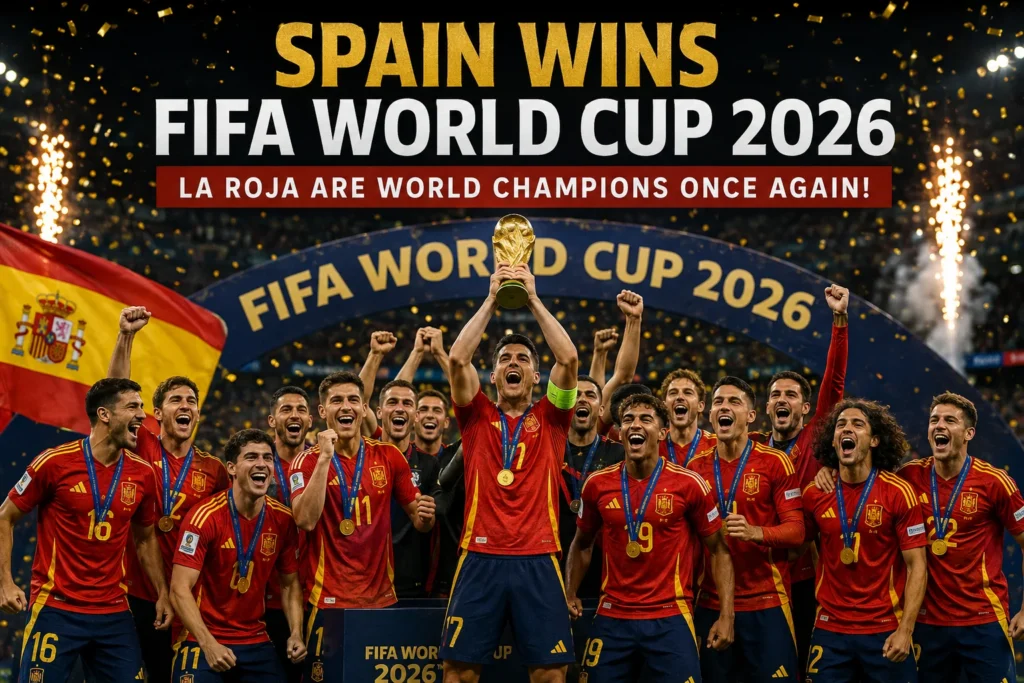
Spain Wins FIFA World Cup 2026: How La Roja Ended Argentina’s Reign and Silenced the World
Football has a habit of creating stories that no scriptwriter could imagine and the FIFA World Cup 2026 Final was one of them. Millions expected Lionel Messi and Argentina to defend their crown, while others believed Spain’s young generation was ready to start a new era.
When the final whistle blew after extra time, there was only one truth: Spain were world champions once again.
Spain Wins FIFA World Cup 2026: The Journey to Glory
Spain’s road to becoming world champions was built on tactical discipline, fearless attacking football, and remarkable teamwork. Every knockout match tested La Roja’s character, but they continued to improve with each performance. By the time they reached the final against Argentina, Spain had become one of the tournament’s most balanced and consistent teams, proving they had everything needed to lift football’s biggest trophy.
Before Kick-Off: A World Divided
The atmosphere at New York New Jersey Stadium was electric, with more than 80,000 fans filling every seat. Spanish and Argentine supporters turned the stadium into a sea of red, blue, and white, while millions watched around the globe.
Before the match, predictions were split. Many experts backed Argentina because of their experience and Messi’s leadership. Others believed Spain’s possession-based football and energetic young stars would eventually overpower the defending champions.
A Tactical Battle That Tested Every Nerve
From the opening whistle, Spain controlled possession and dictated the tempo. Argentina defended bravely, relying on goalkeeper Emiliano Martínez, who produced several outstanding saves to keep the score level.
At halftime, fans believed the match could be decided by a single mistake—or a moment of magic from Lionel Messi. The tension continued to rise as both teams searched for the breakthrough.
Why Spain Deserved to Win
Spain didn’t panic. They stayed faithful to their attacking philosophy, patiently moving the ball and forcing Argentina to chase.
The biggest turning point came when Enzo Fernández received a second yellow card late in normal time, leaving Argentina with ten men. Spain increased the pressure, knowing the extra space could decide the final.
The Moment That Changed History
The deadlock finally ended in the 106th minute.
Pedro Porro delivered a dangerous cross, Nico Williams headed the ball into the box, and Ferran Torres smashed it into the roof of the net. The stadium erupted as Spain celebrated the goal that would become one of the most memorable moments in World Cup history.
Argentina pushed forward in the closing minutes, but Spain’s defence refused to break.
What Went Wrong for Argentina?
Argentina fought with determination, but several factors worked against them:
- Spain dominated possession throughout the match.
- Emiliano Martínez kept Argentina alive for over 100 minutes but received little attacking support.
- The red card to Enzo Fernández made defending even harder.
- Argentina struggled to create clear scoring opportunities against Spain’s organized defence.
Lionel Messi’s Final Fight
Lionel Messi worked tirelessly, trying to inspire another unforgettable World Cup victory. He created chances, led the attack, and never stopped believing until the final whistle.
However, Spain successfully limited his influence in the decisive moments, preventing the legendary captain from adding another World Cup trophy to his remarkable career.
After the Final Whistle
As Spanish players celebrated with their supporters, Argentina’s stars were left heartbroken after surrendering the trophy they had won four years earlier.
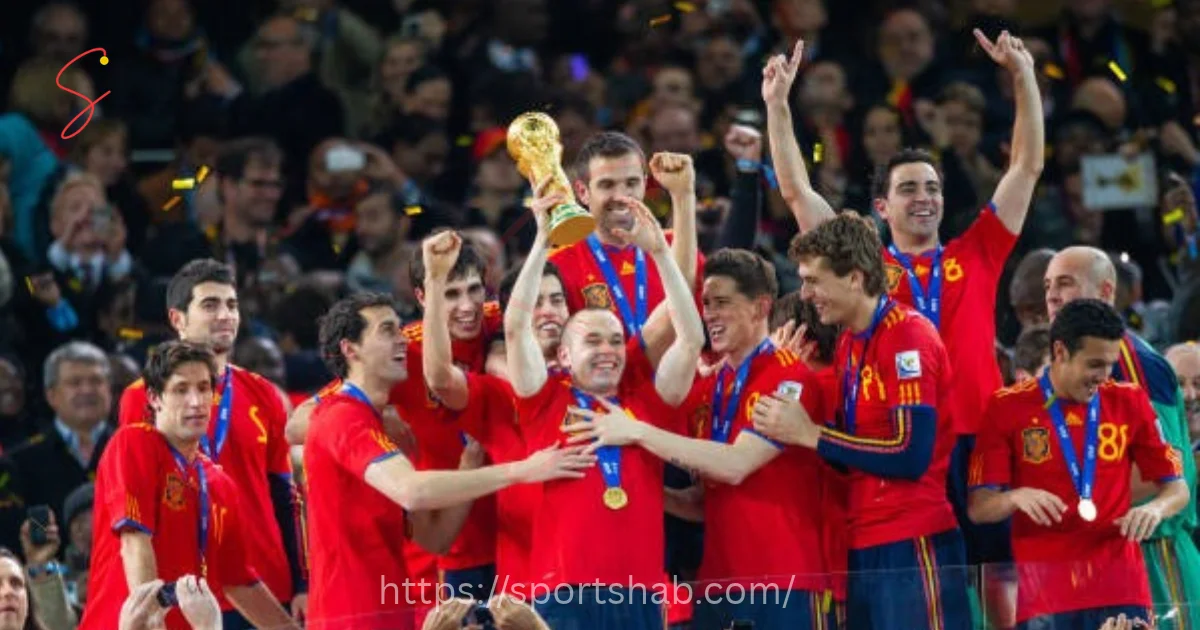
Spain lifted their second FIFA World Cup title, proving that discipline, patience, and tactical excellence can overcome even the strongest champions. It marked the beginning of a new chapter in world football, while Argentina left the tournament with pride despite falling just one goal short.
Final Thoughts
The Spain Wins FIFA World Cup 2026 story is one football fans will remember for generations. Spain combined tactical brilliance, patience, and determination to overcome defending champions Argentina in one of the most dramatic World Cup finals ever played. Ferran Torres’ extra-time winner sealed a historic triumph, ending Argentina’s reign and writing a new golden chapter in Spanish football history.