FIFA World Cup 1974: Tournament That Changed Football Forever
Total Football dazzled the world, Germany found a way through the storm, and one unforgettable final crowned a new generation of champions.
The 1974 FIFA World Cup was a tournament of contrasts.
There was Johan Cruyff gliding across the pitch, seemingly playing wherever he wanted. There was the Netherlands introducing the world to the breathtaking possibilities of Total Football. There was Poland’s remarkable golden generation, led by the electric Grzegorz Lato. There was Brazil trying to defend its crown without Pelé. And then there was West Germany, a team that refused to panic when the pressure reached boiling point.
At the end of it all, the hosts stood on top.
West Germany defeated the Netherlands 2-1 in the final in Munich to become world champions for the second time.
But don’t let that scoreline fool you.
The 1974 World Cup wasn’t a straightforward march to glory. It was a tournament filled with tactical experiments, political symbolism, dramatic comebacks, rain-soaked pitches, controversial moments and one of the most fascinating final matches in World Cup history.
And if you were watching the Netherlands before the final, you might have thought:
“How on earth are you supposed to stop these guys?”
Then West Germany found the answer.
So, football fans, let’s rewind to West Germany in 1974 and revisit a World Cup where Total Football met German resilience.
FIFA World Cup 1974 Winner Germany
West Germany Champions on Home Soil
West Germany won the 1974 FIFA World Cup, defeating Netherlands 2-1 in the final at Munich’s Olympiastadion on 7 July 1974.
It was West Germany’s second World Cup title, following their triumph in 1954.
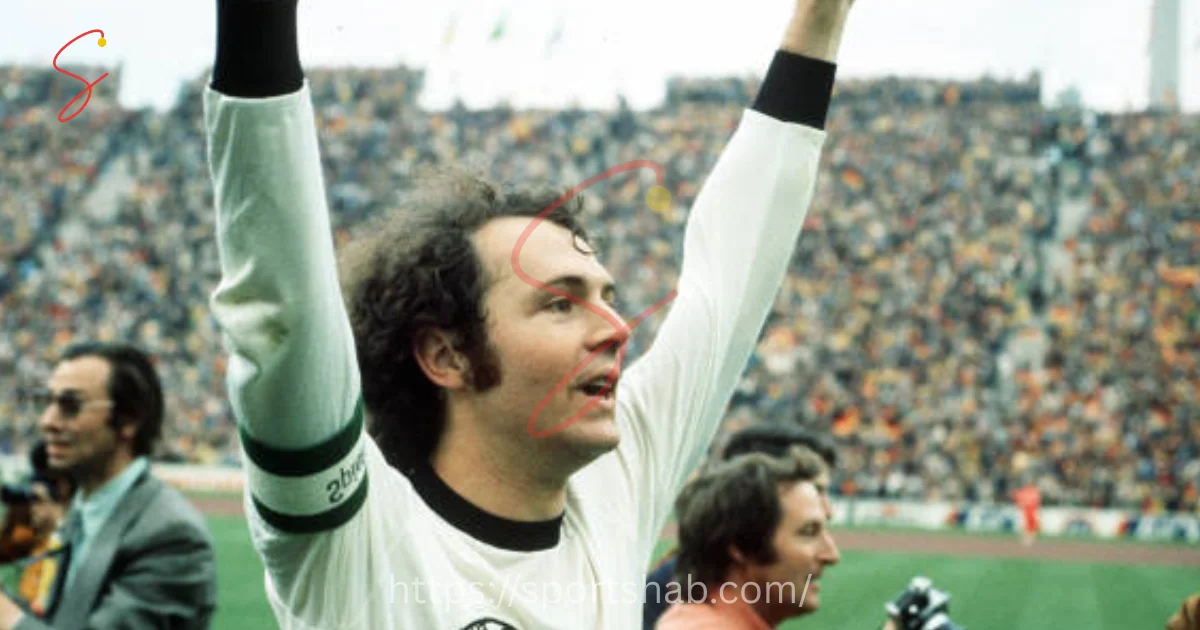
Captain Franz Beckenbauer lifted the trophy, while Gerd Müller supplied the winning goal.
Paul Breitner scored the equaliser from the penalty spot after Johan Neeskens had given the Netherlands an astonishingly early lead.
The Germans had been behind.
They had barely touched the ball.
The Dutch were flying.
Yet West Germany stayed calm.
That became the story of their tournament.
They weren’t always the flashiest team in the room. But when the game caught fire, they knew exactly how to survive it.
FIFA World Cup 1974 Organized By
The 1974 FIFA World Cup was organized by FIFA, football’s international governing body.
It was the 10th edition of the FIFA World Cup and was staged from 13 June to 7 July 1974. The tournament was awarded to West Germany at the FIFA Congress in London in 1966. Ninety-nine teams entered the qualification process, with 92 actually taking part in qualifying matches.
The tournament was particularly important because football was entering a new tactical era.
The rigid positions of earlier generations were beginning to disappear.
Teams were becoming more flexible for adaptation.
Defenders were attacking devastatingly.
Forwards were pressing walls.
Midfielders were changing positions on both ends.
And the Netherlands were about to demonstrate just how far that idea could go.
FIFA World Cup 1974 Host
🇩🇪 West Germany
West Germany hosted the 1974 World Cup, staging matches across nine venues in cities including Munich, Berlin, Dortmund, Düsseldorf, Frankfurt, Gelsenkirchen, Hamburg, Hanover and Stuttgart.
For the hosts, the tournament carried enormous expectations.
Playing at home can be a blessing.
It can also feel like carrying a stadium on your shoulders.
West Germany had a squad capable of winning the tournament, but their opening round did not go entirely according to plan.
They defeated Chile 1-0.
They beat Australia 3-0.
Then came the match everybody remembers.
East Germany 1-0 West Germany.
Jürgen Sparwasser scored the only goal.
The defeat meant West Germany finished second in their group rather than first.
At the time, that looked like a setback.
In hindsight, it may have been the spark that woke them up.
FIFA World Cup 1974 Participants
The 1974 tournament featured 16 teams.
The participating nations were:
West Germany, East Germany, Chile, Australia, Brazil, Yugoslavia, Scotland, Zaire, Netherlands, Uruguay, Sweden, Bulgaria, Poland, Argentina, Italy and Haiti.
Several teams arrived with serious credentials.
Brazil were the defending champions after their magnificent 1970 triumph.
Italy were traditional giants.
Uruguay had already won two World Cups.
West Germany were among Europe’s strongest sides.
Argentina were returning with a talented squad.
The Netherlands, however, arrived with something different.
They had a football philosophy.
And it was about to become famous.
FIFA World Cup 1974 Format
1974 World Cup used a unique two-stage group format.
This is important because there were no traditional quarter-finals or semi-finals in the tournament.
The 16 teams were first divided into four groups of four.
The top two teams from each group advanced.
But instead of moving into a normal knockout bracket, the eight survivors were divided into two second round groups of four.
The winner of each second-round group advanced directly to the final.
The runners-up played for third place.
That meant the tournament had:
First group stage, Second group stage, Final
rather than:
First group stage, Quarter-finals, Semi finals and Final.
So if you’re looking for the 1974 World Cup semi final teams, there weren’t any.
The two second round group winners, the Netherlands and West Germany went directly into the final.
It was an unusual format, but it produced a fascinating final stage.
FIFA World Cup 1974 Group Stage Overview
Group 1 East Germany, West Germany, Chile and Australia
The opening group contained both West Germany and East Germany, creating one of the most politically charged matches in World Cup history.
West Germany defeated Chile 1-0.
East Germany beat Australia 2-0.
West Germany then defeated Australia 3-0, while East Germany drew 1-1 with Chile.
Australia and Chile subsequently drew 0-0.
Then came the big one.
East Germany 1 – 0 West Germany
On 22 June, Jürgen Sparwasser scored the only goal.
East Germany won.
The result sent them through as group winners, with West Germany finishing second.
East Germany’s victory was more than just three points.
It was a historic meeting between two German states that had been divided after the Second World War.
Football had provided the stage.
And Sparwasser provided the moment.
Group 2 Yugoslavia, Brazil, Scotland and Zaire
Brazil began their title defence with a 0-0 draw against Yugoslavia.
They then drew 0 – 0 with Scotland.
Things weren’t exactly screaming “defending champions.”
Brazil eventually defeated Zaire 3-0.
Yugoslavia, meanwhile, destroyed Zaire 9-0, one of the largest victories in World Cup history.
Yugoslavia finished top with four points.
Brazil also finished four.
Scotland had four as well.
But goal difference separated the teams.
Yugoslavia advanced first, Brazil second, while Scotland were eliminated despite remaining unbeaten.
That was one of the tournament’s cruelest statistical twists.
Scotland did not lose a single match and still went home.
Football can be brutal like that.
Group 3 Netherlands, Sweden, Uruguay and Bulgaria
The Netherlands immediately showed that they were not coming to West Germany merely to participate.
They defeated Uruguay 2-0.
Then came a 0-0 draw against Sweden.
They later demolished Bulgaria 4-1.
The Dutch finished first with six points and did not concede a goal in the group stage.
Sweden finished second.
Uruguay and Bulgaria were eliminated.
But the Netherlands were beginning to turn heads.
Cruyff was everywhere.
The Dutch players changed positions.
The defenders moved forward.
Midfielders covered defensive spaces.
Attackers dropped deep.
It was football with the volume turned up.
Group 4 Poland, Argentina, Italy and Haiti
Poland were the surprise package.
They defeated Argentina 3-2.
Then they crushed Haiti 7-0.
Finally, they beat Italy 2-1.
Three matches.
Three victories.
Poland finished top of the group with a perfect six points.
And Grzegorz Lato was becoming one of the tournament’s biggest stars.
He wasn’t the most famous player before the World Cup.
By the end of it, everybody knew his name.
FIFA World Cup 1974 Final Pool
The Second Group Stage
1974 World Cup’s final pool was actually a pair of second round groups.
The eight surviving teams were divided into two groups.
Second Round Group A
Netherlands, Brazil, East Germany and Argentina
The Netherlands opened with a stunning 4-0 victory over Argentina.
Brazil defeated East Germany 1-0.
The Netherlands then beat East Germany 2-0.
Brazil defeated Argentina 2-1.
The final round of matches settled the group.
The Netherlands beat Brazil 2-0.
Argentina drew 1-1 with East Germany.
The Dutch finished first with six points and an extraordinary 8-0 goal difference. Brazil finished second.
The Netherlands were heading to the final.
And their confidence was sky high.
Second Round Group B
The other group contained:
West Germany, Poland, Sweden and Yugoslavia.
West Germany defeated Yugoslavia 2-0.
Poland beat Sweden 1-0.
Germany produced one of the most entertaining matches of the tournament, defeating Sweden 4-2 after Sweden had taken the lead.
Poland defeated Yugoslavia 2-1.
The decisive matches came on 3 July.
West Germany defeated Poland 1-0.
The match was delayed because of a waterlogged pitch, but Müller eventually scored the winning goal. Goalkeeper Jan Tomaszewski had earlier saved a penalty from Uli Hoeneß.
Germany finished first with six points.
Poland finished second.
The final was set.
West Germany vs Netherlands.
FIFA World Cup 1974 Semi Finals
There Were No Semi Finals
This deserves its own heading because it is a common search query.
The 1974 FIFA World Cup did not have semi final matches.
The tournament’s second phase consisted of two groups.
The winners of those groups advanced directly to the final.
Therefore:
Second Round Group A winner: Netherlands
Second Round Group B winner: West Germany
These two teams met in the final.
There were no official semi-final teams or semi-final matches in the 1974 World Cup.
That format is one of the reasons the 1974 tournament feels so different when compared with modern World Cups.
FIFA World Cup 1974 Third Place Match
Poland 1- 0 Brazil
Brazil were no longer the same unstoppable force that had conquered Mexico four years earlier.
Poland, meanwhile, were flying.
The third place match was decided by one goal.
76th minute
Grzegorz Lato scored.
Poland won 1-0 and finished third.
It was the perfect ending to Poland’s breakthrough tournament.
They had defeated Argentina and Italy in the first stage.
They had pushed West Germany.
And now they had beaten the defending champions.
Brazil finished fourth.
FIFA World Cup 1974 Final
🇳🇱 Netherlands 1 – 2 West Germany 🇩🇪
Total Football Meets German Steel
Date: 7 July 1974
Venue: Olympiastadion, Munich
Final: Netherlands 1-2 West Germany
The final had barely started when the Netherlands produced something extraordinary.
West Germany had not even touched the ball.
The Dutch moved forward.
Johan Cruyff entered the penalty area.
Uli Hoeneß brought him down.
Penalty.
2nd Minute, Johan Neeskens
Neeskens stepped up.
Bang.
Netherlands 1-0 West Germany.
The Dutch had taken the lead before their opponents had even completed a meaningful attack.
It looked ominous for Germany.
But the hosts didn’t panic.
They fought back.
25th Minute, Paul Breitner
West Germany were awarded a penalty.
Paul Breitner took responsibility.
He converted.
1-1.
The match had been reset.
The Netherlands still had Cruyff.
Germany still had Beckenbauer, Müller, Breitner and a home crowd desperate for glory.
Then, just before half-time, came the decisive moment.
43rd Minute, Gerd Müller
Müller received the ball inside the Dutch penalty area.
One touch.
Quick turn.
Finish.
West Germany 2-1 Netherlands.
The Netherlands had started the final like lightning.
Germany finished the first half ahead.
The second half became a test of nerve.
The Dutch attacked.
Germany defended.
Cruyff searched for space.
Beckenbauer marshalled his defence.
And when the final whistle arrived, West Germany had done it.
World champions.
The hosts had defeated the most fashionable team in international football.
FIFA World Cup 1974 Interesting Facts
The Netherlands introduced the world to Total Football
The Dutch team under coach Rinus Michels became famous for their fluid style.
Players were not chained to one position.
A defender could move forward.
A midfielder could drop into defence.
An attacker could drift into midfield.
The idea depended on intelligent movement, positional interchange and coordinated pressing.
Cruyff was the heartbeat.
He wasn’t simply a striker.
He could drop deep, create chances, pull defenders away and suddenly appear in the penalty area.
It was football that asked players to think rather than simply follow instructions.
Johan Cruyff’s famous turn became a World Cup moment
During the Netherlands’ match against Sweden, Cruyff produced the piece of skill that would become known worldwide as the Cruyff Turn.
He shaped as though he would cross.
Instead, he dragged the ball behind his standing leg and spun away from the defender.
One movement.
One defender embarrassed.
One move immortalized.
The technique became one of football’s most recognizable skills. IFFHS notes that Cruyff performed the move at the 1974 World Cup and that it subsequently became known as the Cruyff Turn.
East Germany defeated West Germany
This was one of the most politically significant World Cup matches ever played.
East Germany defeated West Germany 1-0.
Jürgen Sparwasser scored.
The result was not just a football upset.
It became a historic sporting symbol of the divided Germanys.
Interestingly, West Germany went on to win the World Cup anyway.
Scotland went home unbeaten
Scotland finished the first group stage with:
One win and two draws.
They did not lose.
Yet they were eliminated because Brazil, Yugoslavia and Scotland all finished with four points, and Scotland had the weakest goal difference among the three.
Imagine that heartbreak.
You don’t lose a single match.
And you’re still packing your luggage.
Poland became the tournament’s surprise package
Poland were arguably the revelation of the competition.
They finished third.
Grzegorz Lato won the scoring title.
And goalkeeper Jan Tomaszewski became a national hero.
Their energetic football made them one of the most dangerous sides in the tournament.
The World Cup Trophy changed
1974 World Cup was the first tournament to use the new FIFA World Cup Trophy after Brazil had permanently kept the Jules Rimet Trophy following their third title in 1970.
The new trophy was designed by Italian artist Silvio Gazzaniga.
It remains the basis of the trophy used today.
The tournament produced 97 goals
Across 38 matches, teams scored 97 goals.
That worked out at approximately 2.55 goals per match.
Poland were the highest-scoring team with 15 goals.
Australia and Zaire failed to score.
The Netherlands were particularly impressive defensively, conceding no goals in the first group stage.
Tournament Innovations and Firsts
1974 World Cup wasn’t only about goals and trophies.
It represented a transition in football.
The new FIFA World Cup Trophy made its debut.
The competition also demonstrated how tactical ideas could reshape the sport.
The Netherlands’ Total Football challenged conventional thinking about positions.
Players increasingly became interchangeable.
The goalkeeper was no longer simply a shot-stopper.
Defenders could contribute to attacks.
Midfielders could control the entire rhythm of a game.
The World Cup also demonstrated the growing importance of tactical pressing and collective movement.
In other words, Mexico 1970 had showcased individual brilliance.
West Germany 1974 and the Netherlands showed the world what could happen when tactics became a form of art.
FIFA World Cup 1974 Statistics
The 1974 tournament featured:
16 teams
38 matches
97 goals
2.55 goals per match
1,865,753 spectators
49,099 average attendance per match.
West Germany scored 13 goals across their seven matches.
Poland scored 15.
The Netherlands scored 15.
Grzegorz Lato finished as the tournament’s leading scorer.
And the final produced three goals despite the Netherlands taking a shock early lead.
FIFA World Cup 1974 Top Scorer
Grzegorz Lato, Poland, 7 Goals
The 1974 World Cup top scorer was Poland’s Grzegorz Lato, who scored seven goals. FIFA’s historical coverage identifies him as the Golden Boot winner.
Lato was not expected to dominate the scoring charts.
Yet match after match, he kept finding the net.
He scored twice against Argentina.
He scored against Haiti.
He scored against Italy.
He later scored against Brazil in the third-place match.
Seven goals.
Third place.
Golden Boot.
Not bad for a player who entered the tournament without the same global reputation as Müller or Cruyff.
FIFA World Cup 1974 Golden Boot
Grzegorz Lato 7 Goals
Modern FIFA terminology identifies Lato as the adidas Golden Boot winner for the 1974 World Cup.
His seven goals placed him ahead of:
Johan Neeskens 5
Andrzej Szarmach 5
Gerd Müller 4
Johnny Rep 4
Ralf Edström 4.
Lato’s seven goals remain one of the most memorable individual scoring campaigns by a player from a team that did not reach the final.
FIFA World Cup 1974 Golden Ball
Johan Cruyff Netherlands
There is an important historical distinction here.
The official FIFA World Cup Golden Ball award was introduced later, so it is more accurate not to pretend that a modern Golden Ball ceremony existed in exactly the same form in 1974.
However, Johan Cruyff is widely recognized as the outstanding player of the 1974 tournament, and IFFHS records that he received the Golden Ball as player of the tournament.
Cruyff scored three goals.
But his influence went far beyond goals.
He created space.
He dictated movement.
He pressed defenders.
He carried the Dutch attacking system.
And he made Total Football understandable to millions of viewers.
The Netherlands lost the final.
Cruyff still left the tournament as one of its defining figures.
FIFA World Cup 1974 Golden Glove
No Official Golden Glove Award Yet
Golden Glove was not an official FIFA World Cup award in 1974 in its modern form.
If we are making a retrospective choice, several goalkeepers deserve consideration.
West Germany’s Sepp Maier was a crucial part of the champions’ defensive structure.
Poland’s Jan Tomaszewski was also outstanding, particularly in Poland’s run to third place.
The Polish goalkeeper even saved Uli Hoeneß’s penalty against West Germany during the second round.
For a retrospective “Golden Glove” selection, Jan Tomaszewski is an excellent candidate because of his tournament-defining saves and Poland’s remarkable run.
But historically, it should be written as a retrospective selection, not an official 1974 FIFA award.
FIFA World Cup 1974 Most Clean Sheets
Netherlands were impressive defensively during the first stage.
They drew 0-0 with Sweden and defeated Uruguay 2-0 and Bulgaria 4-1 Argentina 4-0 East Germany 2-0 Brazil 2-0 West Germany 2–1
West Germany also kept clean sheets against Chile, Australia, Yugoslavia and Poland during their seven match campaign.
That gives West Germany four clean sheets, while the Netherlands recorded five clean sheets across their campaign as well.
The Dutch conceded their first goal of the tournament only in the final.
And when Neeskens gave them the lead, it was the first goal West Germany had conceded in the final.
FIFA World Cup 1974 Squads
🇩🇪 West Germany Squad
The champions had a squad packed with elite talent.
Key players included Sepp Maier, Franz Beckenbauer, Berti Vogts, Paul Breitner, Hans-Georg Schwarzenbeck, Rainer Bonhof, Wolfgang Overath, Uli Hoeneß, Jürgen Grabowski, Bernd Hölzenbein and Gerd Müller.
Coach Helmut Schön knew exactly what he had.
Beckenbauer controlled the defence.
Overath dictated midfield.
Breitner provided aggression and goals.
Bonhof supplied energy.
And Müller did what Müller always did:
He scored when it mattered.
🇳🇱 Netherlands Squad
The Netherlands were built around Johan Cruyff.
Their squad included Johan Neeskens, Wim van Hanegem, Rob Rensenbrink, Johnny Rep, Ruud Krol, Wim Jansen, Arie Haan, Wim Suurbier and goalkeeper Jan Jongbloed.
Coach Rinus Michels created the tactical framework.
Cruyff became its conductor.
Neeskens supplied goals and energy.
Rep provided attacking threat.
Krol and Suurbier gave the defence an attacking dimension.
They may not have won the trophy.
But their football changed how generations thought about the game.
🇵🇱 Poland Squad
Poland’s outstanding squad included Jan Tomaszewski, Antoni Szymanowski, Jerzy Gorgoń, Władysław Żmuda, Kazimierz Deyna, Andrzej Szarmach, Grzegorz Lato and Robert Gadocha.
They combined speed, athleticism and direct attacking football.
Lato was the headline maker.
Deyna provided creativity.
Tomaszewski provided security at the back.
Their reward was third place.
🇧🇷 Brazil Squad
The defending champions still had some familiar names from 1970.
Jairzinho and Rivellino remained key figures, while Luís Pereira, Leão, Zé Maria, Marinho Chagas, Paulo César Carpegiani and Dirceu were among the squad members.
But Brazil were not the same team without Pelé.
They reached the second group stage but lost to the Netherlands and then fell to Poland in the third-place match.
Fourth place was respectable.
For the defending champions, however, it felt like a step backward.
🇦🇷 Argentina Squad
Argentina featured players such as Ubaldo Fillol, Roberto Perfumo, René Houseman, Carlos Babington, Miguel Brindisi, Héctor Yazalde and Rubén Ayala.
They struggled against the Netherlands and Brazil in the second group stage and finished fourth in their group.
🇸🇪 Sweden Squad
Sweden’s squad included Ronnie Hellström, Björn Nordqvist, Bo Larsson, Ralf Edström, Roland Sandberg and Conny Torstensson.
They reached the second group stage but finished third behind West Germany and Poland.
🇪🇦 East Germany Squad
East Germany’s memorable team included Jürgen Croy, Bernd Bransch, Gerd Kische, Konrad Weise, Jürgen Sparwasser, Joachim Streich and Martin Hoffmann.
Sparwasser became a national hero after scoring the winner against West Germany.
FIFA World Cup 1974: The Players Who Defined the Tournament
If you had to build a footballing movie around the 1974 World Cup, the cast would be extraordinary.
Johan Cruyff would be the visionary.
Franz Beckenbauer would be the leader.
Gerd Müller would be the killer inside the box.
Grzegorz Lato would be the surprise hero.
Johan Neeskens would be the tireless engine.
Jan Tomaszewski would be the goalkeeper producing the impossible save.
And somewhere in the background, Rinus Michels and Helmut Schön would be arguing about whether football should be controlled through movement or discipline.
That’s what made 1974 fascinating.
It wasn’t one style against another.
It was football evolving in front of the world.
FIFA World Cup 1974: When Total Football Met the Perfect Counterpunch
The 1974 FIFA World Cup left football with a strange little lesson.
Sometimes the team that looks the most beautiful doesn’t win.
Sometimes the team that survives the chaos does.
The Netherlands entered the final with the football world’s attention.
They had Cruyff.
They had Total Football.
They had movement that made defenders dizzy.
And they had reached the final without conceding a goal in the first group stage.
Then, just two minutes into the final, Neeskens put them ahead.
It looked like the Dutch revolution was about to conquer the world.
But West Germany had other plans.
Breitner equalised.
Müller scored.
And suddenly the team that had spent the tournament fighting, adapting and surviving was lifting the trophy.
That’s football.
It doesn’t always reward the prettiest performance.
It rewards the team that finds a way.
West Germany found that way.
Franz Beckenbauer lifted the new World Cup Trophy.
Gerd Müller delivered the winning goal.
Johan Cruyff walked away without the trophy but with an enormous influence on football history.
Grzegorz Lato walked away with the Golden Boot.
And the Netherlands walked away having changed the sport.
That is why 1974 still matters.
It wasn’t simply the World Cup where West Germany became champions.
It was the tournament where football’s tactical future walked onto the pitch wearing orange.
It was where Cruyff showed that a forward could be a creator, conductor and playmaker all at once.
It was where Beckenbauer demonstrated the possibilities of the attacking defender.
It was where Poland announced itself as a serious football nation.
And it was where a new generation of fans discovered that a World Cup could be about more than winning.
It could be about ideas.
It could be about identity.
It could be about the way a team makes you feel.
West Germany had the trophy.
The Netherlands had the revolution.
And football history kept both.
1974 belonged to the Germans on the scoreboard but the Dutch changed the way the game was imagined.