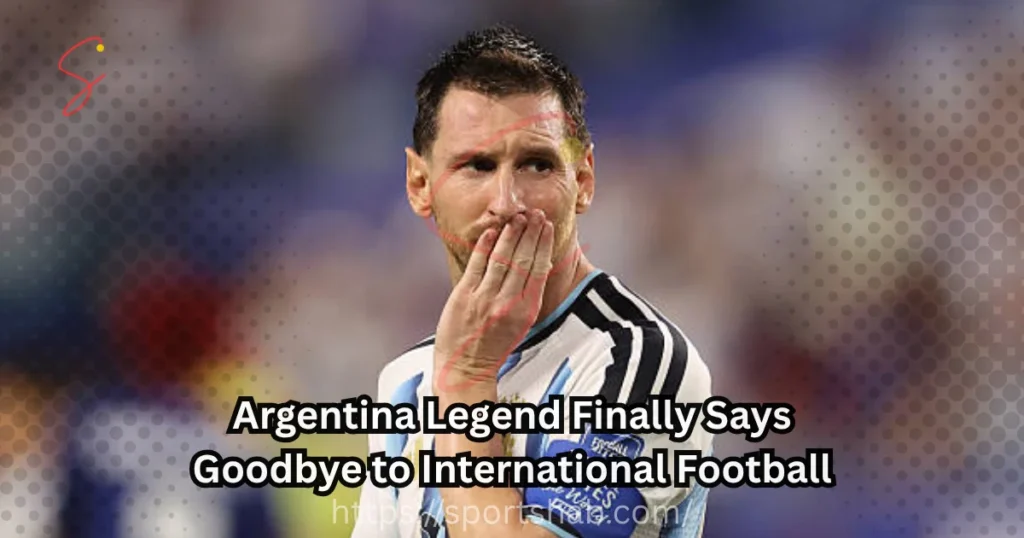
Lionel Messi Retirement: Argentina Legend Finally Says Goodbye to International Football
Lionel Messi retirement has finally become reality.
After more than two decades of unforgettable moments in the Argentina shirt, Lionel Messi has announced his retirement from international football. The Argentine icon’s decision brings an extraoredinary chapter of football history to an end a journey that included heartbreaking defeats, a dramatic retirement in 2016, an emotional comeback and, ultimately, the FIFA World Cup triumph he had dreamed about since childhood.
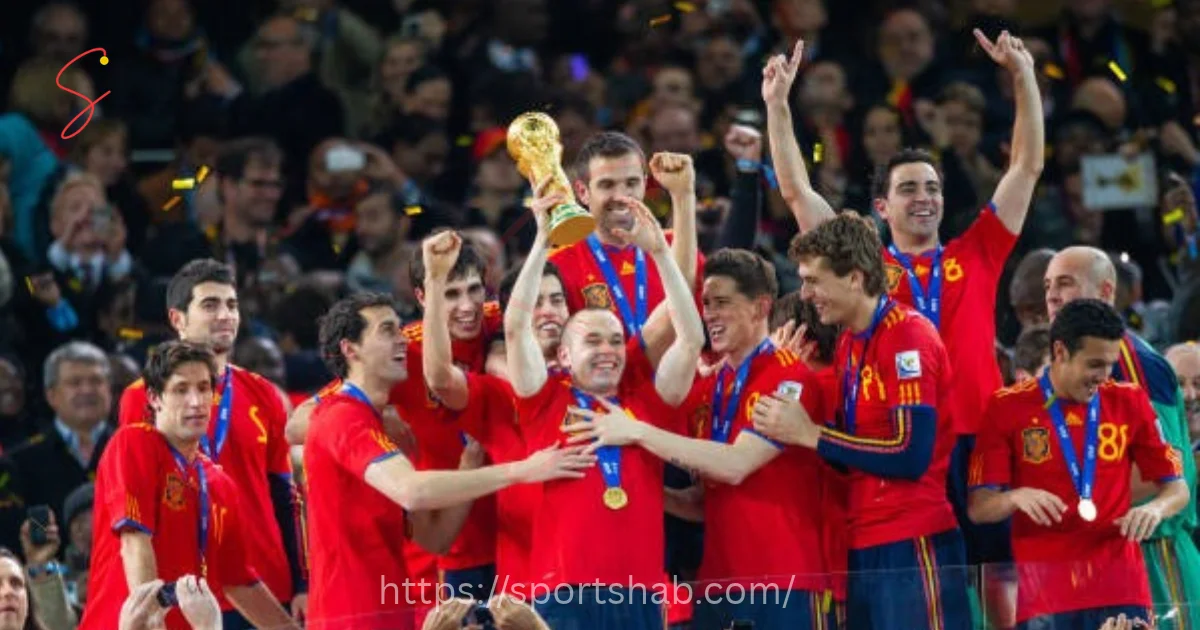
Messi’s final chapter with Argentina came after the 2026 FIFA World Cup final, where Argentina lost 1-0 to Spain after extra time. Messi subesequently confirmed that he would no longer play for the national team. FIFA reported the announcenment on 31 August 2026.
At 39, Messi leaves international football as Argentina’s greatest modern footballer, their record goalscorer and one of the most decorated players the sport has ever produced.
Lionel Messi Retirement: What Happened?
Messi’s decision was not made immediately after the 2026 World Cup final.
According to FIFA, Messi had written his farewell message on 21 July 2026, two days after Argentina’s 1-0 defeat against Spain in the World Cup final. Following the death of his father, Jorge Messi, on 8 August, he eventually decided to make the message public on 31 August.
Messi explained that he felt he had given everything to Argentina and that a new generation of players deserved an opportunity.
This makes the Lionel Messi retirement date effectively 31 August 2026, when he publicly confirmed his decision.
His final international appearance was the 2026 World Cup final against Spain.
Lionel Messi Retirement Match: Argentina vs Spain
The Lionel Messi retirement match was the 2026 FIFA World Cup final between Argentina and Spain.
It was an incredibly fitting but painful ending.
Argentina had reached another World Cup final with Messi at the centre of their campaign, but Spain won 1-0 after extra time. The defeat meant Messi’s final appearance for Argentina ended without another major trophy.
Yet the result cannot erase what he achieved.
FIFA confirmed that Messi extended his record for World Cup appearances to 34 matches during the 2026 tournament.
He also became the all-time leading scorer in World Cup history, reaching 18 goals during the 2026 tournament after overtaking Germany’s Miroslav Klose.
How Many Times Has Messi Retired From International Football?
This is one of the biggest questions behind the search term “how many times has Messi retired from international football?”
The answer is:
Twice.
But there is an important distinction.
First retirement — 2016
Messi announced his retirement from Argentina after the 2016 Copa América Centenario final.
Argentina lost to Chile on penalties, and Messi missed Argentina’s penalty during the shootout.
At that point, Messi had lost four major finals with Argentina the 2007 Copa América, 2014 World Cup, 2015 Copa América and 2016 Copa América.
He publicly said that his time with the national team was over.
But it wasn’t.
Return — September 2016
Only 66 days later, Messi returned to the Argentina team.
His comeback came against Uruguay in a World Cup qualifier on 2 September 2016, and he scored the winning goal.
Second retirement — 2026
Ten years after his first international farewell, Messi has now closed the door for good.
FIFA describes 2026 as his second and final international retirement.
Lionel Messi Retirement 2016: Why Did He Quit Argentina?
The Lionel Messi retirement 2016 story remains one of the most emotional moments of his career.
Argentina had reached another final against Chile, but once again failed to win a major trophy.
Messi missed his penalty in the shootout, and the emotional pressure became overwhelming.
He had already suffered defeats in:
- 2007 Copa América final
- 2014 FIFA World Cup final
- 2015 Copa América final
- 2016 Copa América final
After the Chile defeat, Messi announced that he was finished with Argentina.
At the time, he had achieved almost everything possible at club level with Barcelona, yet his critics continued to argue that he could not reproduce that success with Argentina.
That criticism became one of the defining stories of his career.
The Biggest Twist in Messi’s International Story
The irony is extraordinary.
In 2016, Messi believed he had failed Argentina because he had not won a senior international trophy.
Five years later, everything changed.
2021 — Copa América Champion
Messi finally won his first senior international trophy when Argentina defeated Brazil in the Copa América final at the Maracanã.
It was the moment that transformed his relationship with the Argentine public.
2022 — World Cup Champion
Then came the ultimate achievement.
Messi captained Argentina to the 2022 FIFA World Cup title in Qatar, defeating France on penalties in one of the greatest World Cup finals ever played.
Messi scored twice in the final and finished the tournament with seven goals and three assists, winning the adidas Golden Ball as the tournament’s best player.
2024 — Copa América Champion
Argentina then won another Copa América title in 2024.
Messi had gone from a player accused of failing Argentina to the undisputed leader of one of the country’s most successful generations.
Messi’s Argentina Journey: From Teenage Star to National Legend
Messi’s relationship with Argentina began long before the 2022 World Cup.
He made his senior international debut in 2005 and appeared at his first World Cup in 2006, aged just 18.
His international career lasted more than two decades.
During that period, he experienced almost every emotion possible:
debut → criticism → defeats → retirement → comeback → heartbreak → redemption → trophies → World Cup glory → final farewell.
That is why Messi’s Argentina story is much bigger than a collection of statistics.
It is a story of persistence.
Lionel Messi’s International Career
Messi leaves Argentina after becoming the country’s most important footballer of the modern era.
FIFA’s latest profile lists him with 207 international appearances, while his World Cup record includes six tournament appearances and a record 34 matches.
His World Cup journey stretched across:
- Germany 2006
- South Africa 2010
- Brazil 2014
- Russia 2018
- Qatar 2022
- 2026
Few players have had such a long World Cup career.
Lionel Messi Total International Goals
The keyword “lionel messi total international goals” remains one of the most searched Messi statistics.
FIFA’s 2026 World Cup data had Messi at 117 goals in 199 internationals before the tournament, and he subsequently added to that total during the competition.
His international record is especially remarkable because Messi was not simply a goalscorer.
He was also Argentina’s creative leader and one of their leading assist providers.
That combination — goals, assists, chance creation, dribbling and leadership — is what separated him from ordinary elite forwards.
Lionel Messi Teams He Has Played For
For readers searching “lionel messi teams he has played for”, his senior club journey can be divided into three major chapters.
Newell’s Old Boys
Messi started his football journey in Rosario with Newell’s Old Boys.
He played there as a youth player before moving to Spain. FC Barcelona records show that Messi began his football career at Newell’s in the 1990s before moving to Barcelona at 13.
Barcelona
This is where Messi became a global superstar.
He progressed through Barcelona’s youth system and made his first-team debut in 2004.
At Barcelona, he won:
- 10 La Liga titles
- 4 UEFA Champions League titles
- 7 Copa del Rey titles
- 3 FIFA Club World Cups
- 3 UEFA Super Cups
- Multiple Spanish Super Cups
Barcelona’s official records list his extraordinary trophy haul and his status as the club’s record-setting superstar.
Paris Saint-Germain
Messi joined PSG in 2021 after leaving Barcelona.
He won Ligue 1 twice during his two seasons in France.
Inter Miami
Messi moved to Inter Miami in 2023, beginning a new chapter in Major League Soccer.
His arrival transformed the profile of football in the United States and helped bring unprecedented global attention to MLS.
Inter Miami later extended his contract and described him as the most decorated player in football history, with 46 team trophies at that point.
Lionel Messi’s Greatest Awards and Individual Achievements
Messi’s legend is not based solely on trophies.
His individual awards are extraordinary.
Ballon d’Or
Messi has won the Ballon d’Or eight times, more than any other player.
His victories came in:
2009, 2010, 2011, 2012, 2015, 2019, 2021 and 2023.
His eighth Ballon d’Or further extended his record as the most successful player in the award’s history.
FC Barcelona’s official profile also records his eight Ballon d’Or victories.
FIFA The Best
Messi has also won The Best FIFA Men’s Player award.
His 2022 victory followed his extraordinary World Cup campaign in Qatar.
World Cup Golden Ball
Messi won the FIFA World Cup Golden Ball in:
- 2014
- 2022
That made him the first player to win the award twice.
World Cup Records
Messi has:
- Record 34 World Cup appearances
- World Cup titles with Argentina
- World Cup Golden Ball awards
- Became the tournament’s all-time leading scorer
- Scored across multiple World Cup editions
- Played in six World Cups
FIFA’s records show that he also became the first player to score in nine consecutive World Cup appearances.
Why Is Lionel Messi Considered a Football Legend?
Calling Messi a legend almost feels insufficient.
His greatness comes from the combination of qualities he maintained for more than 20 years.
Goals
Messi consistently scored at an elite level.
Assists
He has also been one of football’s greatest creators.
Dribbling
His close control and ability to eliminate defenders became his trademark.
Vision
Messi could see passing opportunities before defenders recognized them.
Free Kicks
His left-footed free kicks became another major weapon.
Longevity
Messi remained world-class across multiple generations.
International Redemption
Perhaps most importantly, he overcame years of criticism with Argentina.
He didn’t simply win the World Cup.
He transformed the entire narrative surrounding his international career.
Messi vs Maradona: The Debate Is Finally Different
For years, the biggest question in Argentine football was:
Messi or Maradona?
Maradona won the 1986 World Cup and became an almost mythical figure in Argentina.
Messi spent years being compared with him.
But after winning the 2022 World Cup, Messi completed the achievement that many critics believed was missing from his résumé.
Now the comparison is less about whether Messi belongs among the legends.
He unquestionably does.
The debate is about where exactly he ranks among the greatest footballers ever.
For many fans and analysts, Messi is now the greatest footballer in history.
Lionel Messi Retirement Speculation: When Did It Start?
The Lionel Messi retirement speculation did not begin in 2026.
It has followed him for years.
There were questions after the 2014 World Cup final.
There was enormous speculation after the 2016 Copa América defeat.
Later, fans repeatedly wondered whether Messi would continue after every major tournament.
Even before the 2026 World Cup, questions surrounding his age and physical condition made his international future a major talking point.
But Messi continued.
He played at the 2026 World Cup and gave Argentina another historic campaign before finally deciding that his international journey had reached its end.
Lionel Messi Retirement Hint: Did Messi Warn Fans?
Yes, there had been repeated Lionel Messi retirement hint discussions.
As Messi entered his late 30s, he increasingly spoke about the limited amount of time remaining in his career.
His final decision, however, was not presented as a sudden reaction.
FIFA reports that he wrote his farewell message shortly after the 2026 World Cup final and waited before publishing it.
That suggests the decision was carefully considered rather than an emotional announcement immediately after the defeat.
Is Messi Retired From International Football?
Yes.
As of 31 August 2026, Lionel Messi has officially announced his retirement from Argentina.
So for anyone searching:
“has Messi retired from international football?”
The answer is yes.
And for:
“is Messi retired from international?”
Again, yes — from international football with Argentina.
However, this does not automatically mean Messi has retired from professional club football.
His international career and club career are separate.
Messi remains associated with Inter Miami, meaning the end of his Argentina career does not necessarily mean the end of his entire playing career.
Lionel Messi Retirement From Argentina: What Comes Next?
The most important question now is not whether Messi will return.
It is:
Who replaces Lionel Messi as Argentina’s No. 10 and leader?
Argentina has a talented new generation coming through.
Players such as Julián Álvarez and other young stars will have to carry more responsibility.
But replacing Messi is not simply about finding another goalscorer.
Argentina are losing:
- Their captain
- Their record goalscorer
- Their creative leader
- Their biggest global star
- Their emotional symbol
- Their most experienced World Cup player
That is why the post-Messi era will be one of the biggest challenges in Argentine football.
The Greatest Comeback in Messi’s Career
Perhaps the most beautiful part of Messi’s story is that his 2016 retirement did not become his legacy.
He came back.
He lost again.
He came back again.
And eventually he won everything Argentina had been waiting for.
The 2016 retirement looked like the end of Messi’s international story.
Instead, it became the beginning of his greatest chapter.
From the disappointment of Copa América 2016 to lifting the World Cup in 2022, Messi’s journey became one of the greatest redemption stories football has ever seen.
Lionel Messi Live History: A Career That Changed Football
For fans searching “lionel messi live history”, Messi’s career can be understood through a simple timeline:
| Year | Major Moment |
|---|---|
| 1987 | Born in Rosario, Argentina |
| 1990s | Began football journey with Newell’s Old Boys |
| 2000 | Joined Barcelona’s youth system |
| 2004 | Barcelona first-team debut |
| 2005 | Argentina senior debut |
| 2006 | First FIFA World Cup |
| 2008 | Olympic gold with Argentina |
| 2009 | First Ballon d’Or |
| 2012 | Record-breaking Barcelona era |
| 2014 | World Cup final & Golden Ball |
| 2015 | Copa América final defeat |
| 2016 | Announces international retirement |
| 2016 | Returns to Argentina after 66 days |
| 2021 | Wins first senior international title |
| 2022 | Wins FIFA World Cup |
| 2022 | Wins World Cup Golden Ball |
| 2023 | Wins eighth Ballon d’Or |
| 2024 | Wins Copa América |
| 2026 | Argentina reach World Cup final |
| 31 Aug 2026 | Announces final international retirement |
Lionel Messi Retirement News: The End of an Era
The Lionel Messi retirement news is much bigger than one player announcing the end of his international career.
It marks the closing of one of the greatest eras in football history.
Messi spent more than two decades representing Argentina.
He experienced devastating defeats and historic victories.
He was criticized.
He was compared with Maradona.
He retired.
He returned.
He lost more finals.
Then he won Copa América.
Then he won the World Cup.
And eventually, after reaching another World Cup final at 39, he decided there was nothing left to prove.
That is the real meaning of Lionel Messi retires from international football.
He doesn’t leave as the player who couldn’t win with Argentina.
He leaves as the World Cup-winning captain, Copa América champion, record-breaking goalscorer and one of the greatest footballers the world has ever seen.
Final Verdict: Lionel Messi’s Legacy
Lionel Messi’s international career cannot be judged by his final match.
It must be judged across more than 20 years.
The teenager who entered the 2006 World Cup became the captain who lifted the World Cup in 2022.
The player who walked away from Argentina in tears in 2016 returned to become the country’s greatest international success story.
His retirement in 2026 therefore feels completely different from his retirement in 2016.
2016 was an emotional goodbye.
2026 is the closing of the book.
Messi leaves Argentina with the one achievement that once seemed impossible: the World Cup.
And that is why, regardless of where individual fans rank him in the GOAT debate, his place in football history is secure.
Lionel Messi is no longer simply an Argentine superstar. He is a football legend whose international story became one of the greatest redemption stories ever written.