
Australia Reveal ODI Squads for Zimbabwe and South Africa: Labuschagne Dropped as World Cup Plans Take Shape
Australia have revealed their 17-member ODI squad for the upcoming tours of Zimbabwe and South Africa with several World Cup winning stars returning and one major name missing.
Captain Mitchell Marsh and explosive opener Travis Head return to Australia’s 50-over setup, while Pat Cummins and Mitchell Starc have been selected specifically for the South Africa leg. At the same time, former World Cup winning batter Marnus Labuschagne has been left out, making his position in Australia’s plans for the 2027 ODI World Cup a major talking point.
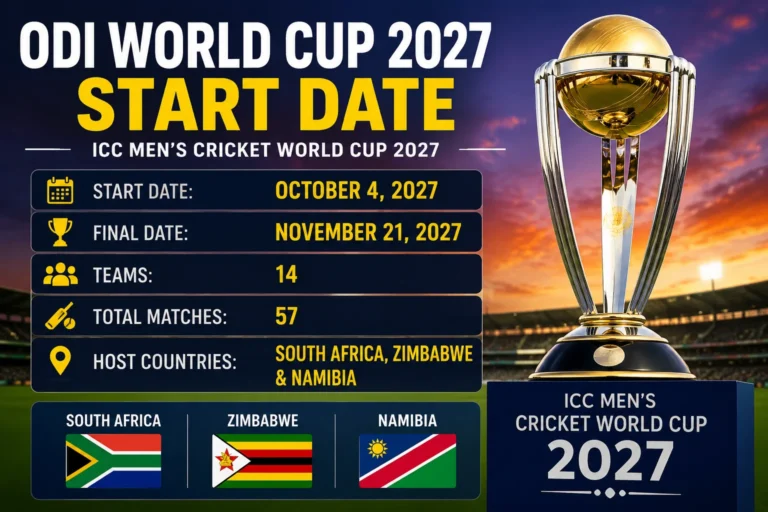
The six-match African tour is especially important because the 2027 Cricket World Cup will be hosted in the same region by South Africa, Zimbabwe and Namibia. Australia’s selectors therefore have a valuable opportunity to test their players in conditions similar to those they will face next year.
Australia ODI Squad for Zimbabwe and South Africa 2026
Australia have selected a 17-player ODI squad for the two series.
Full Australia ODI Squad
| Player | Role / Note |
|---|---|
| Mitchell Marsh | Captain / all-rounder |
| Pat Cummins | South Africa leg only |
| Xavier Bartlett | Fast bowler |
| Alex Carey | Wicketkeeper-batter |
| Cooper Connolly | All-rounder |
| Joel Davies | Young batter |
| Nathan Ellis | Fast bowler |
| Cameron Green | All-rounder |
| Josh Hazlewood | Fast bowler |
| Travis Head | Opener |
| Josh Inglis | Wicketkeeper-batter |
| Spencer Johnson | Fast bowler |
| Oliver Peake | Young batter |
| Matthew Renshaw | Batter |
| Billy Stanlake | Fast bowler |
| Mitchell Starc | South Africa leg only |
| Adam Zampa | Leg-spinner |
Pat Cummins and Mitchell Starc will join for the South African leg only, with their workload also linked to Australia’s upcoming three-Test World Test Championship series against South Africa in October.
Australia ODI Schedule vs Zimbabwe 2026
Australia’s African campaign begins in Zimbabwe with three ODIs at Harare Sports Club.
| Match | Date | Venue |
|---|---|---|
| 1st ODI | 15 September 2026 | Harare |
| 2nd ODI | 18 September 2026 | Harare |
| 3rd ODI | 20 September 2026 | Harare |
All three matches will be played in Harare. Cricket Australia’s official series page confirms the three-match schedule.
Why Zimbabwe Matters for Australia
These matches are more than ordinary bilateral ODIs.
Zimbabwe will be one of the 2027 World Cup co-hosts, meaning Australia’s players will experience African conditions ahead of the global tournament.
For younger players such as Joel Davies and Oliver Peake, the series represents an opportunity to prove that they belong in Australia’s long-term World Cup plans.
Australia ODI Schedule vs South Africa 2026
After Zimbabwe, Australia travel to South Africa for another three ODIs.
| Match | Date | Venue |
|---|---|---|
| 1st ODI | 24 September 2026 | Durban |
| 2nd ODI | 27 September 2026 | Johannesburg |
| 3rd ODI | 30 September 2026 | Potchefstroom |
The South Africa series begins only four days after Australia’s final ODI in Zimbabwe.
The tour therefore gives Australia six consecutive ODI opportunities across two World Cup host nations.
Marnus Labuschagne Dropped: The Biggest Selection Shock
The biggest headline from Australia’s squad announcement is undoubtedly Marnus Labuschagne’s omission.
Labuschagne was part of Australia’s 2023 World Cup winning team and has been an important ODI player since 2022.
But his recent white-ball form has not been convincing.
Reuters reported that Labuschagne has averaged only 21.87 in ODIs since 2024, while his position in Australia’s future white-ball plans has increasingly come under pressure.
The decision is significant because the Australian one day squad World Cup picture is already beginning to take shape.
With the 2027 World Cup only around a year away, selectors cannot afford to carry players who are not producing consistent ODI performances.
Why Did Australia Drop Labuschagne?
Australia’s chief selector George Bailey made an important point: the decision was based on Labuschagne’s ODI performances rather than his Test career.
That distinction matters.
Labuschagne’s ODI omission does not automatically mean he has been dropped from Australia’s Test plans.
In fact, reports indicate that he remains in contention for the Test squad for the South Africa series.
The message from the selectors appears to be clear:
Test cricket and ODI cricket are being judged separately.
For Labuschagne, however, there is now a major challenge.
If he wants to return to Australia’s ODI side before the 2027 World Cup, his domestic performances will become extremely important.
Mitchell Marsh Returns as Australia Captain
Mitchell Marsh is back in Australia’s ODI squad after missing the earlier 50-over series in Pakistan and Bangladesh.
Marsh will captain Australia in Zimbabwe.
His return gives Australia an experienced all-rounder capable of contributing with both bat and ball.
He has also stepped in for Pat Cummins as Australia’s ODI captain on several occasions. Reports note that Marsh has deputised for Cummins 15 times.
His leadership will be particularly important during the Zimbabwe leg.
Travis Head Returns to the ODI Team
Australia have also welcomed back Travis Head, one of the most dangerous white-ball batters in international cricket.
Head missed Australia’s earlier ODI assignments in Pakistan and Bangladesh, but his return significantly strengthens the top order.
His aggressive approach is particularly valuable in World Cup cricket, where quick starts can completely change the momentum of a match.
If Head, Marsh and other senior players remain fit, Australia’s batting unit could again become one of the strongest in the 2027 World Cup.
Pat Cummins and Mitchell Starc Only for South Africa
Another important selection decision is the limited involvement of Pat Cummins and Mitchell Starc.
Both fast bowlers have been selected for the South Africa leg rather than the Zimbabwe series.
This appears to be part of Australia’s workload management strategy.
The South Africa ODIs will be followed by a three Test World Test Championship series beginning in October.
So Australia want their premier fast bowlers to gain some ODI preparation without unnecessarily increasing their workload.
Josh Hazlewood Also Gives Australia Experience
Josh Hazlewood is another major name in the squad.
With Hazlewood, Cummins and Starc available for the South Africa leg, Australia could field an extremely experienced pace attack.
However, the selectors will need to manage workloads carefully.
The 2027 World Cup is the bigger long term objective, and Australia’s priority will be ensuring that their leading fast bowlers reach that tournament fully fit.
Young Players Get a Major Opportunity
The squad is not only about established stars.
Australia have retained youngsters Joel Davies and Oliver Peake, while Cooper Connolly also remains part of the group.
The selectors have clearly identified this tour as an opportunity for younger players to gain international experience.
George Bailey said the six-match series is an important lead-in to the 2027 World Cup because it will be played in the same countries that will host the tournament.
That makes this tour particularly valuable.
Australia ODI Squad: The Biggest Winners and Losers
Biggest winners
Travis Head
His return strengthens Australia’s top order.
Mitchell Marsh
Back as captain and an important all-round option.
Joel Davies
Another chance to establish himself in the ODI setup.
Oliver Peake
The youngster gets further exposure against international opposition.
Cooper Connolly
Continues to receive opportunities in Australia’s developing white-ball side.
Biggest loser
Marnus Labuschagne
His exclusion is easily the biggest surprise.
A player who was part of Australia’s 2023 World Cup winning team now needs to fight his way back into the ODI picture.
Is This Australia’s 2027 World Cup Plan?
Not completely — but it is clearly a major part of it.
Australia’s selectors have essentially created a combination of:
World Cup winners + returning stars + young prospects.
That is exactly what you would expect from a team preparing for a major tournament.
The biggest clue is the location.
Australia will play six ODIs across Zimbabwe and South Africa, two of the three 2027 World Cup host nations.
That allows the selectors to assess:
- Batting combinations
- Spin options
- Fast-bowling balance
- Middle-order roles
- Wicketkeeping options
- Young players
- Leadership
- Conditions
The 2027 World Cup is therefore clearly in the background of this selection.
A Big Problem for Australia: Who Replaces Labuschagne?
This could become one of Australia’s biggest selection battles over the next 12 months.
Labuschagne’s absence creates an opportunity for younger players.
But it also removes a player with World Cup experience.
Australia now have to determine whether they want:
experience or current form.
For now, the selectors appear to be prioritising form.
That is a risky decision but potentially the correct one with a World Cup approaching.
South Africa’s Kagiso Rabada Blow Adds Another Twist
Australia’s South Africa ODI series has another major storyline.
South Africa’s premier fast bowler Kagiso Rabada has been ruled out of the ODI series because of a hamstring injury.
His availability for the subsequent Test series is also uncertain.
That is a significant blow for the Proteas.
Rabada was one of South Africa’s key performers when they defeated Australia in the 2025 World Test Championship final at Lord’s, taking nine wickets in that match.
His absence could therefore change the balance of the ODI contest.
Australia vs South Africa: Could We See Another Major Battle?
The keyword “south africa win over australia” has strong historical relevance because these two teams have produced several memorable matches.
Their rivalry became particularly intense during major ICC tournaments.
South Africa defeated Australia in the 2025 World Test Championship final, while Australia remain one of the most successful teams in ICC history.
The upcoming ODI series therefore gives Australia an opportunity to test themselves against one of the strongest teams in the region before the 2027 World Cup.
What About the “ODI South Africa” World Cup Connection?
The ODI South Africa series is especially important because South Africa will host a major portion of the 2027 World Cup.
Australia will play in Durban, Johannesburg and Potchefstroom during this tour.
Those matches should provide valuable information about pitches, weather, travel and match conditions that could become relevant again during the World Cup.
Australia vs South Africa ODI Controversies
There is currently no major on-field controversy surrounding the upcoming ODI series.
The biggest selection debate is Australia’s decision to leave out Labuschagne.
For South Africa, the major concern is Rabada’s hamstring injury.
The other major talking point is workload management, particularly for Cummins and Starc, who are only joining Australia for the South African leg.
So far, this is more of a selection and World Cup strategy story than a controversy-driven series.
Why the 2027 World Cup Makes This Tour So Important
The 2027 ICC Men’s Cricket World Cup will be played across South Africa, Zimbabwe and Namibia.
Australia will therefore get an unusually valuable preparation opportunity.
Instead of simply watching conditions through television or analysing previous matches, Australia’s players will actually play competitive ODIs in two of the three host countries.
That could prove a major advantage.
Australia ODI Squad Strengths
1. World-class pace
Cummins, Starc and Hazlewood give Australia an extraordinary fast-bowling pool.
2. Explosive opening
Travis Head can destroy bowling attacks during the first 10 overs.
3. All-round depth
Mitchell Marsh and Cameron Green provide balance.
4. Spin
Adam Zampa remains a key middle-overs wicket-taker.
5. Young talent
Davies, Peake and Connolly give Australia options beyond the current core.
Australia’s Weaknesses
Despite the strength of the squad, there are some questions.
Middle-order stability
Australia are still searching for their ideal batting combination after several changes.
Labuschagne’s absence
The selectors have lost a proven World Cup winner from the current ODI group.
Fitness
Australia’s fast bowlers must be managed carefully.
New players
Young players need international exposure before the World Cup.
“Australia Have Named Their T20I and ODI Squads for the South Africa Series” What’s the Difference?
One important SEO clarification is needed here.
The current announcement is specifically about Australia’s ODI squad for Zimbabwe and South Africa.
It should not be confused with a separate T20I squad announcement.
So if you’re targeting the keyword:
“australia have named their t20i and odi squads for the south africa series”
use it naturally only in a broader Australia tour article, rather than incorrectly claiming this particular announcement is a T20I squad announcement.
That will help SportsHab maintain factual accuracy while still capturing related search intent.
South African Players Who Play Overseas
Another related search term is “south african players who play overseas.”
South Africa have a large group of cricketers with experience in overseas leagues and competitions.
That international experience is one reason the Proteas remain a dangerous ODI side.
However, this article should focus primarily on the Australia vs South Africa ODI series, while a separate evergreen SportsHab article could target:
“South African Players Who Play Overseas: Complete Cricket Guide”
That would create an internal-linking opportunity without weakening this article’s search relevance.
Australia vs Zimbabwe and South Africa: Full Fixture List
Zimbabwe ODIs
September 15, 2026
Zimbabwe vs Australia — Harare
September 18, 2026
Zimbabwe vs Australia — Harare
September 20, 2026
Zimbabwe vs Australia — Harare
South Africa ODIs
September 24, 2026
South Africa vs Australia — Durban
September 27, 2026
South Africa vs Australia — Johannesburg
September 30, 2026
South Africa vs Australia — Potchefstroom
Australia’s six-match ODI campaign therefore runs from September 15 to September 30.
What Happens After the ODIs?
Australia’s South Africa tour continues into October with a three-Test World Test Championship series.
The Tests are scheduled for:
- October 9–13: Durban
- October 18–22: Gqeberha
- October 27–31: Cape Town
The ODI and Test schedules mean Australia’s senior players will have to manage a demanding period of international cricket.
Our Analysis: Australia Are Thinking About 2027 Already
The most interesting aspect of this squad is not who has been selected.
It is why these players have been selected now.
Australia could have picked a conventional full-strength ODI side.
Instead, the selectors have combined experienced World Cup winners with younger players who need exposure.
The Labuschagne decision is especially revealing.
Australia are not selecting purely on reputation.
They appear willing to move on from established names if current ODI performance does not meet expectations.
That could create some uncomfortable selection battles before the 2027 World Cup but it could also produce a stronger Australian team.