ICC Saliva Ban to Stay Despite Shubman Gill’s Plea to Lift It
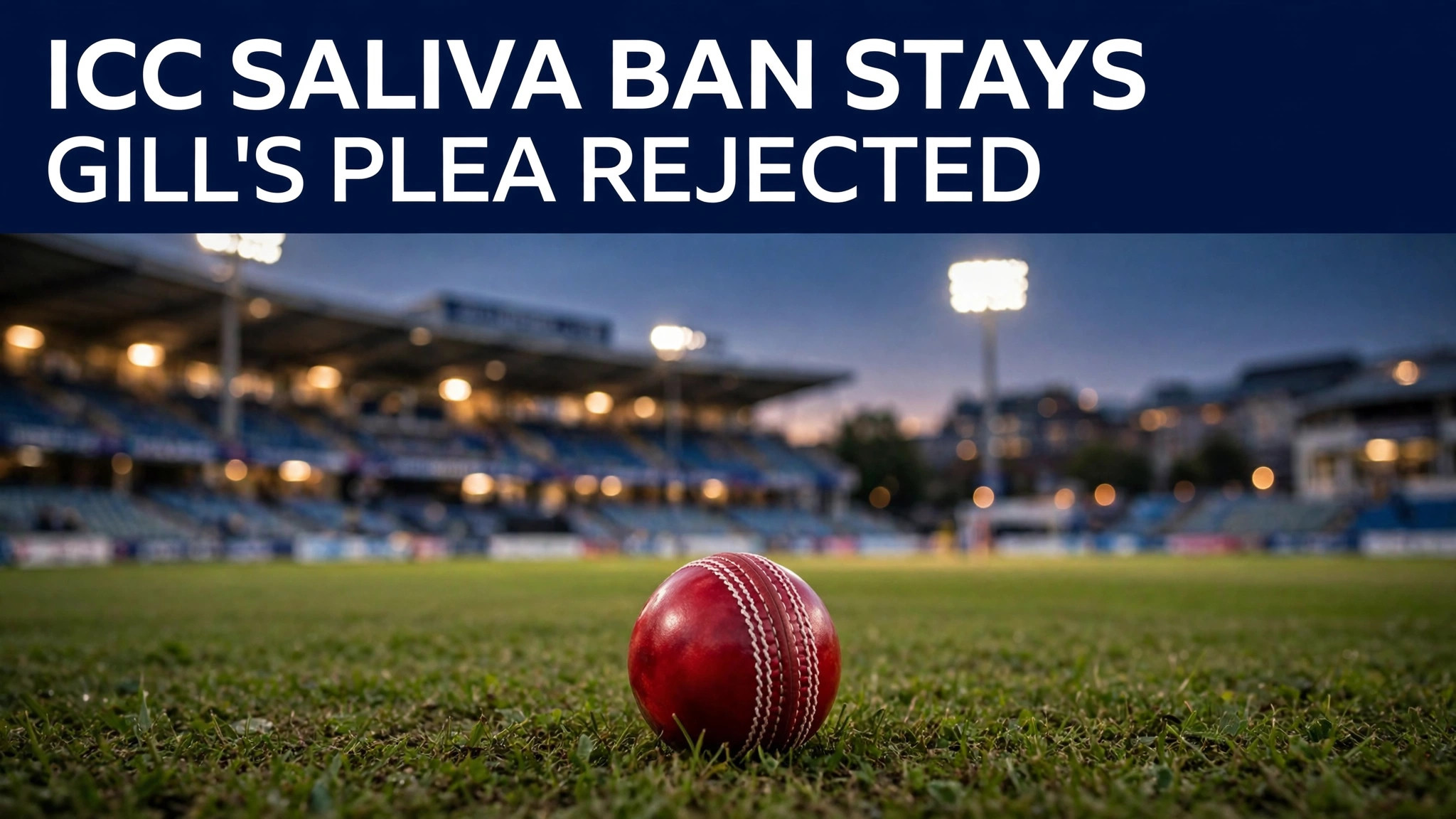
The ICC saliva ban will remain in place, the governing body has confirmed, despite India captain Shubman Gill’s public call to lift it after the drawn first Test against New Zealand in Wellington.
Gill argued that bowlers need saliva to keep the ball in shape on flat pitches, but the ICC says it has no plans to review a rule first introduced during the Covid-19 pandemic.
Key Facts
- ICC decision: Saliva ban stays; no review planned
- Gill’s call: Made after the Wellington Test draw on Monday, 23 November
- Ban history: Introduced in 2020, made permanent in 2022
- Gill’s other concern: Kookaburra ball goes soft after 25-30 overs
- IPL contrast: Lifted its saliva ban ahead of the 2025 season
- Next Test: India vs New Zealand, 2nd Test, Christchurch, from Friday 27 November
ICC Saliva Ban Stays After Gill’s Wellington Plea
Gill raised the issue at his press conference after India failed to bowl New Zealand out on the final day at the Basin Reserve, where the hosts finished on 239 for five and the match ended in a draw.
“We are way past Covid times. There was a rule that you can’t apply saliva to shine the ball. It’s been seven-eight years now, I still don’t understand why they are not allowing it,” Gill said.
The ICC responded within a day, with sources telling PTI on Tuesday that the governing body has no plans to review the ban for health and cricketing reasons, and that its position remains unchanged.
The ban was not even discussed at the ICC meetings in Bali earlier this month, and any future change would need a member board to raise it through the relevant ICC committee before the board could decide.
Saliva Ban Timeline: Key Dates
The saliva ban has been debated since it began, and Gill is not the first captain to question it. Here is how the rule has developed over the last six years.
| Year | Development |
|---|---|
| 2020 | ICC bans applying saliva to shine the ball as a Covid-19 health precaution |
| 2022 | Ban made permanent in the ICC playing conditions |
| March 2025 | Mohammed Shami asks the ICC to lift the ban after the Champions Trophy semi-final |
| 2025 season | IPL lifts its own saliva ban before the season starts |
| 23 Nov 2026 | Gill calls for the ban to be lifted after the Wellington Test draw |
| 24 Nov 2026 | ICC confirms it has no plans to review the ban |
Why It Matters
Why the ICC Saliva Ban Matters for Reverse Swing
Gill’s main complaint was the Kookaburra ball, which he said goes soft after 25 to 30 overs and makes it harder for bowlers to take wickets on flat pitches.
New Zealand batted for 75 overs on the final day, scoring 120 runs for three wickets, and India missed out on valuable World Test Championship points as the draw cost them ground in the standings.
India had piled up 720 for 9 declared in the first innings, a record total in New Zealand, yet still could not force a win on a pitch that offered the bowlers almost nothing.
Rishabh Pant’s century had powered India to that huge total, but the bowlers still could not finish the job on a pitch that offered almost nothing.
The IPL lifted its own saliva ban before the 2025 season, which is why Gill’s call has support among bowlers, yet the ICC treats saliva like any other unfair method of changing the ball’s condition.
Former New Zealand captain Tim Southee and ex-South Africa seamer Vernon Philander backed Mohammed Shami when he made the same plea in March 2025, showing this is a long-running debate among fast bowlers.
What’s Next
India and New Zealand now head to Christchurch for the second and deciding Test from Friday, where both captains expect a greener, more seamer-friendly pitch than the flat Basin Reserve surface.
Gill will hope his attack finds more help there, while New Zealand will take confidence from a draw secured by Daryl Mitchell and Glenn Phillips, who batted out the final session together.
The saliva debate is unlikely to go away, but for now the ICC’s answer is clear: the ICC saliva ban stays, and bowlers must keep working within the current playing conditions.
FAQs
Why is saliva banned in cricket?
Saliva was banned in 2020 as a Covid-19 health precaution, then made permanent in 2022. The ICC treats applying saliva as an unfair way to change the ball’s condition, so the ban remains in international cricket.
Will the ICC lift the saliva ban?
No, not for now. The ICC saliva ban will stay, the ICC confirmed on 24 November 2026, as it has no plans to review the rule despite Shubman Gill’s call to lift it after the drawn Wellington Test.
When was the saliva ban introduced in cricket?
The ban was introduced in 2020 during the Covid-19 pandemic and was made permanent in the ICC playing conditions in 2022, so it has now been in place for more than six years.
Can bowlers use saliva in the IPL?
Yes. The Indian Premier League lifted its saliva ban ahead of the 2025 season, which means the rule in the IPL now differs from the ICC rule used in international cricket.
Source: The Print (PTI)